The United States is aiming to secure its critical mineral and rare-earth supply chains. U.S. President Donald Trump has made this a priority, and many precious resource companies have popped as a result.
One small company that has had a banner year with its stock performance is The Metals Company (TMC -2.19%). The deep-sea mining company has made progress that could help it begin mining in a resource-rich region of the Pacific Ocean.
The stock has gone on quite a roller-coaster ride, up as much as 913% on the year and reaching over $11 per share as recently as October. Since then, The Metals Company's stock has fallen 42% from its high, which could be a dip-buying opportunity for growth investors. But there are some things you should know first before scooping up the stock.

NASDAQ: TMC
Key Data Points
The Metals Company looks to strengthen the U.S. critical minerals supply
The Metals Company is seeking a first-mover advantage in the deep-sea mineral exploration industry. The company focuses on collecting, processing, and refining polymetallic nodules from the seafloor in international waters of the Clarion-Clipperton Zone, roughly 1,500 miles southwest of San Diego, California. Polymetallic nodules are rocks sitting on the seafloor with high concentrations of nickel, copper, cobalt, and manganese from a single rock.
CEO Gerard Barron testified before the U.S. House Committee on Natural Resources, highlighting how seabed minerals offer the U.S. the opportunity to end critical mineral dependence and reclaim leadership in offshore innovation.
He also noted that these nodules hold more critical minerals than all known land-based reserves combined. Not only that, but the industry could potentially create over 100,000 American jobs and generate over $300 billion in gross domestic product (GDP).
The company could benefit from regulatory tailwinds
Critical minerals have come under focus during U.S. President Donald Trump's second term. That's because China has built a dominant position in the rare-earth mining and processing space. It has used its strong position in rare earths to restrict exports amid ongoing trade tensions between the two countries.
Because some of these resources are critical to defense and infrastructure, the U.S. is taking steps to restore mining and processing capabilities. President Trump signed an executive order, "Unleashing America's Offshore Critical Minerals and Resources," that underscores the administration's commitment to building a robust domestic supply of critical minerals.
This order directs the Department of Commerce to implement an expedited permitting process under the Deep Seabed Hard Mineral Resources Act (DSHMRA). Alliance Global Partners called the shift in permitting strategy from the Trump administration a "significant de-risking event" and a major inflection point, providing a more straightforward path toward mining and supplying key minerals from the ocean.
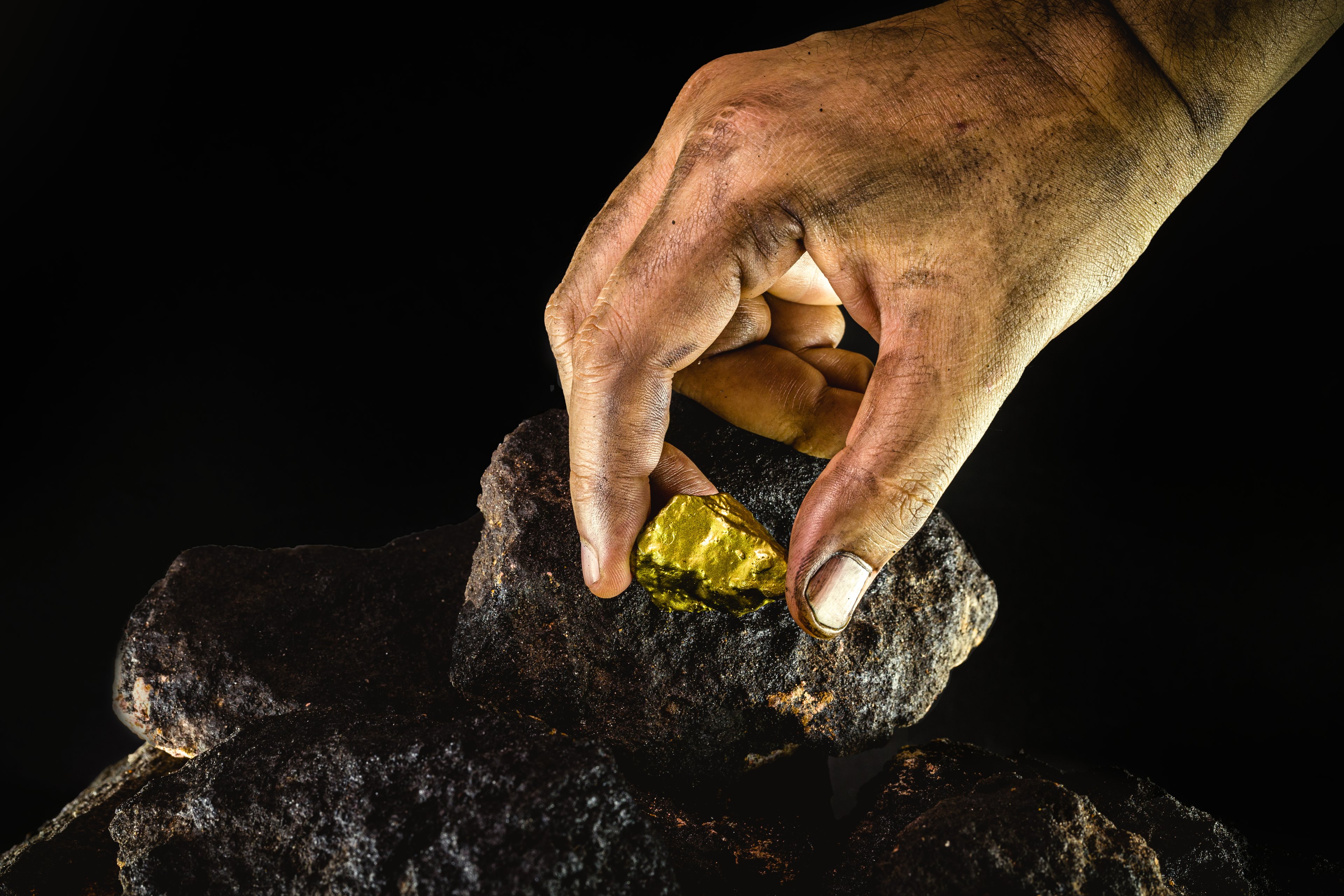
Image source: Getty Images.
The Metals Company has submitted applications for a commercial recovery permit and two exploration licenses under the regulations of the DSHMRA and the National Oceanic and Atmospheric Administration (NOAA).
In July, it submitted amended exploration applications with additional information requested by NOAA. NOAA subsequently confirmed that both exploration license applications were fully compliant, and that The Metals Company has a priority right over both exploration areas. Next, exploration applications must undergo an interagency review with other U.S. government departments.
Following certification, an Environmental Impact Statement is expected to be prepared in accordance with the National Environmental Policy Act (NEPA), and a public comment period will be provided. NOAA will then determine whether to issue the requested licenses and permits.
However, there are legal and international hurdles that remain, as the International Seabed Authority has not finalized exploitation regulations. There is controversy over whether the U.S. can issue mining permits in international waters, which creates uncertainty for the deep-sea mining company.
A risky play in critical resources
The Metals Company is making progress toward operating its deep-sea mining operations. The executive order should help expedite the permitting process. Meanwhile, the company is forming strategic partnerships, such as its partnership with Korea Zinc, which is considered one of the few companies outside China capable of refining its intermediate materials at scale.
That said, it continues to operate in the red, reporting an operating loss of $95.3 million through the first nine months of the year. It has $165 million in cash and available credit, but will likely need additional financing to fund operations over time. This could lead to debt or equity issuance, diluting shareholders' stakes.
The Metals Company is at a risky point in its business. The company has a strong foundation of technical knowledge related to deep-sea mining and favorable political tailwinds that could help it secure the first-ever deep-sea mining permit. But it still has some hurdles to overcome before obtaining the necessary licenses and permits, and scaling up its mining operations will take time afterward. For that reason, most investors will want to see further progress on its permitting process before investing in this speculative stock.