Usually, Wall Street gets a story in its teeth and then runs with it, often to the point where a stock's valuation gets ahead of its fundamentals. That is why investors should be worried about pharmaceutical giant Eli Lilly (LLY 2.05%) today. It is a leader in the GLP-1 weight loss drug space, but investors have used that story to afford the company a worryingly high valuation. That's a warning you shouldn't ignore.
The first out of the gate was Novo Nordisk
The first company to market with GLP-1 drugs was Eli Lilly's competitor Novo Nordisk. GLP-1 drugs are a new and exciting option in the weight loss space that have gained rapid acceptance among practitioners and consumers. Although there are notable negative side effects, such as muscle loss and possible intestinal issues, the benefit of losing weight without having to diet or exercise has turned GLP-1 drugs into instant blockbusters.
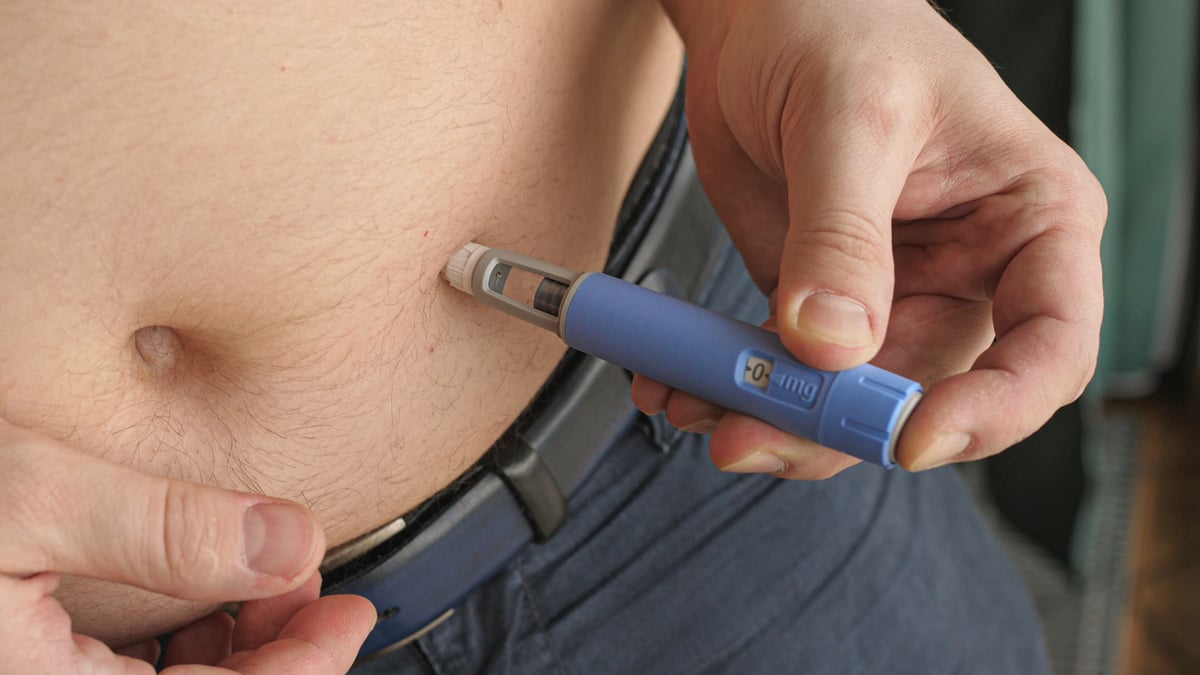
Image source: Getty Images.
Novo Nordisk is important to highlight here because it was displaced as the industry leader in GLP-1 drugs by Eli Lilly. That fact has investors very excited about Eli Lilly's stock. Over the past year alone, the shares have risen 19% versus just 12% or so for the S&P 500 index.
That doesn't do justice to Eli Lilly's skyrocketing stock price. Over the past three years, the shares have increased by 164%, compared to 73% for the S&P 500. Over the past five years, Eli Lilly has risen 557% compared to 85% for the S&P. Investors have already factored in a significant amount of positive news.
Eli Lilly's silver lining is tarnished
The truth is, there is a lot of good news for Eli Lilly and its shareholders today. The big story is that its GLP-1 drugs Mounjaro and Zepbound have quickly achieved blockbuster status. Moreover, they still have quite some time before they lose their patent protections, which means a patent cliff is probably a decade or so away. However, with a price-to-earnings ratio of roughly 50, investors are clearly aware of the good news here.
The good news, meanwhile, comes with risks. The key factor here is that Mounjaro and Zepbound are already two of the largest drugs in Eli Lilly's arsenal. Together, they account for nearly 55% of revenues, which is a worryingly high percentage. Eli Lilly's continued success as a business and as a stock is highly dependent on the company maintaining its dominance in the GLP-1 niche.

NYSE: LLY
Key Data Points
This is why it is important to recall that Eli Lilly unseated Novo Nordisk as the leader in GLP-1 drugs. It is entirely possible that another pharmaceutical company will emerge and unseat Eli Lilly. Notably, Pfizer just inked a deal to acquire a smaller drug maker, largely to gain access to that company's weight loss drug pipeline.
Additionally, it is worth noting that Eli Lilly's patents will eventually expire. That event may be years away, but dealing with patent expirations is a common occurrence in the pharmaceutical sector. You can't look at the company's GLP-1 drugs and extrapolate success too far into the future; that's just not how the pharma industry works. Eventually, the golden goose driving investor excitement today will die, and Eli Lilly will have to figure out how to replace it.
However, remember that this dynamic is not unique to Eli Lilly; it is simply the normal course of events in the pharmaceutical sector.
Be careful about how excited you get for Eli Lilly
This isn't meant to disparage Eli Lilly or its GLP-1 drugs. Indeed, the company is performing very well at the moment. The problem is that investors are well aware of that fact and have bid the stock materially higher. At this point, investors need to question whether the stock's lofty valuation is justified by the long-term opportunity. That opportunity, notably, is time-limited by the patent protection framework in the industry. It is also important to consider what could go wrong, such as another drug maker discovering a more effective weight loss drug to sell.