When it comes to artificial intelligence (AI) stocks, Nvidia (NVDA 1.46%) seems unstoppable. Despite rising by nearly 1,500% from its low in October 2022, the increasing demand for AI continues to bolster Nvidia, which remains the dominant company for AI accelerators.
Still, its market cap now stands at almost $4.5 trillion after blowing past the $5 trillion mark in November. Since large companies tend to grow at a slower pace, smaller companies might appear more attractive to growth investors.
Knowing this, can the stock go higher, or should investors rotate out of Nvidia in favor of other tech names?

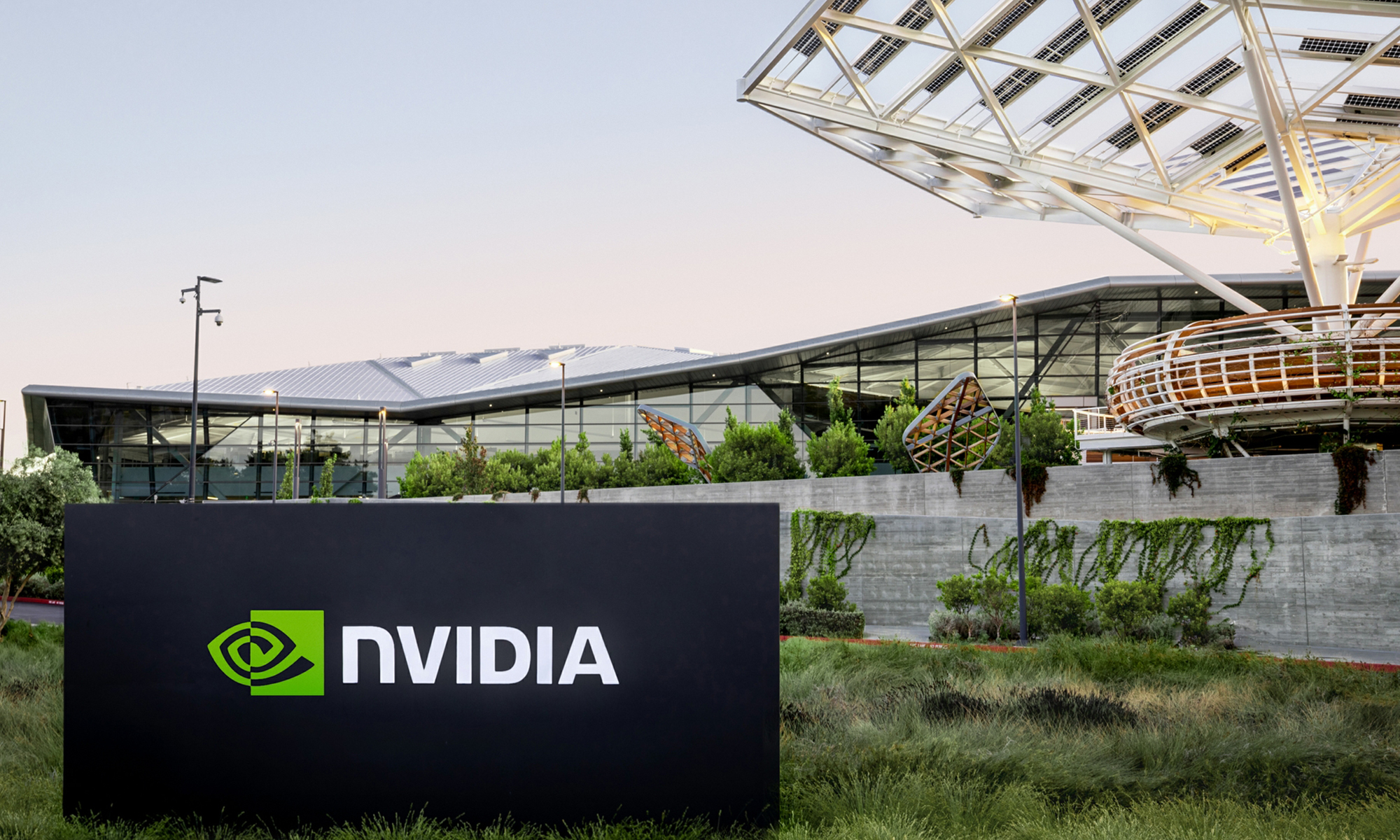
Image source: Nvidia.
The power of Nvidia's dominance
When it comes to a mix of growth and safety, one might struggle to find a stock better positioned than Nvidia. It's the dominant player in the AI accelerator market, and it is dealing with insatiable demand for its product.
Moreover, that demand is likely to remain strong. Between 2024 and 2030, Grand View Research estimates a compound annual growth rate (CAGR) for the AI chip market of 29%. Nvidia continues to far exceed that, and in the third quarter of fiscal 2026 (ended Oct. 26), its $57 billion in revenue was up 62% from year-ago levels.
Furthermore, its data center segment, which designs the AI accelerators, makes up about 90% of the company's revenue. That segment reported more than $51 billion in revenue in the same quarter, rising by 66% over the last year.
Keeping up with the rapid demand led to a 71% rise in the cost of revenue. Thus, the company's $32 billion in net income increased by 65%, closely approximating the growth of its revenue.
Still, the 56% net profit margins place Nvidia in an enviable position. Thanks to those profits, it has had adequate funds to continue spending on innovation and other investments.
Nvidia's stock dilemma
Given that staggering level of financial growth, it is highly likely that the stock will continue to rise.
And that creates a challenge for shareholders. The $4.5 trillion market cap is the world's largest, but it can also be a headwind for growth investors.
For the stock to rise by 100%, its market cap would have to grow to $9 trillion. As of today, no stock has yet reached the $6 trillion mark. As previously mentioned, its financial growth should take Nvidia's stock to that point over time, but it makes a repeat of the nearly 1,500% gains achieved over the past 38 months highly improbable.

NASDAQ: NVDA
Key Data Points
Knowing this, growth investors may deploy more capital to the stock of competitors like AMD, whose market cap is a comparatively modest $360 billion and -- according to many analysts -- is closing the technical gap with Nvidia, which might make it more attractive.
Fortunately, Nvidia could mitigate this challenge by developing a larger following among more-conservative investors. They would have to stomach the price-to-earnings ratio (P/E) of 46, higher than the S&P 500 average of 31.
Still, such investors could benefit from the chipmaker's high degree of safety and rapid growth. Even with possible size-related headwinds, the company stands a good chance of beating market averages, which could still make it attractive to many types of investors.
Moving forward with Nvidia stock
Ultimately, the stock is going to continue to move higher, if only because of its huge growth. The more meaningful question is what kind of investor is going to want it at current levels.
Its huge market cap could become a headwind, since such a size is going to make another 1,500% gain over three years highly unlikely. That may lead growth investors into other stocks.
However, for more conservative investors, the rapid growth and stability of Nvidia could make it attractive. Assuming they can stomach a higher-than-average P/E, they can benefit from faster growth at a lower risk.
In the end, no matter how investors perceive Nvidia, it is likely that the demand for AI will continue to make it a market-beating stock for some time to come.