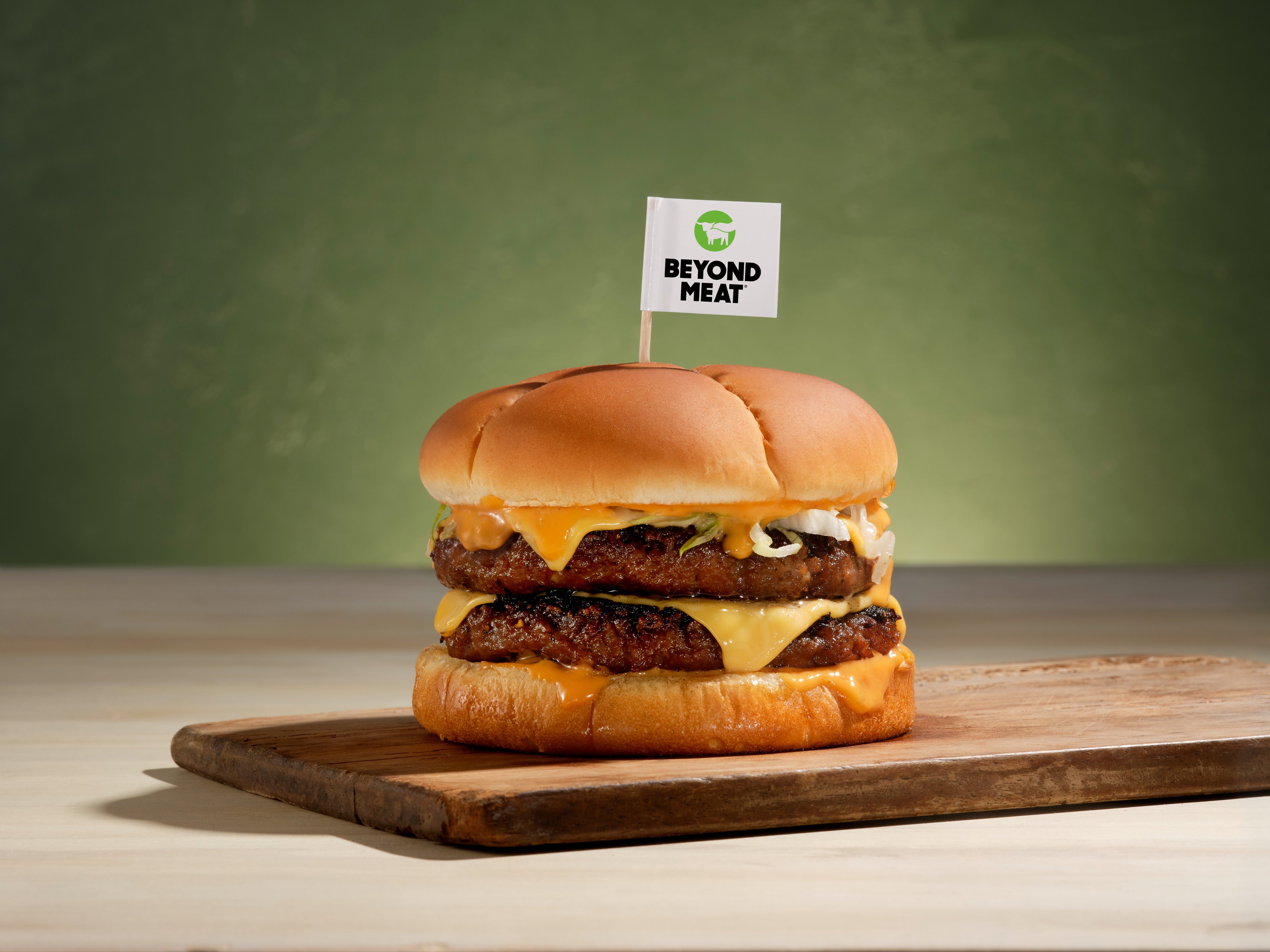
Beyond Meat (BYND 4.86%) is a meme stock that has crashed by more than 70% year to date. A brief one-week burst from $0.50 per share to $7.69 per share in mid-October shows what this meme stock can do once enough investors pile into it. However, the stock fell below $1 per share less than one month later, demonstrating the risk of buying and holding the stock.
This stock has plenty of attention, but that doesn't mean you should buy shares. These are some of the headwinds to monitor if you want to give Beyond Meat stock a closer look.
Sales are shrinking across the board

Image source: Getty Images.
Beyond Meat's third-quarter earnings results don't have a silver lining. Every segment except international foodservice was down year over year, and that part of the business was only up by 2.4%. The U.S. segment was a disaster, with revenue down by 21% year over year. International revenue has become the larger slice of the pie, but that part of the business dropped by 13.3% year over year.

NASDAQ: BYND
Key Data Points
Downward pressure on revenue and volume of products sold has been a common theme for Beyond Meat. It's continuing to lose market share at a time when plant-based meat demand continues to cool off. The industry is removed from its peak success in 2021 and 2022, which is also when Beyond Meat stock was at its highest.
Net operating losses have also increased year over year, and that's excluding Beyond Meat's $77.4 million loss from a one-time impairment of long-lived assets. Getting rid of this figure still results in a net operating loss of $34.9 million, which is higher than the $30.9 million loss from the same quarter last year.
Shrinking sales and rising losses are not a good formula for long-term growth and sustainability, especially since Beyond Meat is in a declining industry.
ESG is fading
Consumer sentiment has changed significantly over the past few years, and there aren't many changes that are more significant than ESG fading away. It's a crucial development for Beyond Meat, which touts itself as an environmental champion for offering an alternative to animal-based meat.
The World Economic Forum cited political backlash, regulatory complexities, and fears of greenwashing as key contributors to the fall of ESG. Changing sentiment toward being stewards of the environment has hurt Beyond Meat, as criticisms of animal-based meat have waned. Plant-based meat is also two to four times more expensive per pound than traditional meat, casting more doubt on the company's long-term viability.
Rising living costs and the reduction of virtue signaling have made Beyond Meat's products less practical. Beyond Meat may have another short squeeze in the future, but it doesn't look good as a long-term investment.