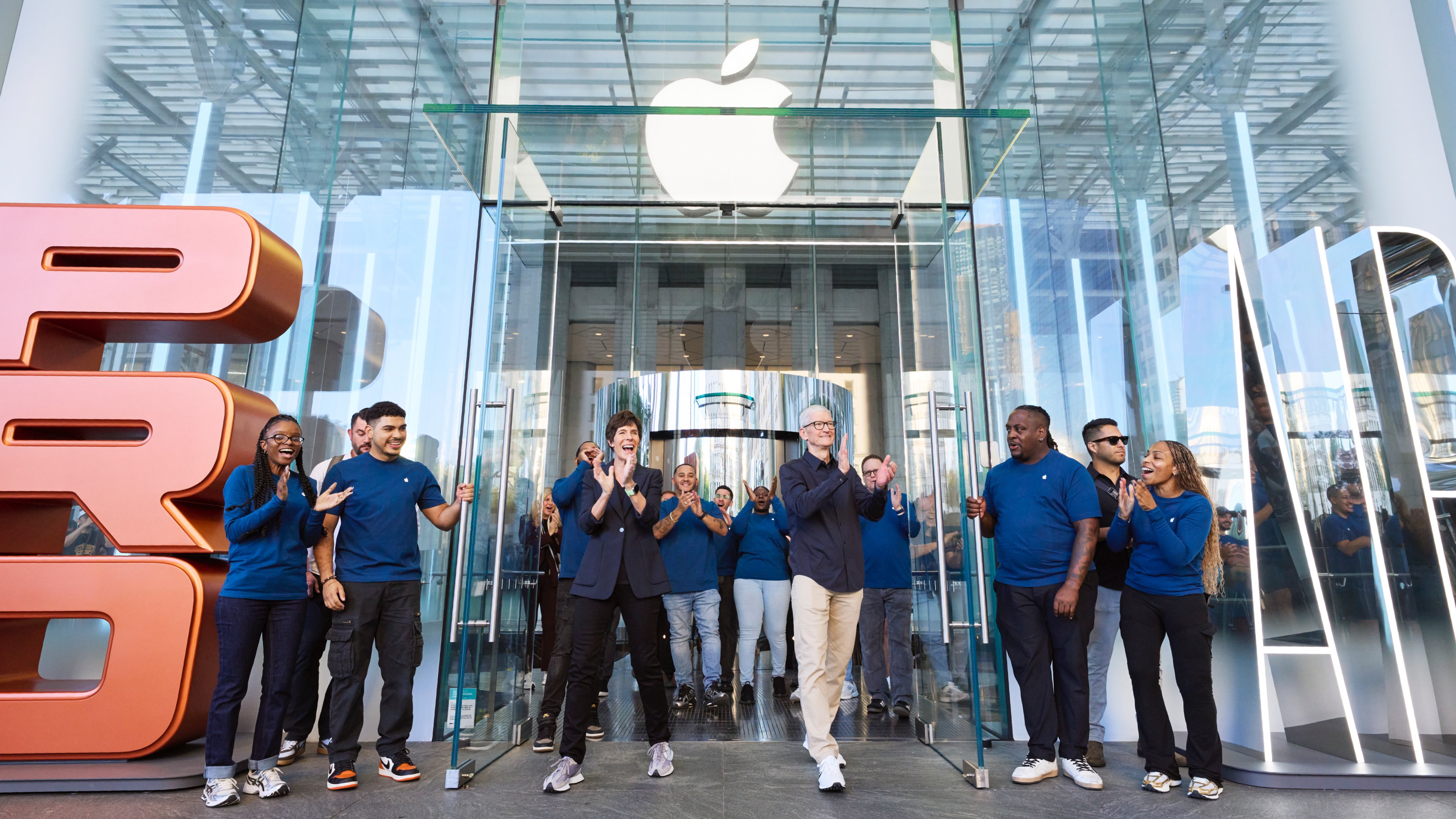
In a search for investment ideas for 2026 and beyond, I keep coming back to Apple (AAPL 3.68%) and Berkshire Hathaway (BRK.B 1.56%) (BRK.A 1.58%). Not only are they attractive investments in their own right, but they go particularly well when paired together in a portfolio. The iPhone maker gives investors exposure to technology and what looks to be an accelerating business. And Warren Buffett's conglomerate provides investors with a cash-heavy balance sheet that can be deployed into assets at attractive prices if the market declines. Even more, Apple trades at a premium valuation as investors eye the tech stock's growth potential -- and Berkshire is somewhat of a value stock.
Here's a closer look at why both of these stocks make it to the top of my buy list going into 2026.
Image source: Getty Images.
Apple's accelerating business
Capturing Apple's strong business momentum, the company grew sales 8% year over year in fiscal Q4 (the three-month period ended Sept. 27). Even more, its revenue mix continued to tilt toward its lucrative services business, which grew 15.% year over year. Further, the segment's growth rate in fiscal Q4 ran ahead of its 13.5% increase for the full fiscal year, suggesting the high-margin business segment is building momentum.
Overall, Apple's fiscal 2025 results reminded investors that the tech stock is still a growth story. Following a fiscal year when sales grew only 2%, Apple's fiscal 2025's results were likely refreshing for shareholders.
"Our September quarter results capped off a record fiscal year, with revenue reaching $416 billion, as well as double-digit EPS growth," said Apple chief financial officer Kevan Parekh in the company's fourth-quarter fiscal 2025 earnings release. "And thanks to our very high levels of customer satisfaction and loyalty, our installed base of active devices also reached a new all-time high across all product categories and geographic segments."

NASDAQ: AAPL
Key Data Points
Further, Apple's strong free cash flow during the year, combined with its net cash position (where total cash exceeds total debt) on its balance sheet, enabled the tech company to continue returning cash to shareholders through both dividends and share repurchases. Repurchases, in particular, were significant. The company repurchased $90.7 billion of stock during the year.
Of course, investors have rewarded the stock already for the company's accelerated momentum. Shares currently trade at a forward price-to-earnings of 33. But considering that management expects even faster revenue growth (10% to 12%) in its important holiday quarter, helped by a strong iPhone cycle and continued double-digit growth in services, I believe shares are worth this valuation.
Berkshire Hathaway's powerful balance sheet
Meanwhile, Berkshire gives investors something different: A more conservatively valued stock (shares trade at just 1.6 times book value), a war chest of cash on its balance sheet, and a diversified underlying business.
With over $350 billion in cash, cash equivalents, and short-term Treasury bills, Berkshire has the liquidity to play offense if the market takes a hit.
Further, the company is very diversified. Not only does it have a substantial amount of cash, but it also has strong underlying operating assets, including a sprawling insurance operation, a railroad, a large energy business, and numerous other subsidiaries. This diversified business contrasts nicely with Apple's highly focused business, which generates more than half of its revenue from iPhone sales.

NYSE: BRK.B
Key Data Points
Risks
Of course, both companies have their fair share of risks.
Apple's dependence on the iPhone, for instance, means that if smartphone sales falter, the stock could suffer. Additionally, Apple's global presence makes it vulnerable to various geopolitical risks. Finally, its valuation is quite high; so strong execution from Apple in 2026 is key for the stock to continue rising.
Berkshire's biggest risk, of course, is that 2025 was Warren Buffett's last year as CEO of Berkshire. This means he'll be taking a back seat as the chairman, without operational control of the company. Successor Greg Abel will need to prove to investors that he can adeptly manage the Berkshire Hathaway that Warren Buffett and Charlie Munger built. In addition, with so much cash on hand, the stakes are high for Abel to deploy a material portion of it productively. Investors, therefore, should watch Berkshire's investment moves closely in 2026.
Overall, however, I think both stocks make sense as part of a diversified portfolio.