According to The Motley Fool's 2026 AI Investor Outlook Report, 9 out of 10 investors surveyed said they planned to buy or hold artificial intelligence (AI) stocks in 2026. While Motley Fool Senior Investment Analyst Asit Sharma believes that smaller semiconductor and data center ecosystem stocks are set to outperform in the coming years, that doesn't mean your portfolio shouldn't include some megacap AI stocks as well.
Let's look at two market-leading AI stocks that should be in your portfolio in 2026.
1. Nvidia

NASDAQ: NVDA
Key Data Points
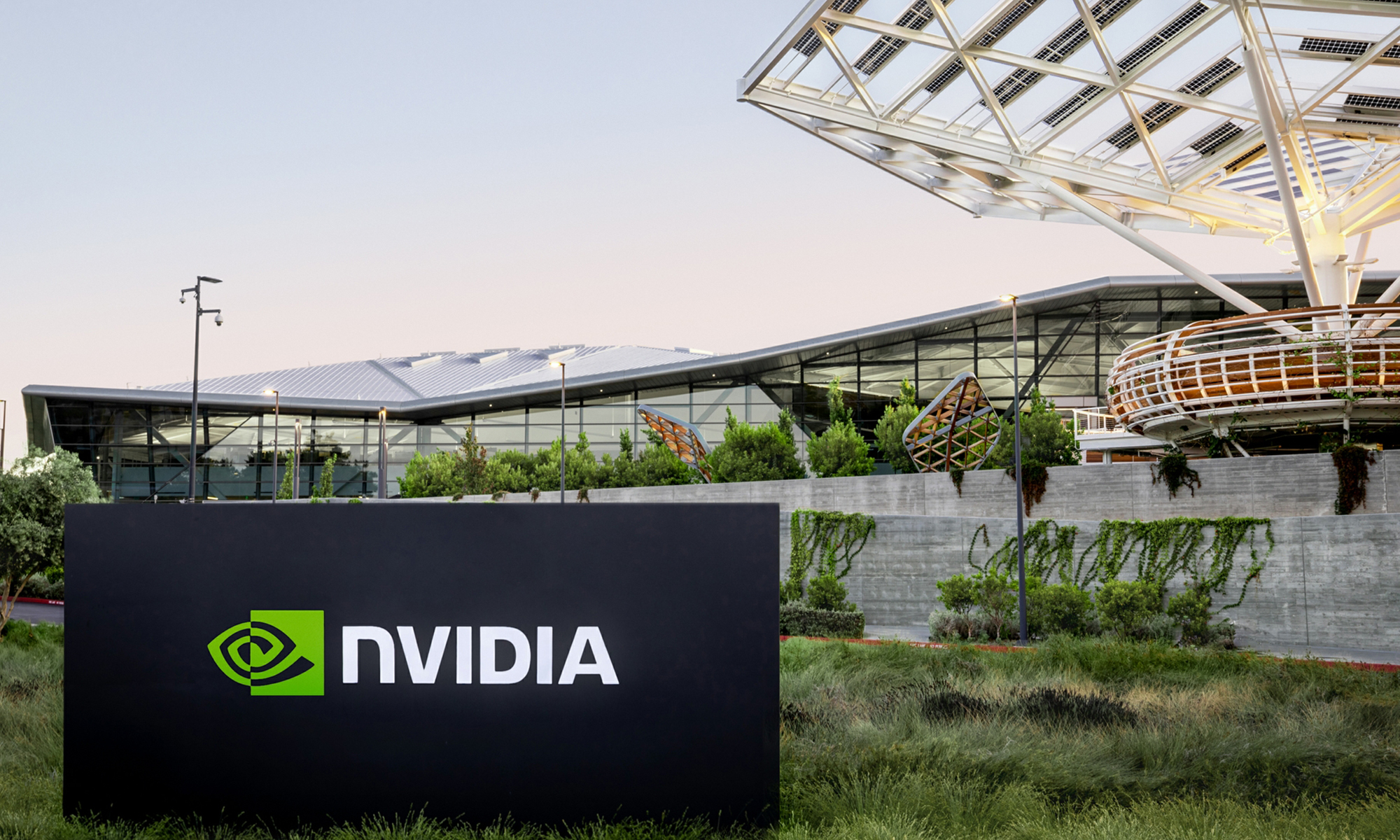
No company has benefited from the AI infrastructure buildout more than Nvidia (NVDA +0.91%). Its growth over the past few years has been like a rocket ship. In its fiscal Q3 2023, the company generated $5.9 billion in revenue. Three short years later, its revenue for fiscal Q3 2026 was $57 billion.
Nvidia's incredible growth starts with its graphics processing units (GPUs), which are the primary chips powering AI workloads. However, its data center networking portfolio shouldn't be overlooked: Revenue from that segment soared 162% in fiscal Q3 to $8.2 billion. Within networking, the company's Ethernet and InfiniBand products are growing nicely as the company now offers end-to-end turnkey solutions, but its NVLink is its secret sauce, as it interconnects multiple GPUs and allows them to act as one powerful unit.
The biggest reason for Nvidia's dominance, though, is its CUDA software platform. The company originally created CUDA as a way to try to expand the market for its GPUs beyond video games by making it possible for developers to program its chips for other tasks. The uptake of this was slow, but the company smartly pushed CUDA into academic institutions and research labs that were experimenting with AI. As a result, a generation of developers got trained on Nvidia's software platform, and most of the AI foundational code and libraries were written on CUDA software to optimize its chips for training large language models (LLMs).
While competition in the parallel processor space is increasing, Nvidia remains the undisputed AI infrastructure leader and is set to continue producing outstanding growth as data center spending continues to ramp up.

Image source: Getty Images
2. Broadcom

NASDAQ: AVGO
Key Data Points
Broadcom (AVGO 0.08%) is a leader in data center networking and ASIC (application-specific integrated circuit) design. The company's networking products, including Ethernet switches and optical interconnects, are vital in managing the flow of data within AI clusters. This is a strong and fast-growing market, but it is in ASICs where the company's biggest opportunity lies.
As hyperscalers look for cheaper alternatives to Nvidia's chips, they are increasingly turning to Broadcom to help them make custom AI chips. While its customers must design their own chip architectures, Broadcom helps provide the building blocks through access to its intellectual property portfolio for things like SerDes (serializer/deserializer), high-bandwidth memory integration, and chip connectivity. It also has a strong relationship with Taiwan Semiconductor Manufacturing, where it can use its advanced packaging technologies to produce more powerful chips and have the foundry manufacture them at scale.
The biggest advantages of ASICs over GPUs are that they perform the specific tasks for which they are designed very well and use significantly less energy to do them. The downsides of ASICs are the high upfront costs that companies must incur to design them, and the fact that they lack the flexibility of GPUs, which can be reprogrammed for a range of uses. However, as inference workloads become a larger share of the AI processing universe, ASICs are a solid option for data center operators.
Broadcom helped Alphabet design its well-regarded Tensor Processing Units (TPUs). That success helped it land ASIC deals with other hyperscalers. With production on these chips set to ramp up over the next few years, analysts at Citigroup forecast that Broadcom's AI revenue will soar from $20 billion in fiscal 2025 to over $50 billion in fiscal 2026, and $100 billion in fiscal 2027. Given that the company's total revenue was just under $64 billion in fiscal 2025, that's explosive growth.
AI ASICs aren't going to overtake GPUs, but it does look like they will carve out a significant niche in a rapidly growing chip market, making Broadcom a stock you'll want to have in your portfolio.