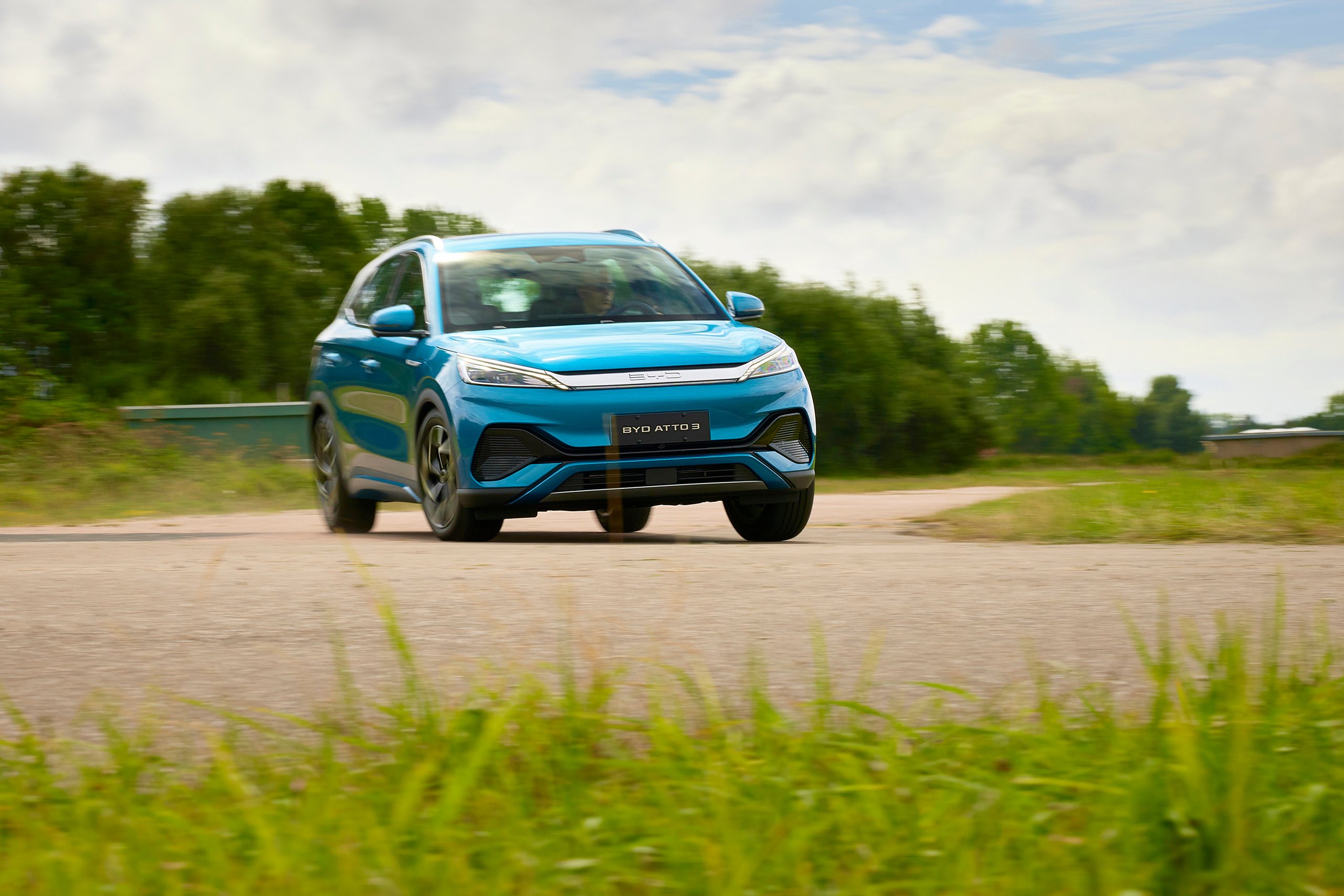
By 2025, BYD Company (BYDDY +0.27%) had already crossed an important milestone. It became a legitimate global EV player, not just a China-first manufacturer with overseas ambitions. Volume leadership was secure, exports were scaling, and the company had multiple growth levers beyond the automotive sector.
That also means expectations have changed.
2026 won't be about whether BYD can grow. It will be about how well it can execute in a more challenging, more mature phase of the EV cycle. For investors, three tests stand out.

Image source: Getty Images.
Can BYD stabilize margins after the price wars?
The defining challenge for BYD in 2026 is profitability.
China's EV market has turned brutally competitive, and price wars in 2024-2025 showed that even the lowest-cost producer isn't immune. BYD continued to gain share, but came under pressure as discounts deepened.
In 2026, investors should expect a shift in focus from volume growth to margin defense. That doesn't mean prices will rise meaningfully -- competition won't allow that. Instead, the test will be whether BYD can protect profitability through:
- Better cost control across batteries and components
- A higher mix of overseas sales
- Gradual upselling of software and features
This is where BYD's vertical integration matters, but it's not automatic. If margins continue to compress even as exports rise, the market may start to question whether a scale advantage alone is enough.
For investors, margin stability -- not unit sales -- will probably be the most crucial financial signal to watch in 2026.

OTC: BYDDY
Key Data Points
Will overseas factories deliver adequate returns, not just capacity?
BYD's global footprint is expanding fast. Factories are opening up in Southeast Asia, Europe, and Latin America to cater to the automaker's international ambitions.
However, 2026 is when these facilities will need to demonstrate economic value.
Building factories overseas helps to solve several problems: tariffs, logistics, and political friction. However, it also introduces new risks, such as higher labor costs, lower initial utilization, and increased execution complexity.
The key question isn't whether BYD can produce cars abroad; rather, it is whether it can do so profitably. It's whether these plants can reach:
- Reasonable utilization rates.
- Competitive cost structures versus China.
- Sustainable local demand.
If overseas factories remain underutilized or require heavy incentives to drive sales, returns on invested capital could disappoint. On the other hand, if BYD can localize efficiently, 2026 could mark the start of a structurally higher-quality revenue mix.
For long-term investors, this is a critical inflection point. Global expansion only strengthens the investment case if it improves shareholder returns, not just capturing new headlines.
Can software and energy move the profit needle?
BYD has spent years building optionality beyond vehicles -- software platforms, advanced driver assistance, and energy storage systems. By 2026, investors will want evidence that these businesses are doing more than just existing.
The question is no longer "Does BYD have these capabilities?" It's "are they starting to matter financially?" That means looking for signs such as:
- Software features that drive higher average selling prices.
- Energy storage that contributes a larger share of profit, not just revenue.
- Early recurring revenue streams from connected services.
These businesses don't need to rival the core auto segment overnight. However, they do need to demonstrate operating leverage -- proof that BYD's ecosystem approach can mitigate margin pressure when vehicle pricing remains tight.
If software and energy remain strategically interesting but financially immaterial, BYD's earnings profile will stay tightly tied to the EV cycle. That's not fatal, but it limits upside.
What does it mean for investors?
In 2026, BYD will no longer be judged as an emerging EV disruptor. It will be judged as a global industrial operator. That's a stricter standard, but also a more durable one if executed well.
For investors, the playbook is clear:
- Watch margins more closely than volumes.
- Track utilization and returns from overseas plants.
- Look for early signs of profit contribution from software and energy.
If BYD passes these tests, it could evolve into a long-term compounder rather than a cyclical EV winner. If it doesn't, the stock may continue to trade like a volume-driven manufacturer in a crowded market.
In short, 2026 is about proof, not promise. BYD has already built the scale. Now it needs to show it can convert that scale into durable, high-quality earnings.