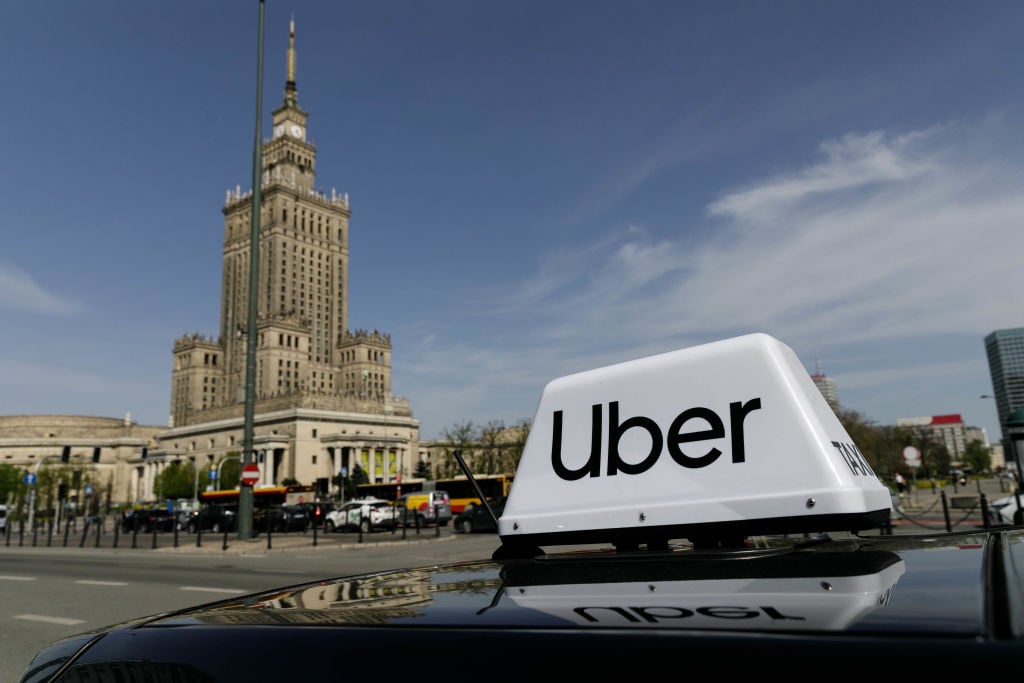
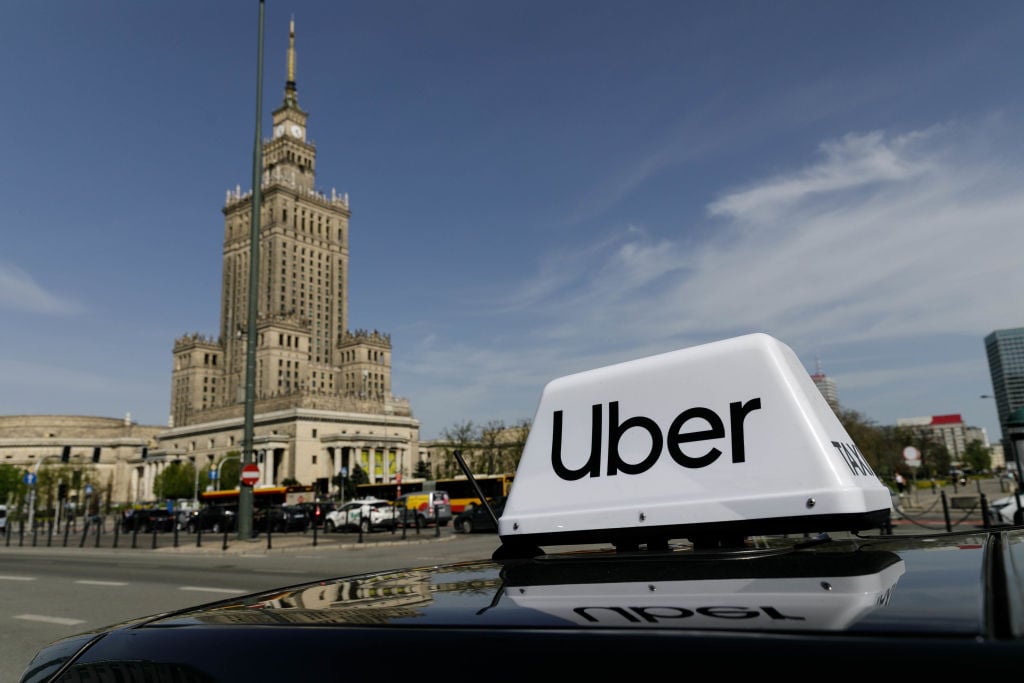
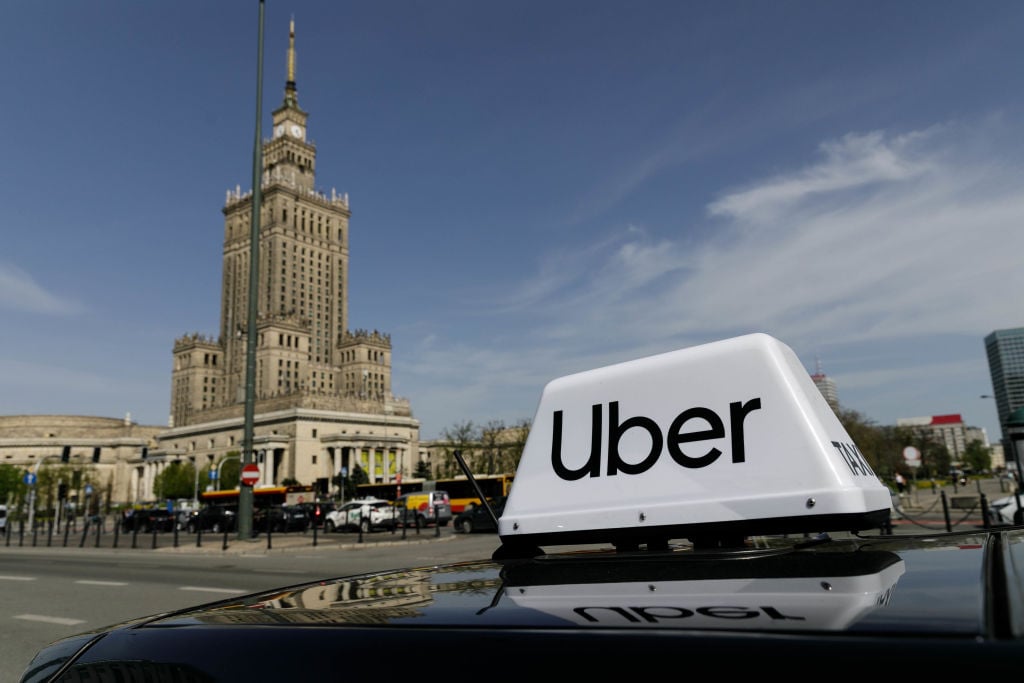
Uber (UBER +0.62%) is one of the most innovative businesses of this century. It created an entirely new category of on-demand ride-hailing and anytime delivery services. And it has quickly ascended to become a sizable company that carries a market cap of $177 billion, after shares soared 35% in 2025.
Coca-Cola (KO 0.06%) isn't nearly as exciting. But its long history is noteworthy, as the company has been around for well over a century. This is one of the most recognizable brands on the face of the planet. Its shares produced a total return, including dividends, of 16% in 2025.
Each stock has its investment merits. Which of these consumer-facing businesses is the best one to buy right now?

Image source: Getty Images.
Network effects and tremendous growth potential

NYSE: UBER
Key Data Points
Uber's ride-hailing services might be in 15,000 cities. But the growth is not even close to being finished. Bookings in this segment were up 20% in Q3 (ended Sept. 30) to $25.1 billion. The delivery division shouldn't be overlooked, either. Its bookings surged 25% year over year during the quarter. This supported a 20% gain in overall company revenue.
The leadership team sees an opportunity for increased adoption. In the U.S., Uber's most critical market, only 15% of the adult population uses Uber's services. There is also upside to cross-selling between mobility and delivery, which could boost spending as these people spend three times more than single product users.
Uber has been successful in launching adjacent revenue streams to supplement the core platforms. Its advertising operations collected run-rate sales of $1.5 billion in Q1 2025. It makes sense that businesses would want to leverage the valuable data Uber has access to.
As a multi-sided ecosystem, Uber has built up powerful network effects. With more riders and drivers, the ride-hailing segment becomes stronger. And with more consumers, couriers, and restaurants/merchants, mobility experiences the same positive feedback loop. Network effects have essentially solidified Uber's competitive position.
Impressive profitability supported by pricing power

NYSE: KO
Key Data Points
Coca-Cola doesn't post huge growth numbers. That's because it's an extremely mature enterprise that already has a ubiquitous presence around the world. It owns more than 200 different beverage brands. And 2.2 billion servings of its drinks are consumed every single day. It's hard to expand meaningfully from this impressive base.
However, the company's top-notch brand is its most valuable asset. Customers have built an affinity for the brand, driven by a superior marketing strategy. This helps the company's competitive position, as disruption or obsolescence are not concerns at all. Coca-Cola is able to consistently raise prices that consumers pay, which can support revenue gains even if unit volumes stagnate.
Coca-Cola leans on third-party partners to handle bottling and distribution duties. The result is sizable profits, as demonstrated by a superb operating margin of 33% through the first nine months of 2025.
This leads to the production of copious amounts of free cash flow. Coca-Cola historically returns excess cash to shareholders in the form of dividends. 2026 is set to be the company's 64th straight year that the dividend payout will be increased, a phenomenal streak that makes this a Dividend King.
Do you favor capital appreciation or income?
Both Uber and Coca-Cola are high-quality companies. But the one that investors decide to buy will depend on their preferences. If you care about generating a steady and growing stream of income, then Coca-Cola is the top choice. It helps that shares trade at a reasonable forward price-to-earnings (P/E) ratio of 21.7.
I tend to focus more on capital appreciation since I have a long time horizon that spans decades. That's why I believe Uber is the better stock to buy of these two. It's surprising to learn that Uber's forward P/E multiple of 20.3 is cheaper. Coca-Cola is the safer company to own, but Uber's potential to rapidly grow its earnings in the coming years represents significantly more upside.