As Wall Street's next earnings season approaches, investors will, of course, have their eyes on Nvidia (NVDA +5.93%), which will report on Feb. 25. Not only does it have the world's largest market cap, but it is also leading the way in the advancement of artificial intelligence (AI) technology.
Nvidia stock is now up by nearly 1,500% from the cyclical low it hit in the fall of 2022. After that remarkable rise, should investors continue to buy, or would they be better off putting their money to work in other stocks?

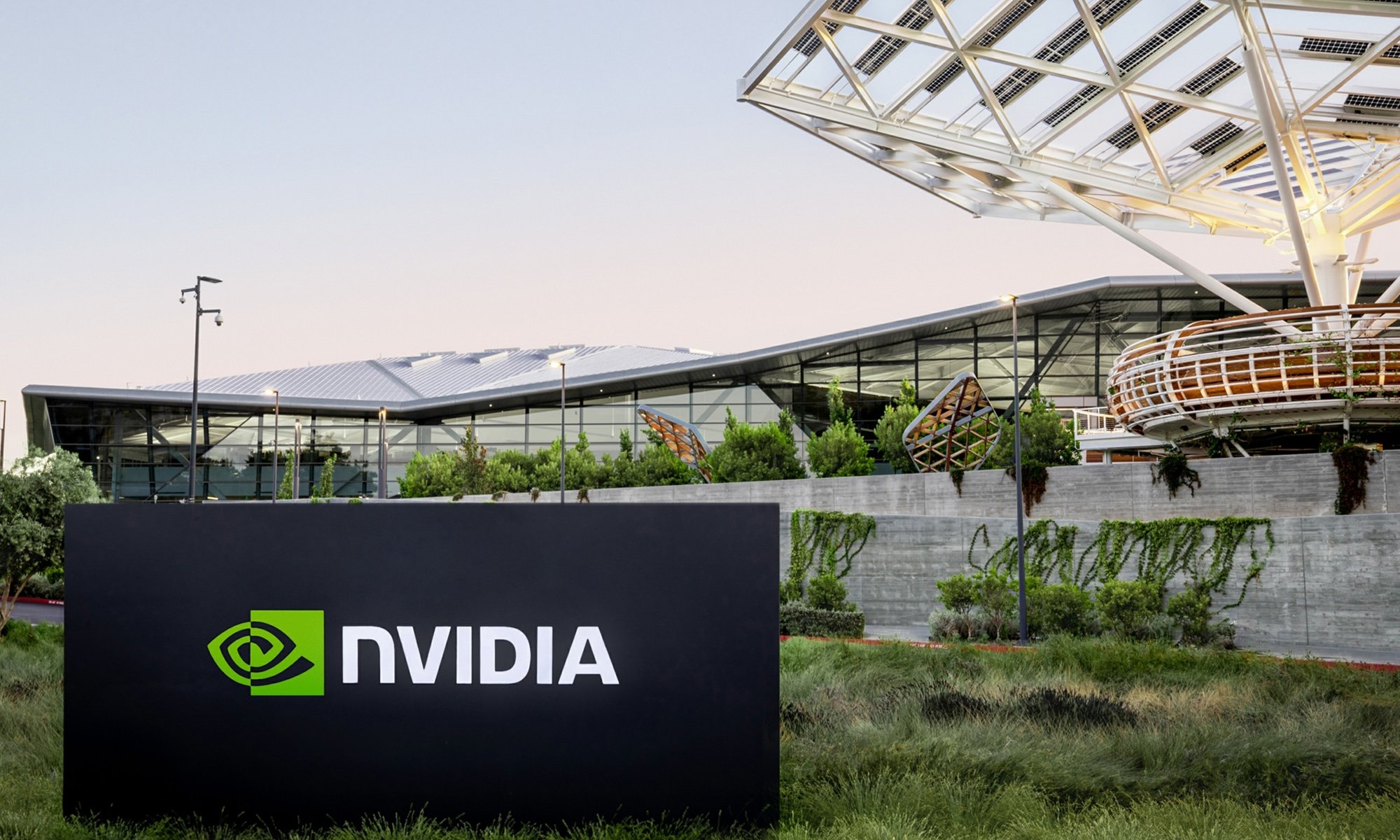
Image source: Nvidia.
Where Nvidia is headed
As of its current fiscal year, Nvidia derives about 90% of its revenue from the data center segment, the part of the business that designs and sells its dominant AI accelerators.
That point is significant since it began 2026 with CES, the annual consumer products show that draws tech's largest players to Las Vegas. As a consumer-focused show, CES would seemingly be a less-than-ideal platform for a company that earns most of its revenue from products related to data centers.
However, that did not stop CEO Jensen Huang from making the most of that stage. While much of what Nvidia announced at CES was not new, it elaborated more on its "physical AI" plans. Huang offered more details on the company's upcoming Rubin architecture and introduced Alpamayo, an open-source AI model designed to train self-driving cars.
Moreover, Nvidia announced a partnership with Caterpillar. Here, both companies will add AI capabilities to construction equipment. These will include in-cab features such as AI-powered recommendations to help equipment operators navigate complex conditions on job sites.
All this comes as competitors like AMD continue to work to narrow Nvidia's commanding lead in the AI accelerator market. Still, despite its industry dominance and its continuing innovation, its stock has pulled back in the first two weeks of the year, which may have left investors scratching their heads.

NASDAQ: NVDA
Key Data Points
Nvidia's financials
That pullback seems to have little obvious long-term significance, as Nvidia is still growing at a torrid pace. In the first nine months of fiscal 2026 (a period that ended Oct. 26), its revenue rose 62% year over year to $148 billion.
When it releases its Q4 numbers in late February, analysts expect that its top-line growth for the fiscal year will come out to 63%, and they're forecasting a 50% revenue increase in fiscal 2027.
Investors should note that its cost of revenue surged by 106%, an indication that keeping up with the rapidly rising demand has come at a cost. Consequently, its $77 billion in net income for the first three quarters of fiscal 2026 was only up 52% from year-ago levels.
Despite the impressive growth, its $4.4 trillion market cap may be becoming a headwind to further share price gains. At current levels, the stock doubling in value would take the market cap to $8.8 trillion, a huge feat given that no company's market cap has yet reached $6 trillion, and the value of the entire U.S. stock market is in the neighborhood of $69 trillion. That factor could make Nvidia stock less attractive than some of its peers, many of which have market caps under $1 trillion.
Its price-to-earnings (P/E) ratio of 45 may reflect some of that hesitation. Although that is above the S&P 500's average earnings multiple of 31, it seems low for a company with revenue growth exceeding 60%. None of this means that Nvidia's share price will stop growing, but given that a repeat of its performance of the last few years over the next few would give it a value almost equal to the whole market today, investors should expect far less impressive results.
Is Nvidia stock a buy now?
Despite the company's size-related challenges, Nvidia stock is a buy now.
None of the challenges it faces changes the fact that it's the leading company in the critical AI accelerator market. Moreover, maintaining revenue growth above 60% is even more impressive considering that its size means it has to generate exponentially more growth on an absolute dollar basis than its peers to maintain that percentage.
Furthermore, this situation makes Nvidia stock the best of both worlds. Its size offers the type of stability desired by risk-averse investors while it still manages to deliver growth rates surpassing those of many smaller growth stocks. Thus, investors can expect market-beating returns from Nvidia.