Very few professional money managers outperform the S&P 500 (^GSPC 0.06%) over long time periods, but the ones who do are great sources of inspiration. Investors can track their trades by browsing Forms 13F filed quarterly with the SEC.
In the third quarter, these hedge fund billionaires (all of whom beat the S&P 500 over the last three years) purchased shares of Nvidia (NVDA 0.44%) and Western Digital (WDC 0.27%).
- Cliff Asness at AQR Capital Management beat the S&P 500 by 10 percentage points over the last three years. Nvidia is his largest holding, and he owns a small position in Western Digital. The stocks collectively account for 3% of his portfolio.
- Israel Englander of Millennium Management beat the S&P 500 by 28 percentage points over the last three years. Nvidia is his largest holding, and he owns a small position in Western Digital. The stocks collectively account for 2% of his portfolio.
- Steven Cohen at Point72 Asset Management beat the S&P 500 by 31 percentage points in the last three years. Nvidia is his largest holding, and he owns a small position in Western Digital. The stocks collectively account for 3% of his portfolio.
Those trades are interesting because both stocks have already been big winners since artificial intelligence (AI) became one of Wall Street's top investment themes in January 2023. During that period, Nvidia and Western Digital have returned 1,180 and 830%, respectively. Yet, these fund managers still have confidence in both stocks, especially Nvidia.

Image source: Getty Images.
Nvidia: Up 1,180% since January 2023
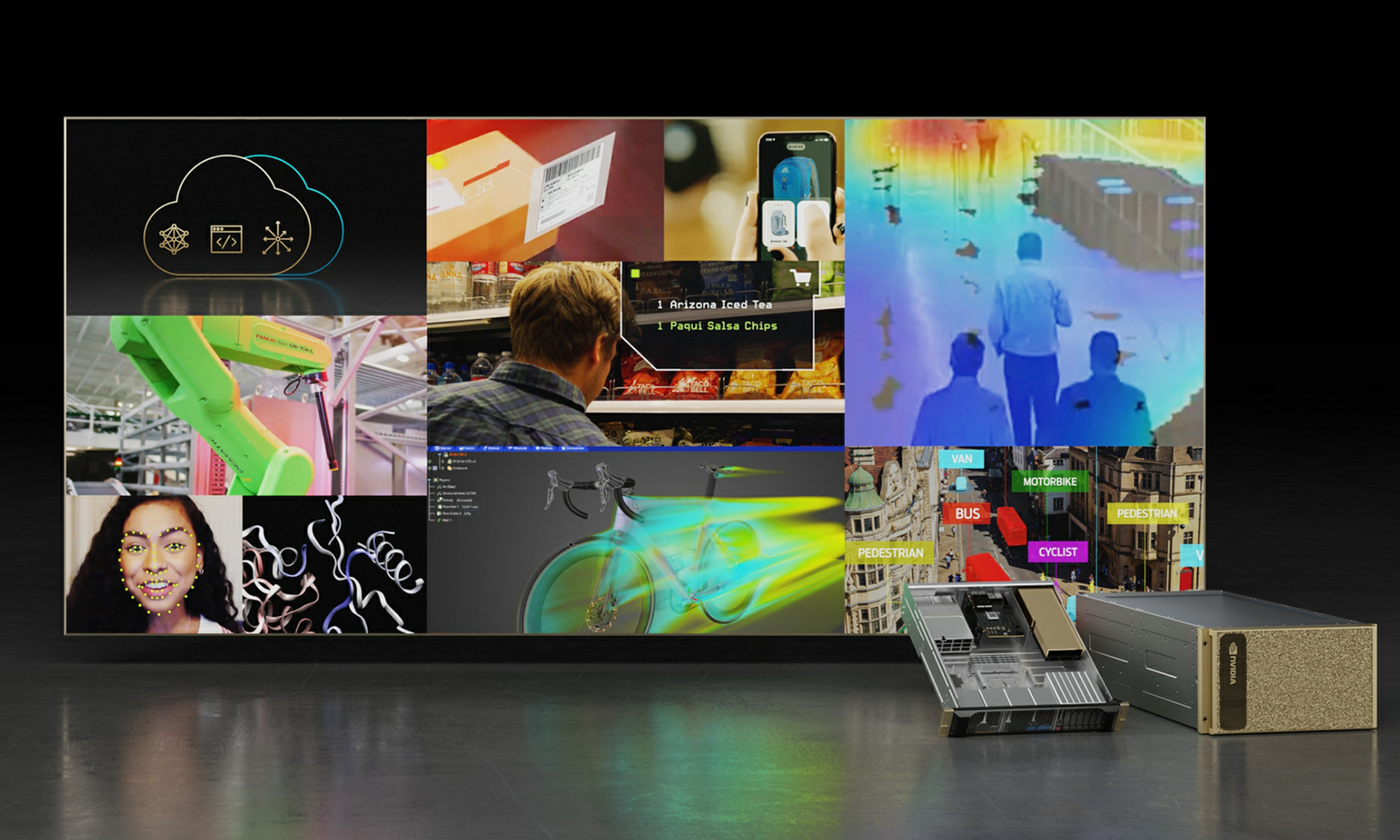
Nvidia is well known for its best-in-class graphics processing units (GPUs), chips also called data center accelerators because they speed up demanding workloads such as artificial intelligence. However, the company is truly formidable because its full-stack strategy spans adjacent data center hardware and software development tools.
To elaborate, Nvidia develops full rack-scale systems that combine GPUs with CPUs and networking gear, which lets the company optimize infrastructure performance across the entire data center. It also saves customers the trouble of integrating hardware from multiple suppliers. Meanwhile, Nvidia also provides an extensive suite of software tools called CUDA, which simplifies the development of GPU applications.
Consequently, while custom AI accelerators designed by competitors like Broadcom may be cheaper, Nvidia systems often have the lowest total cost of operation (TCO) when every expense is included. "Our TCO is so good that even when the competitors chips are free, it's not cheap enough," according to Nvidia CEO Jensen Huang. To that end, Nvidia is likely to maintain its dominance in AI infrastructure for years to come.
Wall Street estimates Nvidia's adjusted earnings will increase at 67% annually through the fiscal year ending in January 2027. That makes the current valuation of 46 times earnings look rather cheap. Wall Street shares that opinion. Nvidia's median target price of $250 per share implies 33% upside from the current share price of $187.

NASDAQ: WDC
Key Data Points
Western Digital: Up 830% since January 2023
Western Digital designs and manufactures data storage devices across three end markets: data centers, personal computers, and other consumer devices. The company focuses on hard disk drives (HDDs), which are slower and less power efficient than solid state drives (SSDs), but also about six times cheaper per terabyte of stored data.
SSDs and HDDs play important roles in supporting AI workloads. SSDs are better when performance is most critical, such as storing data for AI training and inference. However, HDDs are better when cost efficiency is most critical, such as storing large backups and raw data not in active use.
Western Digital led the market in HDD shipments during the first half of 2025, though it only beat Seagate by a percentage point. They consistently rank first and second, while Toshiba always ranks a distant third. Data center HDD sales are projected to grow at 22% annually through 2030, driven by demand for AI infrastructure.
Western Digital reported solid financial results in the first quarter of fiscal 2026 (ended in October). Revenue increased 27% to $2.8 billion as demand for HDD storage continued to exceed the available supply, affording the company pricing power. Meanwhile, non-GAAP (generally accepted accounting principles) earnings increased 137% to $1.78 per diluted share.
Western Digital stock has increased 350% in the past year because investors are hoping to capitalize on the unprecedented HDD supply shortage created by growing demand for AI infrastructure. Wall Street estimates adjusted earnings will grow at 26% annually through the fiscal year ending in July 2027. That makes the current valuation of 34 times earnings look reasonable.
However, the HDD market is notoriously cyclical, and the current supply shortage will probably be followed by a period of oversupply, at which point the market will likely afford Western Digital a lower valuation multiple due to expectations that future earnings will grow more slowly as the market absorbs excess product. That possibility seems to have Wall Street worried. Western Digital's median target of $200 per share implies 10% downside from its current share price of $200.