The launch of Intel's (INTC +7.05%) Panther Lake CPUs, the first chips to use the company's advanced Intel 18A process node, marks a key moment in Intel's battle to compete with TSMC. Not only has Intel erased much of the manufacturing lead TSMC has enjoyed for years, but it has also beaten TSMC to market with its implementation of backside power delivery.
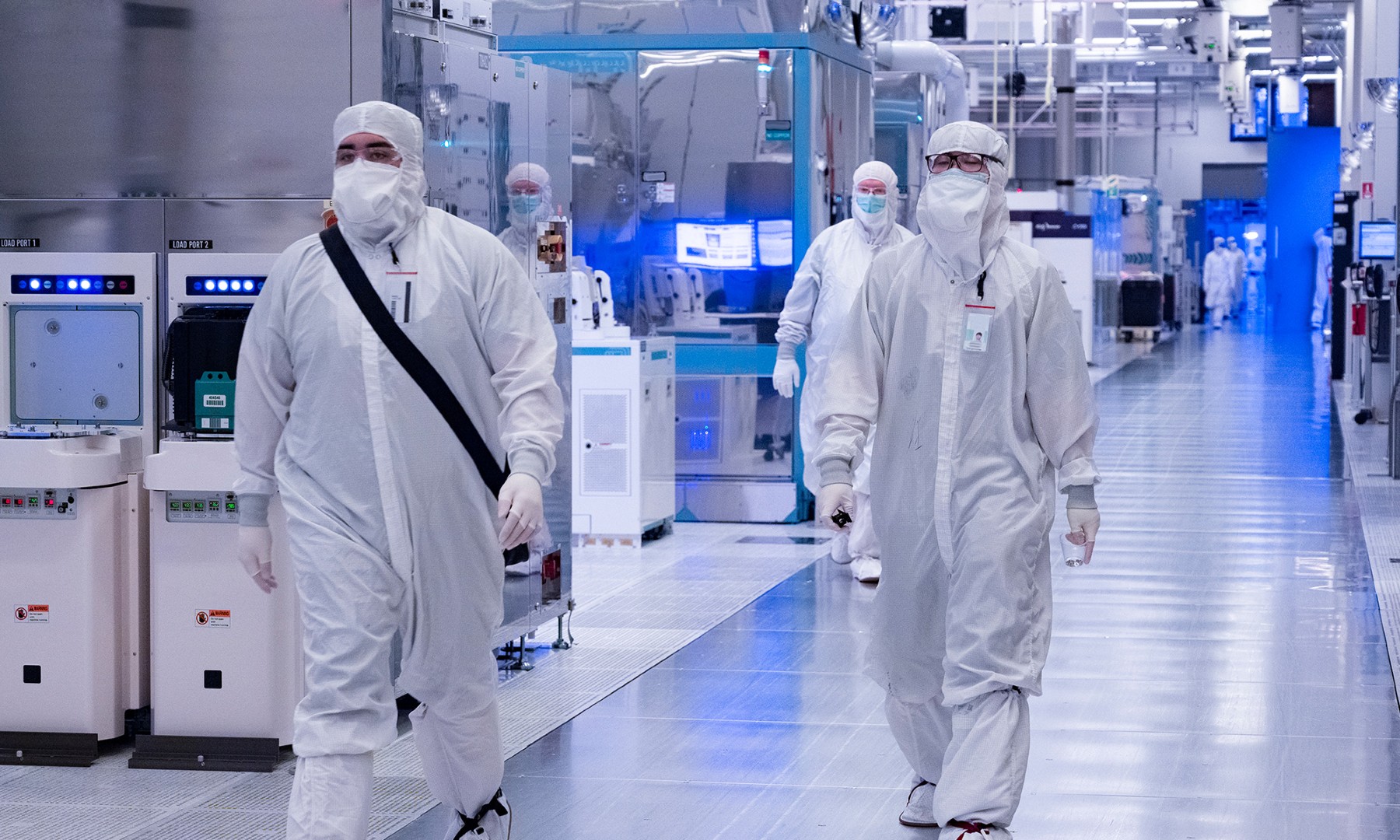
Image source: Intel.
A year ahead of TSMC
All modern chips put interconnects, which are tiny wires connecting various parts of the chip, and power connections in the same layers. In the past, this didn't matter. However, as chips become denser and more complex, these connections become chaotic and can interfere with one another, hindering performance and efficiency.
The solution is backside power delivery, which moves power wires to the back side of the chip, leaving the interconnects on the front side. Manufacturing a chip in this way is more complicated, which explains why it hasn't been done until now.
Intel's implementation of backside power delivery is called PowerVia, and it debuted with the Intel 18A process. With Panther Lake laptops shipping later this month, the technology is about to show up in millions of devices. The benefit is meaningful, particularly for use cases where power efficiency matters. In Intel's early testing, PowerVia enabled a 6% boost in chip frequency. That means the chip can run faster using the same amount of power, or use less power while delivering the same performance, relative to a chip that doesn't use backside power delivery.
TSMC is also planning its own backside power delivery implementation, but the foundry leader is well behind Intel. TSMC's A16 process node, expected to enter production by the end of 2026, includes Super Power Rail, TSMC's take on the technology. Assuming A16 enters volume production as planned, Intel has a head start of between 6-12 months.
Innovation is back at Intel
Intel's monopoly on backside power delivery won't last beyond 2026, but at the very least, the company's success in launching the Intel 18A process using the technology is a sign that the company's innovation engine is back on track.

NASDAQ: INTC
Key Data Points
Next up for Intel is the Intel 14A process, which is scheduled for 2027. If everything goes according to plan, Intel will beat TSMC to market again, this time with High-NA EUV lithography. TSMC may not start using High-NA EUV tools until 2028, putting Intel at least a year ahead.
As Intel races to find external customers for its foundry, the company's trailblazing with backside power delivery and High-NA EUV could help turn the struggling foundry business into a long-term success.