Pharmaceutical giant Eli Lilly (LLY +1.89%) and biotech Viking Therapeutics (VKTX -0.63%) have one major thing in common: They both work in the high-growth area of weight loss drugs. Lilly's tirzepatide, sold as Mounjaro for type 2 diabetes and as Zepbound for weight loss, is bringing in blockbuster revenue and driving the company's growth. Viking's candidates, which are in the same class of drugs as Lilly's, are progressing in late-stage clinical studies.
The weight loss drug market is forecast to reach nearly $100 billion by the end of the decade, and demand has been consistently high for today's commercialized products -- so there's reason to be optimistic about the growth potential of these types of drugs. Considering this, which stock is more likely to be a millionaire-maker -- Eli Lilly or Viking Therapeutics?

Image source: Getty Images.
The case for Eli Lilly
As mentioned, Lilly's weight loss drugs, known as dual GIP/GLP-1 receptor agonists, already are delivering blockbuster revenue. In the most recent quarter, Mounjaro and Zepbound together brought in more than $10 billion in sales. (Though Zepbound is commercialized for weight loss, doctors have also prescribed Mounjaro for this indication.)
The company shares market leadership with Novo Nordisk, the maker of similar drugs, Wegovy and Ozempic, and demand has been so high that it surpassed the supply of all of these products a few years ago. Since, the companies have ramped up production to better serve demand.

NYSE: LLY
Key Data Points
Lilly's drugs are injectables, but the company may soon enter the market with an oral weight loss drug. Regulators are reviewing the candidate, orforglipron, right now, and a potential approval could act as a positive catalyst for stock performance.
The case for Viking Therapeutics
Viking is working on injectable and oral candidates, and they are involved in phase 3 and phase 2 trials, respectively. These drugs, like those of Lilly, act on hormones involved in digestion, and as a result, help regulate blood sugar levels and appetite. The company's trials so far have met their goals and produced solid results, so there's reason to be optimistic about Viking's future in this field.

NASDAQ: VKTX
Key Data Points
Though Lilly and Novo Nordisk are today's leaders in the space, considering the levels of demand for such drugs, there's room for a new player to carve out market share. Viking and its investors may win big if the company makes it to the finish line with one or both of its candidates -- and they also might score a win if Viking strikes a partnership or is acquired by a larger player. This is a possibility since many pharma and biotech companies aim to get in on this lucrative market.
A million-dollar stock?
So now let's get back to our question: Which one of these players is most likely to be a millionaire-maker? Lilly stock trades for 33x forward earnings estimates, down from a high of more than 42x just a few months ago. Though this valuation may seem high for a pharma stock, it actually is reasonable given Lilly's growth and prospects down the road, thanks to its leadership in the weight loss space. This suggests Lilly stock has plenty of room to run.
Still, Lilly's successes have pushed the stock price to more than $1,000, and the company's market capitalization is approaching $1 trillion. It's generally more difficult for a stock to double or triple once it's reached such levels.
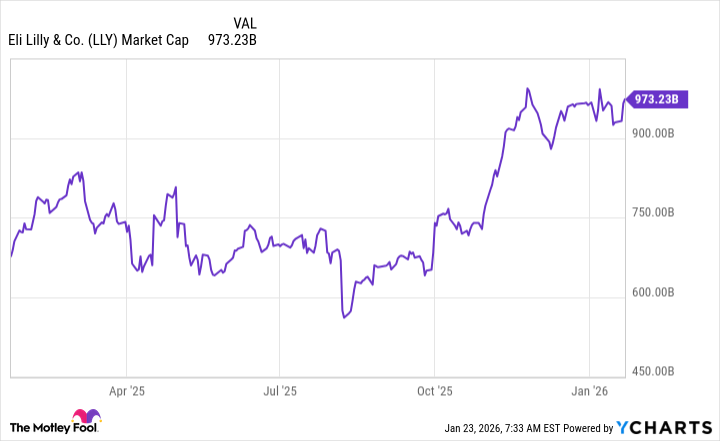
LLY Market Cap data by YCharts
Viking doesn't yet have products on the market, so we can't use the same valuation metrics. Instead, investors should focus on the strength of its candidates and the company's ability to shepherd them to the finish line. And here, things look positive as clinical data have been solid, and the company ended the most recent quarter with more than $700 million in cash -- this should support clinical development.
At the same time, Viking's market value at just under $4 billion offers it room to climb significantly -- if the company wins regulatory approval and starts generating product revenue.
Of course, Viking comes with more risk than Lilly since it's still in the clinical development stage, but if the biotech reaches its goals, it's more likely to be a millionaire-maker.