Intel's (INTC +2.61%) foundry strategy until recently could be summed up as "if you build it, they will come." The company poured capital into manufacturing facilities and raced to bring new manufacturing processes into production. The Intel 18A process, the culmination of the company's original foundry roadmap, is now churning out Panther Lake CPUs for Intel's PC products group.
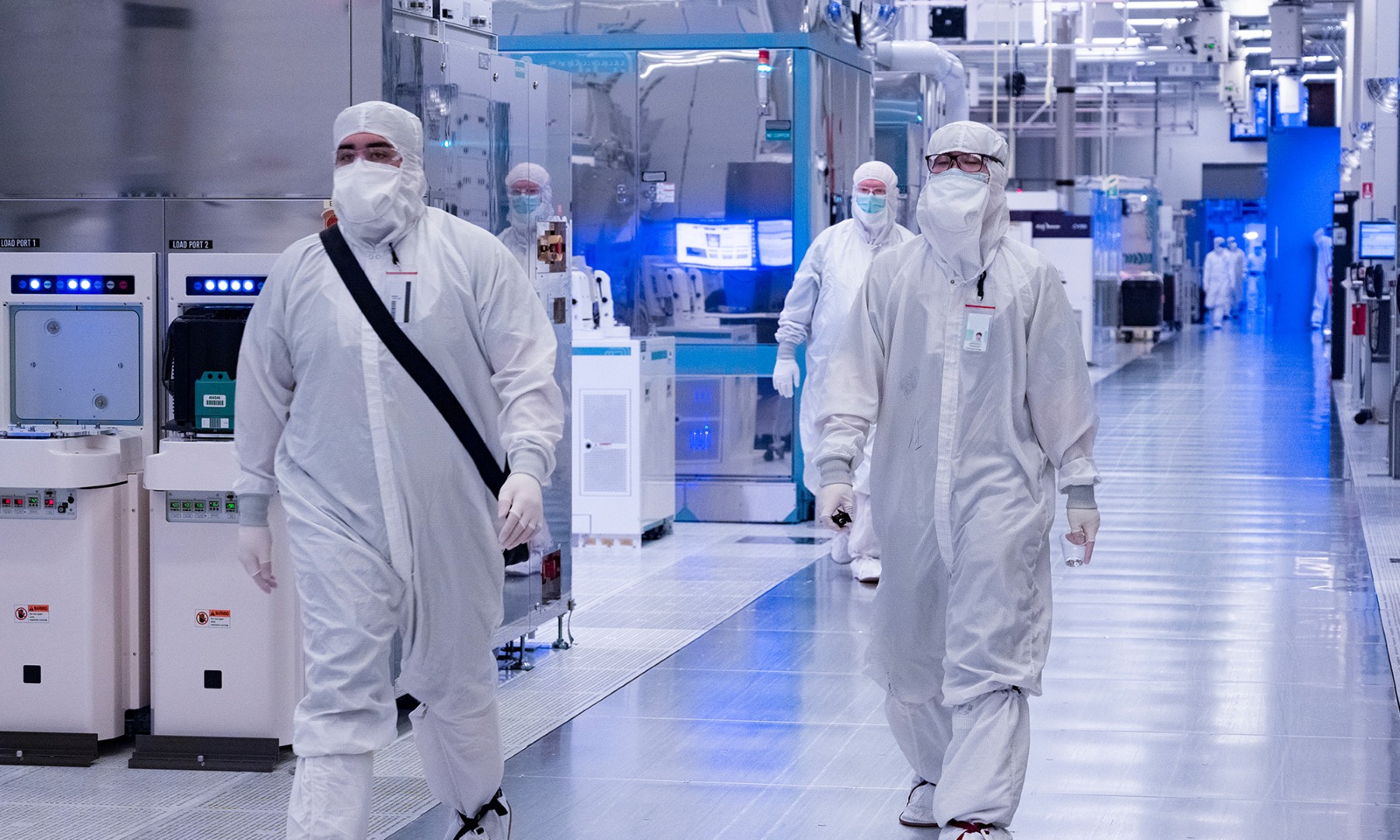
Image source: Intel.
What Intel 18A is not doing right now is producing meaningful volumes of chips for external customers. Intel has signed a handful of deals over the past couple of years, including a pact with Microsoft in 2024 to manufacture an unnamed custom chip on the Intel 18A process, and an agreement to make AI fabric chips on the same process for Amazon. The scope and timing of those deals are unknown. What is known is that essentially all of Intel's foundry revenue remains internal.
A rumor that Apple is likely to use a variant of Intel 18A for some of its M-series chips seems like a good bet, but revenue from such a deal would likely be at least a year away. Intel CEO Lip-Bu Tan made clear earlier this year that the era of "blank checks" was over. For Intel 14A, Intel's next-generation manufacturing process, customers would need to come first.
This new strategy sets the stage for a high-stakes year. Intel must win large foundry customers for the Intel 14A process to sustain the foundry business in the long run.
Holding back on Intel 14A
Intel is facing a supply shortage. The company is working to improve yields across existing manufacturing processes and ramp up tool purchases to boost production. The Intel 7 process, a few generations old, still accounts for a significant share of overall capacity, and the new Intel 18A process is currently ramping up.
Despite the shortage, Intel is being disciplined with Intel 14A. "What we're holding back on is 14A because 14A is really linked to foundry customers," said CFO Dave Zinsner during the fourth quarter earnings call. "...it does not make sense to build out significant capacity there until we know that we have the customers that will accept that demand."
Given Intel's ongoing struggles to secure customers for Intel 18A, this discipline makes sense. It also means that if Intel doesn't win customers for Intel 14A, the future of the company's manufacturing operations is up in the air.
The good news is that Intel appears confident that customer wins are on the way this year. The company plans to release version 0.5 of the process design kit for Intel 14A in the first quarter, a key step in engaging with potential customers. The current plan is to begin risk production by the end of 2027, with volume production starting in 2028. That schedule, though, depends on customer demand.
Intel CEO Lip-Bu Tan expects firm commitments to start rolling in later this year. "Engagements with potential external customers on Intel 14A are active. We believe customers will begin to make firm supplier decisions starting in the second half of this year and extending into the first half of 2027," said Tan during the earnings call.

NASDAQ: INTC
Key Data Points
Intel has 2026 to make it work
The fate of Intel's foundry business will likely be decided over the next year. A single large customer, either a hyperscaler designing custom chips or a fabless company like Apple with significant volume needs, would go a long way toward validating Intel's foundry business.
The industry backdrop couldn't be more favorable for Intel. Foundry leader TSMC is struggling to keep up with demand amid the AI boom, creating ample opportunities for Intel to win business from customers unable to secure enough capacity. The Intel 18A process has a starring role this month as Intel's Panther Lake laptop CPUs debut. A successful launch would provide strong evidence for potential customers that Intel's foundry business is worth considering.
For Intel, proving that it can win customers before ramping up production of a process node is critical. If the company can rack up some major customer wins in the back half of the year, not only will it set the stage for foundry revenue to soar in 2027 and beyond, but it will also light a fire under the stock.