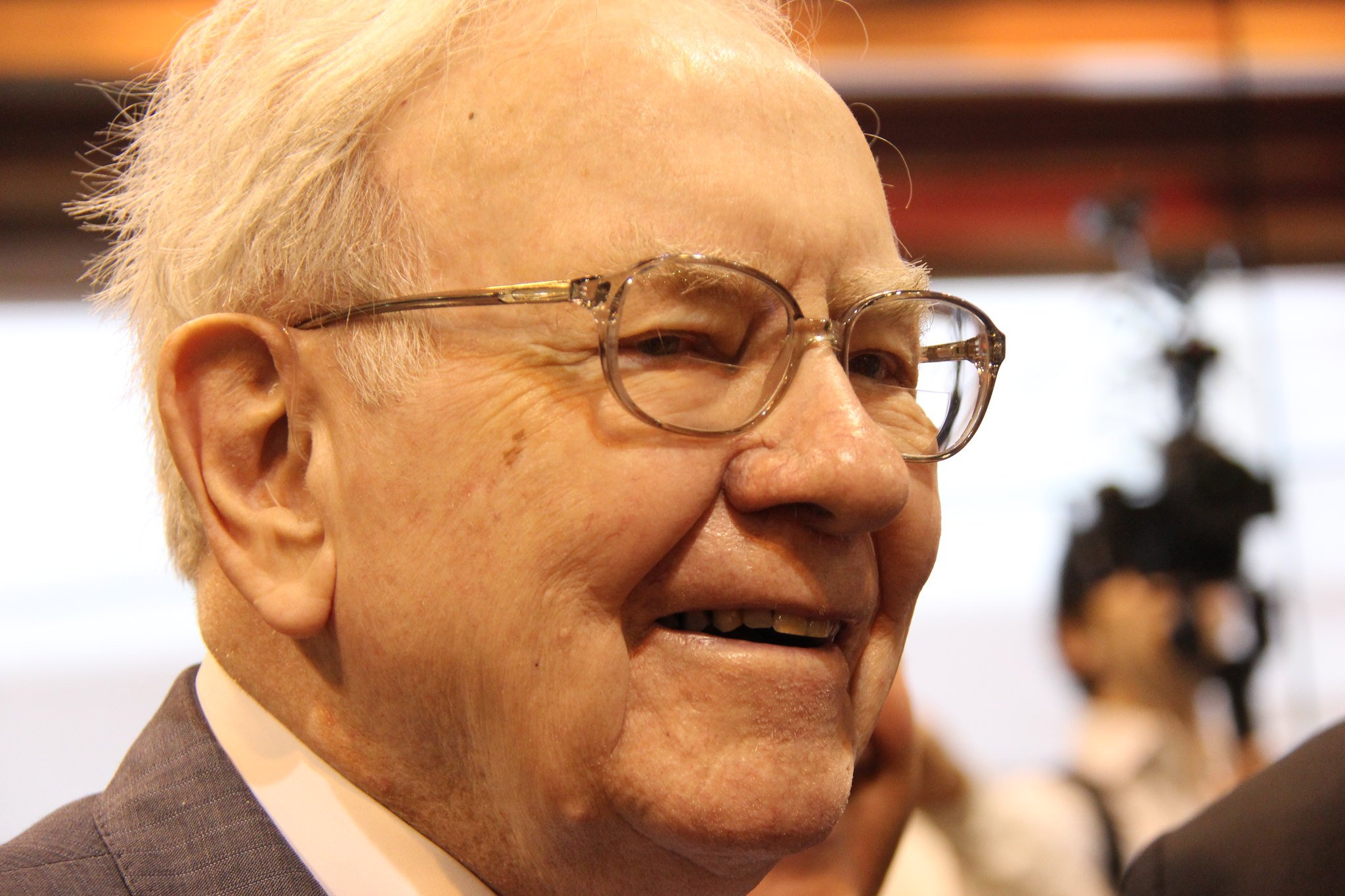
Since Warren Buffett stepped down as chief executive officer on Jan. 1, shares of Berkshire Hathaway (BRK.B +0.70%) are down about 4%, compared to the S&P 500's 2% rise. While not a dramatic gap, the longer underperformance is striking.
Since Buffett announced last May that he was stepping down, the shares of his conglomerate have fallen 10%, while the S&P 500 has rallied 22%. This 32-percentage-point gap in performance isn't what most people expect from Berkshire Hathaway.

NYSE: BRK.B
Key Data Points
The lag comes amid mainstream media speculation on the loss of the so-called Buffett premium, or the extra price that investors were willing to pay for shares of a company run by someone of Buffett's expertise and stature. Clearly, investors believe that Berkshire Hathaway has lost someone irreplaceable. While that may be true, there are three big reasons the conglomerate can keep delivering life-changing results for investors.
1. The "secret sauce" remains intact
In his 2022 letter to shareholders, Buffett described the "secret sauce" behind Berkshire Hathaway's gains of more trhan 3.7 million percent.
He singled out American Express and Coca-Cola as companies that Berkshire had invested in decades ago that had raised their dividends every year since. Despite paying only $1.3 billion for each investment, both companies pay Berkshire hundreds of millions of dollars a year in dividends. And since 2022, those dividends have grown by 91% and 23%, respectively.
Given their fundamentals, they seem likely to continue increasing their dividends no matter who's running Berkshire. And they're far from the only dividend juggernauts in its portfolio.
Consider Visa and Mastercard. Berkshire invested in these credit card companies in 2011, buying 2.3 million shares of Visa in the third quarter after buying 216,000 shares of Mastercard earlier that year. Since 2011, they have ramped up their dividends by 1,686% and 5,700%, respectively.
Image source: Getty Images.
Apple may be the most important example. Although Berkshire has unloaded the majority of its shares in recent years, the company still held 238.2 million shares as of its most recent filings. Since Buffett first established a position, it has doubled its dividend. And on the shares it bought back then, Berkshire likely enjoys a yield on cost of about 4.5%.And considering Apple's earnings increased by 86% year over year last quarter, these payouts are likely to keep growing.
2. The "engine that has propelled our expansion"
In Buffett's 2015 letter to shareholders, he credited the conglomerate's property and casualty insurance business as being "the engine that has propelled our expansion since 1967."
Berkshire's insurance business is magical because it enables the company to invest the premiums it collects that may or may not be paid out in claims. This investable cash pile, called the float, has swelled from $88 billion in 2015 to $171 billion as of Buffett's last annual letter.
Here's why this is a big deal. Everyone thinks hedge fund managers have it good with the "Two and Twenty" structure that pays them 2% of investors' capital and 20% of profits, regardless of how they perform. Berkshire gets to invest people's capital for free and keep 100% of the returns.
There's nothing stopping the conglomerate from parking these hundreds of billions of dollars in U.S. Treasuries and securing nearly risk-free returns of 3% to 5%. And that's just what it has done -- most of Berkshire's $314 billion cash was in Treasuries last quarter, meaning it owned more Treasury bills than even the Federal Reserve.
These bonds will be a major source of income and stability for Berkshire in the years ahead. And if its float can continue growing, it's hard to see the conglomerate underperforming for much longer.
3. Berkshire is cheap today
Buffett began his career as a strict value investor, before pivoting into someone who will pay a fair price for a fantastic business. But today, investors can pay a fantastic price for his fantastic business.
Berkshire Class B shares trade at just 15.1 times trailing earnings; the average S&P 500 company trades at about 30 times earnings. This is a 50% discount relative to the broader market, tilting the odds in favor of anyone buying them today.
That's especially true considering the company's recent earnings growth of 17.3%. As its major holdings continue to increase their dividends prodigiously, and as its float continues to buoy the company with its negative cost of capital, Berkshire could very well thrive on autopilot, with its new management understanding that in almost every instance, the only thing it has to do is nothing.
There's an old Buffett quote: "Invest in a business any fool can run, because sooner or later, one will." Luckily for shareholders, his successor, Greg Abel, isn't a fool. But in any case, Berkshire Hathaway's business looks foolproof.