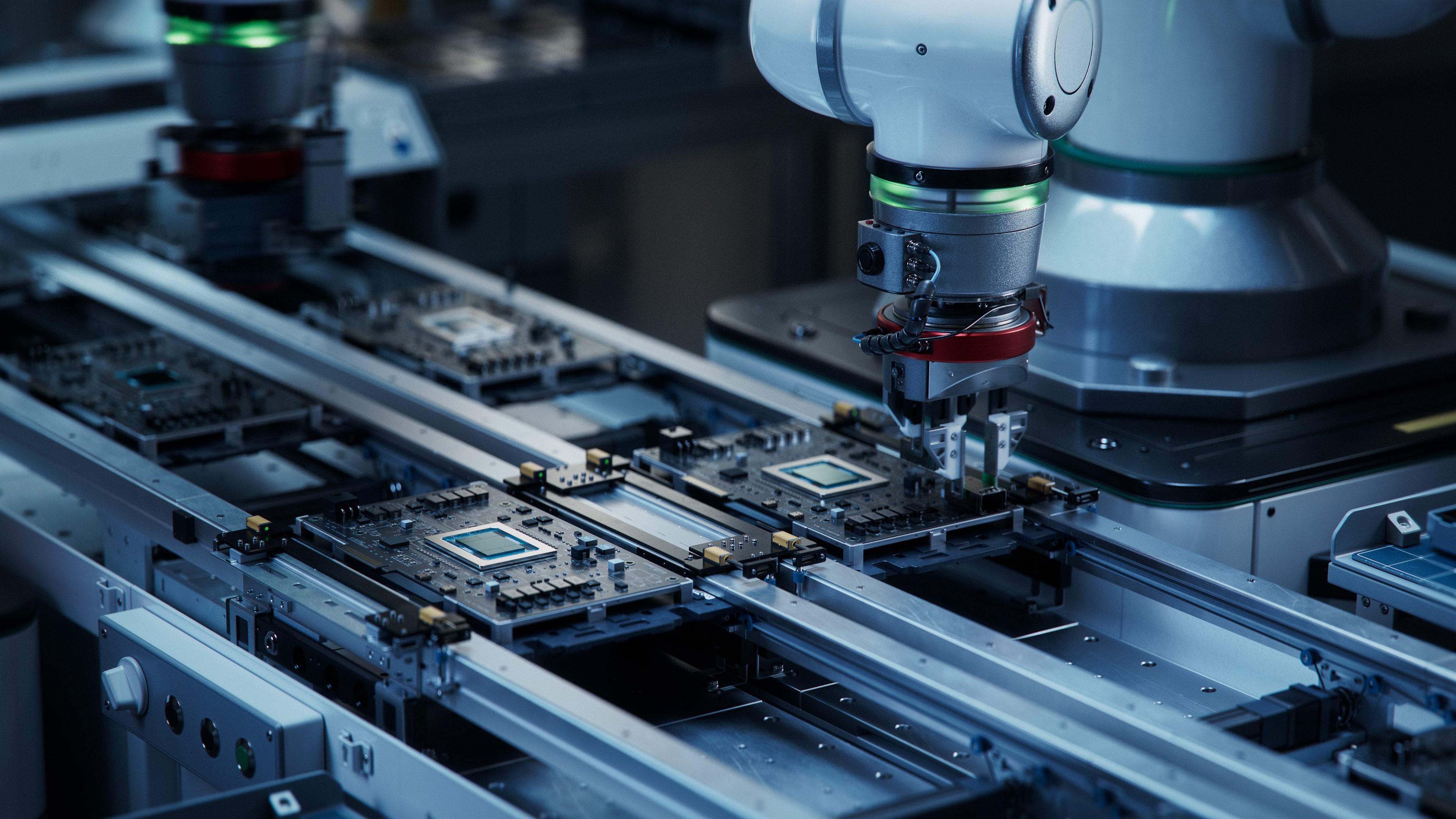
Just because a stock has been on a strong run, it doesn't mean you can't add more shares. Let's look at two growth stocks that you might want to consider doubling up on today.
Broadcom
Broadcom (AVGO 3.21%) shares have been on a strong run, with its stock essentially doubling in value in both 2023 and 2024, and then rising by nearly 50% last year. The stock recently pulled back some from its highs, and it has a huge growth opportunity in front of it. This makes it a top option to double up on in 2026.
Image source: Getty Images.
Broadcom is one of the biggest beneficiaries of the current shift among artificial intelligence (AI) companies to start moving more toward custom AI chips. While graphics processing units (GPUs) dominate the landscape today, more and more companies are looking toward designing their own custom chips to help reduce costs. Meanwhile, these companies are increasingly turning toward Broadcom, which is a leader in ASIC (application-specific integrated circuit) technology, to help take their designs and help make them a reality.

NASDAQ: AVGO
Key Data Points
Broadcom helped Alphabet with its highly successful tensor processing units (TPUs), which have become a growth driver for Broadcom as Alphabet begins to let its own cloud computing customers deploy these chips. Meanwhile, other companies, including OpenAI, have also turned to Broadcom for help making their own custom chips. With Broadcom's AI revenue set to explode in the coming years, this is a stock to double up on.
Micron Technology
Another tech stock to consider doubling up on right now is Micron Technology (MU 4.17%). One of the biggest bottlenecks in AI infrastructure at the moment is memory, and Micron is a leader in the space. About 80% of its revenue comes from DRAM (dynamic random access memory) and 20% from NAND (flash memory).

NASDAQ: MU
Key Data Points
For GPUs and other AI chips to perform optimally, they need a special form of DRAM called high bandwidth memory (HBM) that can quickly store, retrieve, and transmit data. However, manufacturing HBM is a much more complex process and requires three to four times the wafer capacity of ordinary DRAM. This is leading to supply shortfalls and memory prices going through the roof. It's also pulled resources away from NAND at a time when data centers also need large enterprise, high-performance solid-state drives (SSDs).
The result is soaring demand for Micron's memory components and skyrocketing prices, which are leading to huge gross margin expansion and surging profits. The company sees HBM demand increasing at a 40% annual clip through 2028 and it is aggressively investing to build out new plants to help increase capacity to better meet demand. This supercycle environment is why you may want to double up on the stock.