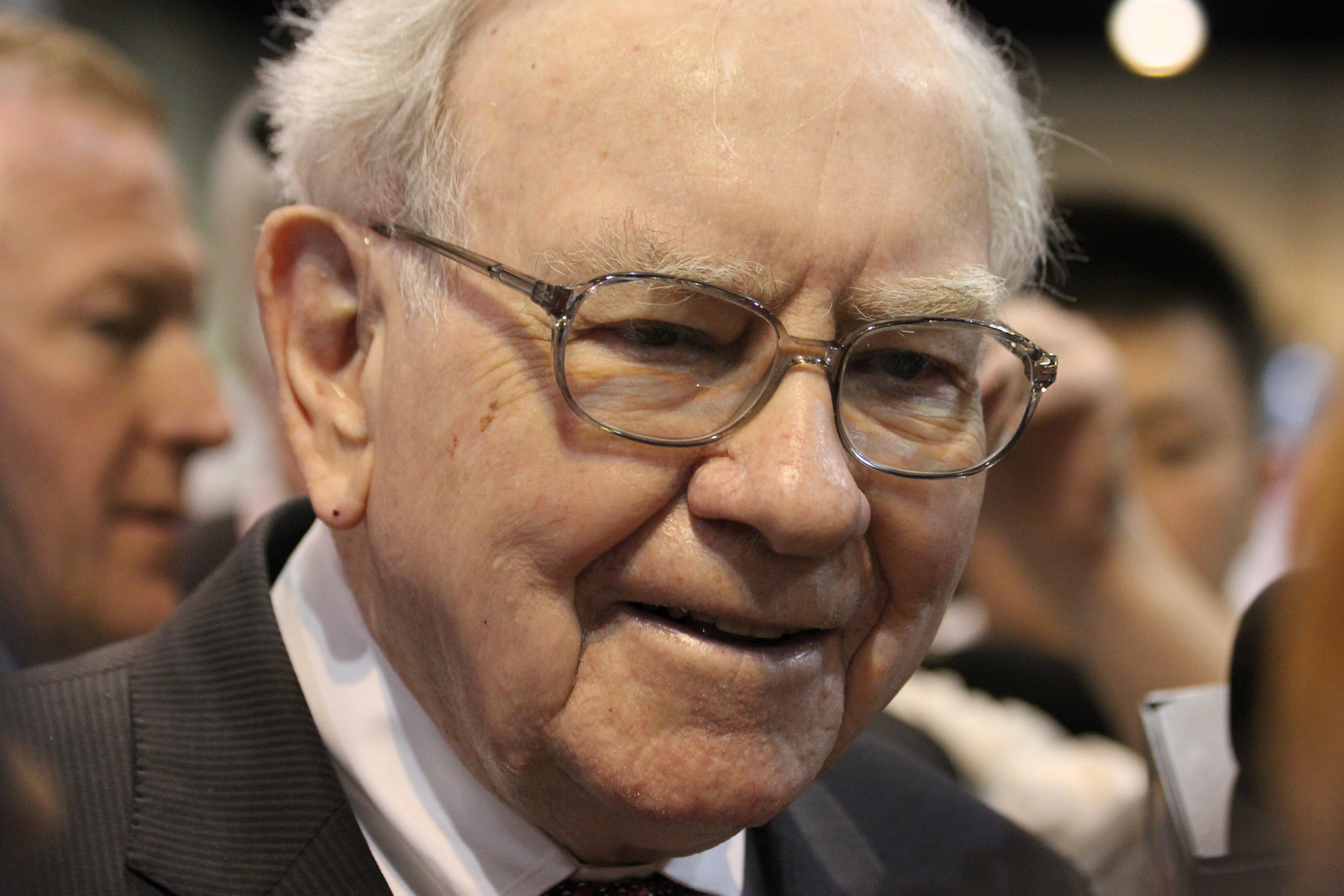
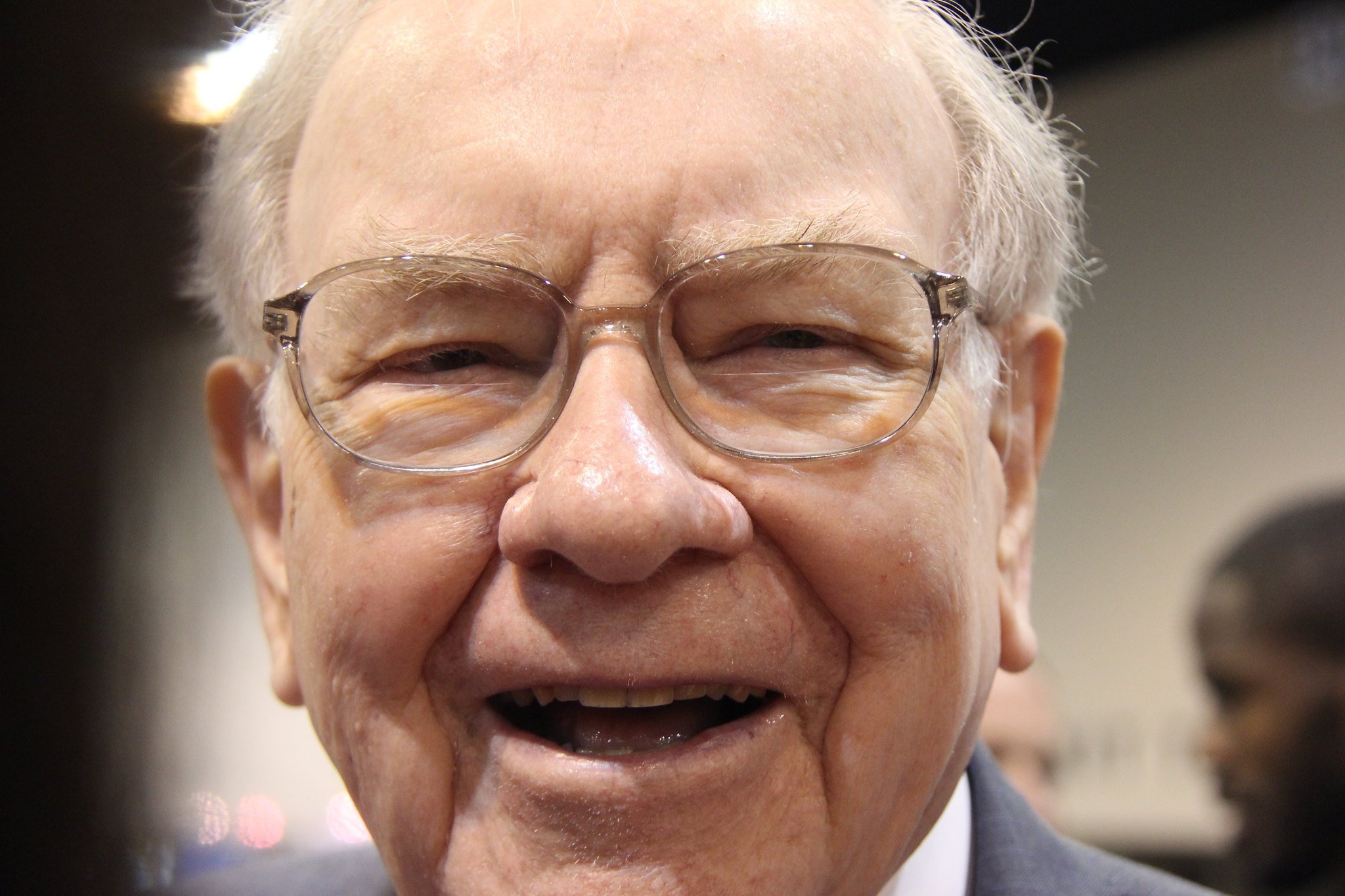
Let's play a what-if game. Imagine that you plunk, say, $500 in Warren Buffett's company, Berkshire Hathaway (BRK.A +2.69%) (BRK.B +2.62%). (Note that Buffett recently retired, and the new CEO is a longtime lieutenant, Greg Abel, in whom Buffett has expressed great confidence.) What would your stake be worth in a decade?
Here's a look at that question.

Image source: Getty Images.
Meet Berkshire Hathaway
With a recent market value of about $1 trillion, Berkshire Hathaway is a classic blue chip stock. It's not currently a dividend-paying stock, which is a bit unusual for a well-run company of its size, but some speculate that Abel may well institute a dividend. (The company's third-quarter report revealed a cash hoard that has reached $382 billion, after all.)
If you invest in Berkshire Hathaway, you'll be a part owner of many businesses entirely owned by Berkshire, such as GEICO, Benjamin Moore, See's Candies, and the entire BNSF railroad -- and you'll have a stake in Berkshire's stock portfolio, too, which features major positions in companies such as Apple, American Express, Coca-Cola, and Bank of America. (Berkshire recently owned 9% of Coca-Cola, for example, and 2% of Apple.)
How will Berkshire perform over the coming 10 years?
So what kind of return can you expect from Berkshire over the next 10 years? Here's how it's done in the past:
|
Time Period |
Average Annual Return |
|---|---|
|
Past 1 year |
1.60% |
|
Past 3 years |
15.53% |
|
Past 5 years |
15.91% |
|
Past 10 years |
13.90% |
|
Past 15 years |
12.49% |
Source: Data from Morningstar.com as of Jan. 29, 2026.
We shouldn't expect such fat returns every year, though. Remember that the stock market has averaged annual returns of close to 10% over many decades -- and Berkshire is no longer a modest-sized and nimble fast-grower.
Still, let's be a bit conservative and assume that the stock will average a total annual return of, say, 11% over the coming decade -- with or without a dividend. If it does, that will boost your stake's value to $1,420.
Here's what it will be worth at different growth levels (since we can't know exactly how the stock -- or the market -- will do):
|
Growing at This Rate |
$500 Becomes This After 10 Years |
|---|---|
|
7% |
$984 |
|
8% |
$1,079 |
|
9% |
$1,184 |
|
10% |
$1,297 |
|
11% |
$1,420 |
|
12% |
$1,553 |
|
13% |
$1,697 |
|
14% |
$1,854 |
|
15% |
$2,023 |
Calculations by author.
So -- should you invest in Berkshire Hathaway? You could do a lot worse. The shares seem reasonably valued at recent levels, with a recent forward-looking price-to-earnings (P/E) ratio of 22.37 a bit above its five-year average of 21.27.
The stock may not perform like some popular growth stocks, but it's likely to drop less in a market pullback, too. Its beta -- a measure of volatility -- was recently just 0.65, reflecting that if the overall market drops by 10%, Berkshire's stock would drop by around 6.5%. Even without Buffett at the helm, Berkshire Hathaway has a lot going for it.