Ether (ETH 16.14%), the native cryptocurrency of the Ethereum blockchain, has shed more than a third of its value this year amid the broader crypto market's swoon. However, could it bounce back and rise more than tenfold over the next few years?
What are Ether's catalysts and challenges?
Ether could originally be mined like Bitcoin (BTC 14.42%), but it transitioned to the more energy-efficient proof-of-stake (PoS) consensus mechanism in 2022. After that upgrade, it could no longer be mined. However, it could be "staked" (locked up on the blockchain to earn interest-like rewards) and gained support for smart contracts -- which are used to develop decentralized apps (dApps), non-fungible tokens (NFTs), and other crypto assets.
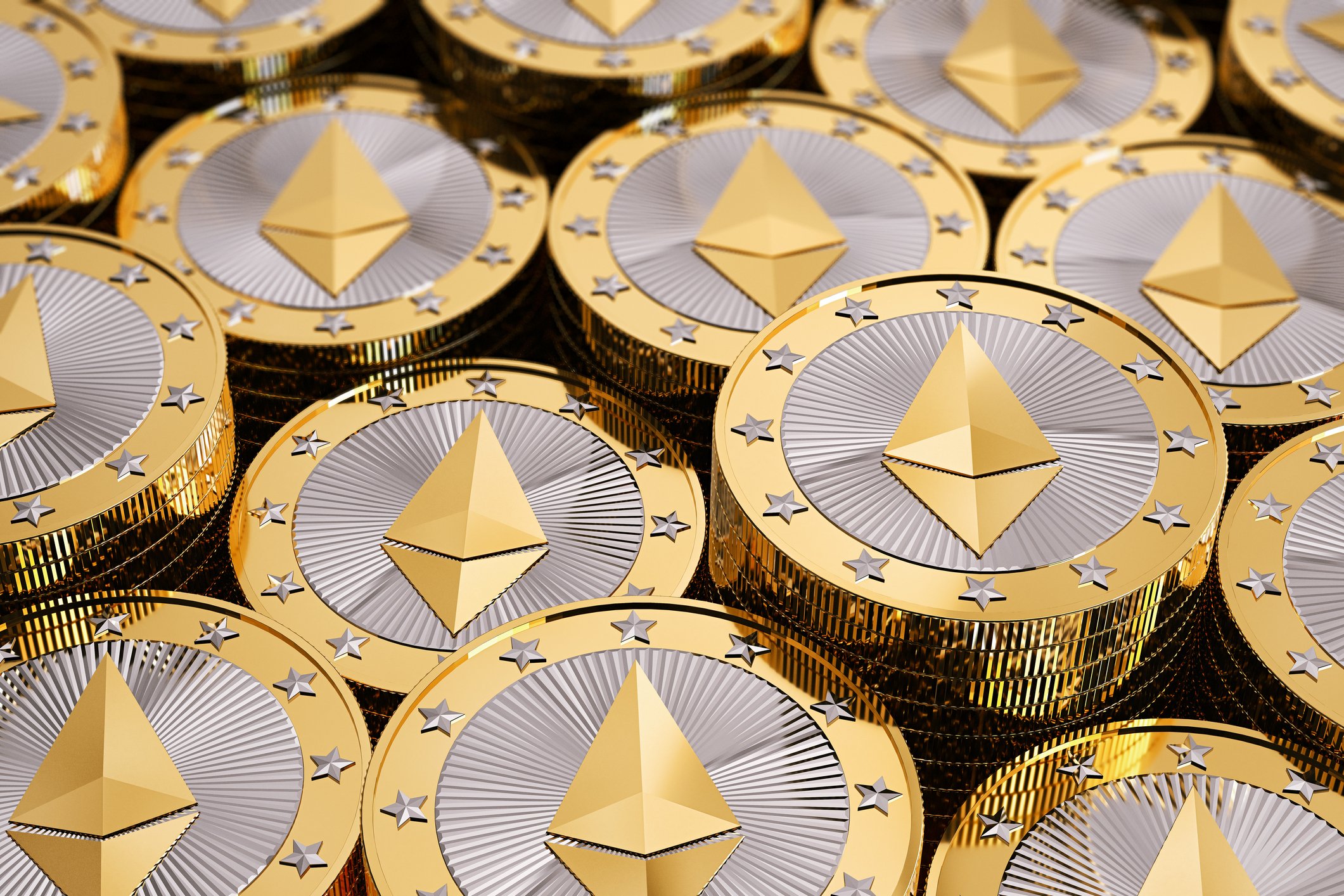
Image source: Getty Images.
Today, Ether's value is mainly tied to the growth of its developer ecosystem rather than its token's scarcity. It has a circulating supply of 121 million tokens, and doesn't have a fixed supply limit like Bitcoin. Its main Layer 1 (L1) blockchain isn't as fast as newer PoS blockchains like Solana (SOL 22.40%), but its Layer 2 (L2) rollups -- which bundle together multiple transactions and process them off-chain at higher speeds -- are helping it close that gap.

CRYPTO: ETH
Key Data Points
Ethereum hosted nearly 32,000 active developers as of last September, making it the world's largest developer-oriented blockchain. The bulls expect that support to drive Ether's price higher as the token is integrated into more Ethereum-based decentralized finance (DeFi) apps.
How could Ether soar tenfold over the next decade?
Ether is already the world's second-most-valuable cryptocurrency, with a market cap of $233 billion. Yet it's still tiny compared to Bitcoin, which is worth $1.31 trillion.
Like Bitcoin, Ether's price is being compressed by a murky outlook for interest rates, messy macro headwinds, and a cascade of leveraged liquidations. Therefore, its price could certainly drop lower this year before it bottoms out.
However, it could bounce back once those headwinds dissipate. Ether's spot price exchange-traded funds (ETFs), which were initially approved in 2024, could also draw in more institutional investors as its price recovers.
Over the next decade, Ethereum plans to improve scalability, reduce network congestion and gas fees, and increase efficiency through three major upgrades: The Verge, The Purge, and The Splurge. Those improvements should boost Ethereum's network activity, support increased Ether payments, and widen its moat against other PoS blockchains.
As that happens, Ether's price could rise more than tenfold to more than $19,000. That's still conservative compared to Cathie Wood's lofty price target of around $180,000 by 2030 -- and I believe it could deliver that tenbagger gain as its longer-term tailwinds kick in.