Back in 2024, XRP (XRP +3.11%) looked like a great investment. Parent company Ripple Labs was wrapping up its long-running legal troubles, and the election results pointed to a more crypto-friendly administration. And XRP traded at just $0.70 per coin in early November that year, making its total market value a fairly modest $41 billion.
Things changed at that point. XRP started to skyrocket, soaring to $2.70 by Dec. 2 and $3.30 in mid-January 2025. At that point, XRP was a crypto giant. With a market value of $182 billion, only Bitcoin (BTC +2.78%) and Ethereum (ETH +3.64%) had a larger footprint.

CRYPTO: XRP
Key Data Points
That jump was too much, too fast. XRP was priced for absolute perfection, leaving little room for further gains and a steep downside. The coin was no longer a top choice, in my view.
The price chart has been diving since July, primarily due to macroeconomic uncertainty. The downturn applies to most of the crypto market, but XRP took a deeper six-month dive than Ethereum or Bitcoin. It's down more than 50% from the peak, and valuation isn't really holding me back anymore.
All told, XRP has roughly doubled from 2024's election week, which looks appropriate, given the lawsuit resolution. But I'm still not buying XRP until people and financial institutions actually start to use it.
Show me the money (moving through XRP)
XRP was designed to facilitate cross-border payments. Ripple Labs pitched it as a faster, cheaper alternative to the SWIFT network (Society for Worldwide Interbank Financial Telecommunication) that banks use for this purpose today. The idea is compelling; international wire transfers can take days and cost a fortune in fees. XRP transactions settle in seconds and cost fractions of a penny.
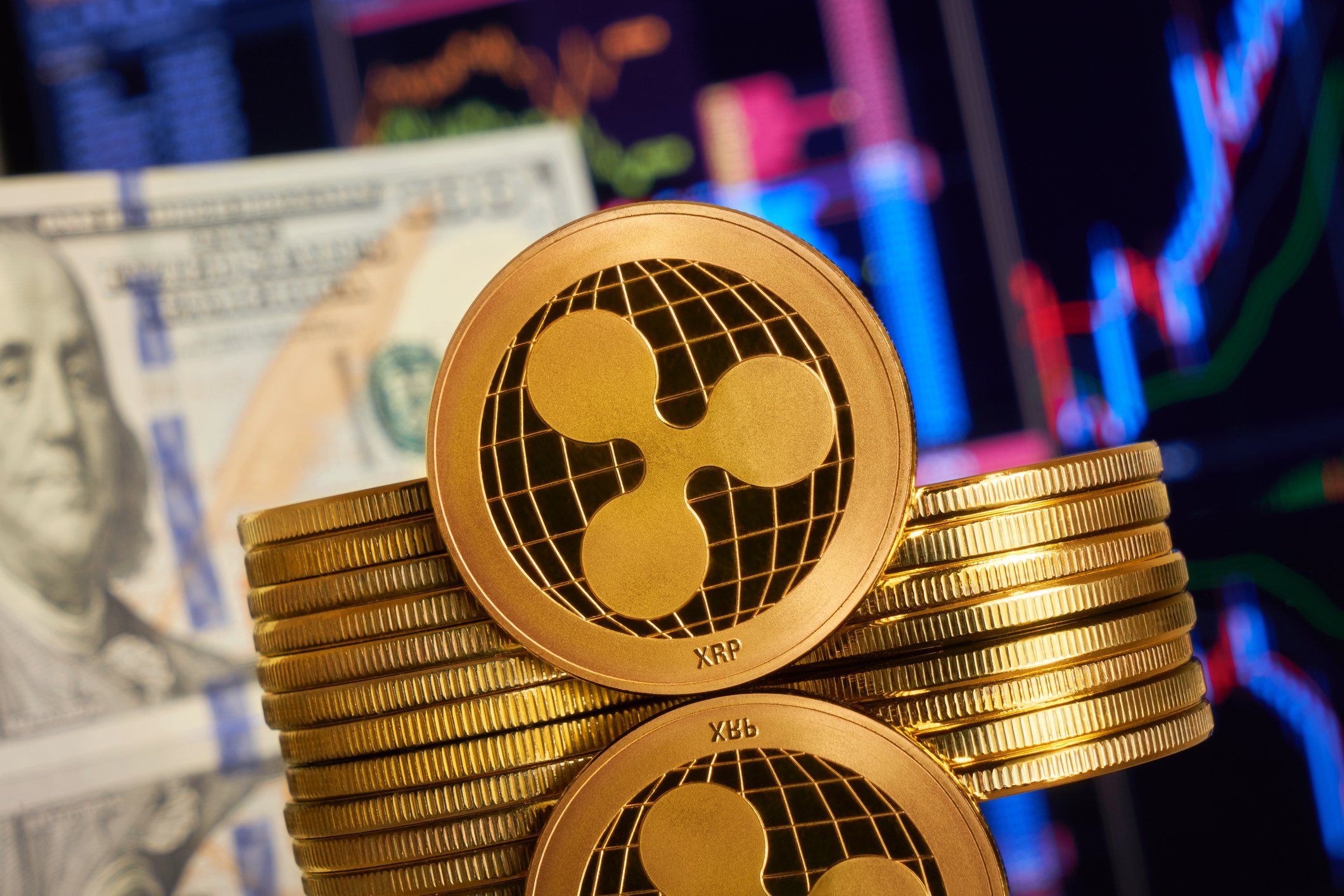
Image source: Getty Images.
So XRP sounds great on paper. In practice, Ripple has announced dozens of partnerships with banks and payment providers over the years. Most of these pilots never scaled into meaningful transaction volume, though. The company doesn't disclose how much XRP actually flows through its On-Demand Liquidity (ODL) service, so investors are left squinting at loosely related press releases and hoping for the best.
I've been squinting for a while now. Here's what would make me stop and possibly invest:
- Transparent volume data: Ripple publishing regular, audited reports on ODL transaction volume would help. Show me the receipts, please.
- A big bank goes on the record: Not a pilot, not a memorandum of understanding, not a "strategic partnership" that goes nowhere. I want a top-20 global bank saying, "We move billions of dollars with XRP."
- Some defense against the competition: Stablecoins and central bank digital currencies (CBDCs) are reaching for the same cross-border payments market with different blockchain-based solutions. XRP needs a reason to win that fight beyond "We got here first."
Without these signals, XRP remains a bet on potential rather than performance. Ripple has been making the same pitch for nearly a decade. I'd like to see it land before I buy a ticket. Lower coin prices are a good start, but I'm looking for serious real-world progress.