Shares of real estate conglomerate CBRE Group (CBRE +3.24%) sank 8.8% on Thursday.
The swoon followed CBRE's fourth-quarter 2025 earnings report. Despite a solid-looking double-digit revenue growth number and an earnings beat, CBRE's top line slightly missed estimates.
With the stock having run up substantially over the past half-year or so, CBRE's results just weren't good enough to satisfy investors, who are in a nervous mood about many things today, including AI and interest rates.

NYSE: CBRE
Key Data Points
Q4 results were good, but not enough
In the fourth quarter, CBRE's revenue grew 11.8% to $11.6 billion, which was just shy of expectations, while core adjusted earnings per share were up 17.7% to $2.73, beating estimates by $0.05. Management also forecast adjusted core EPS of $7.45 at the midpoint for 2026, which would mark a 16.7% EPS growth rate.
Despite double-digit growth and an earnings beat, the revenue miss triggered a sell-off. Investors, already jittery about broader economic uncertainties, are awaiting the January inflation report due out tomorrow.
Additionally, some may be concerned about the real estate sector's outlook in general and especially CBRE's commercial and industrial focus, due to AI fears. The thinking may be that if AI can do much of the work humans currently do, even in sectors that hadn't already been affected by the pandemic's work-from-home shift, then there may be less need for commercial real estate.
CBRE also has a business that manages data center real estate deals and those properties, so it could very well adapt to this new reality. In addition, during the conference call with analysts, management actually took the time to spell out that AI is unlikely to disintermediate CBRE's legacy businesses in negotiating real estate transactions, building and managing property, and other real estate activities which are highly complex and require both data-centric elements along with physical and nuanced human touches.
Additionally, management also sounded optimistic that AI can help its company with data-gathering on the business side, as well as other cost efficiencies.
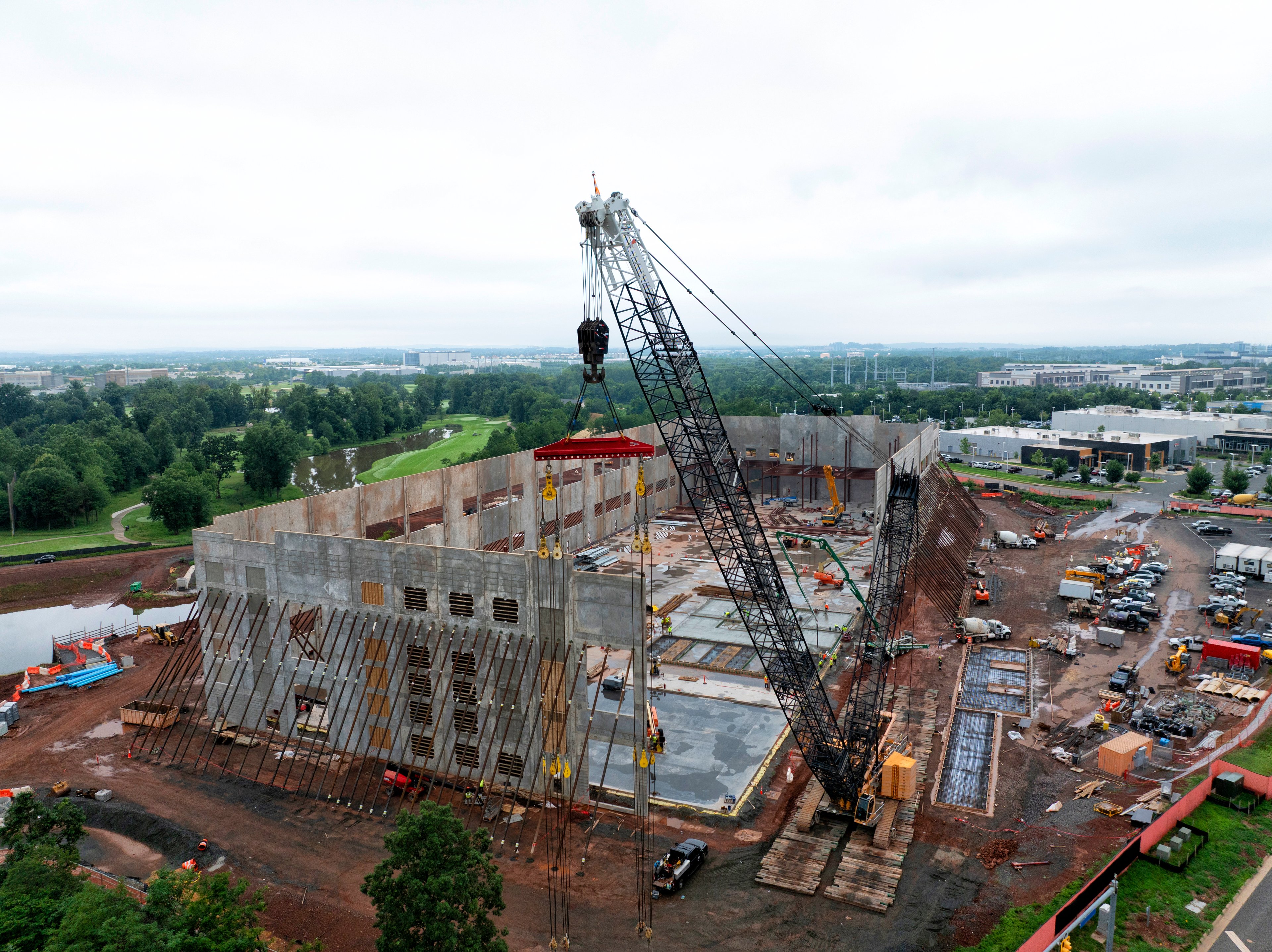
Image source: Getty Images.
Is the fear overblown?
Management, fortunately, appears to be very much on the case regarding the potential of AI disruption, while also seeking ways to profit from it. Still, data centers only contributed only 14% of CBRE's EBITDA (earnings before interest, taxes, depreciation, and amortization) last quarter, so it remains to be seen how quickly CBRE can pivot to this exciting growth area if its legacy office-related assets get disrupted.
All in all, with the stock's decline today, CBRE trades at roughly 18.3 times the midpoint of its 2026 guidance of $7.45 per share. That seems cheap if the AI fears are overblown, but a fair valuation given the high uncertainties abounding today.