Semiconductor designer Astera Labs (ALAB 3.65%) saw massive growth in 2025 as its revenue rose some 115% year over year and its earnings climbed to $1.22 per share, a sharp reversal from its $0.64 per share net loss in the prior-year period.
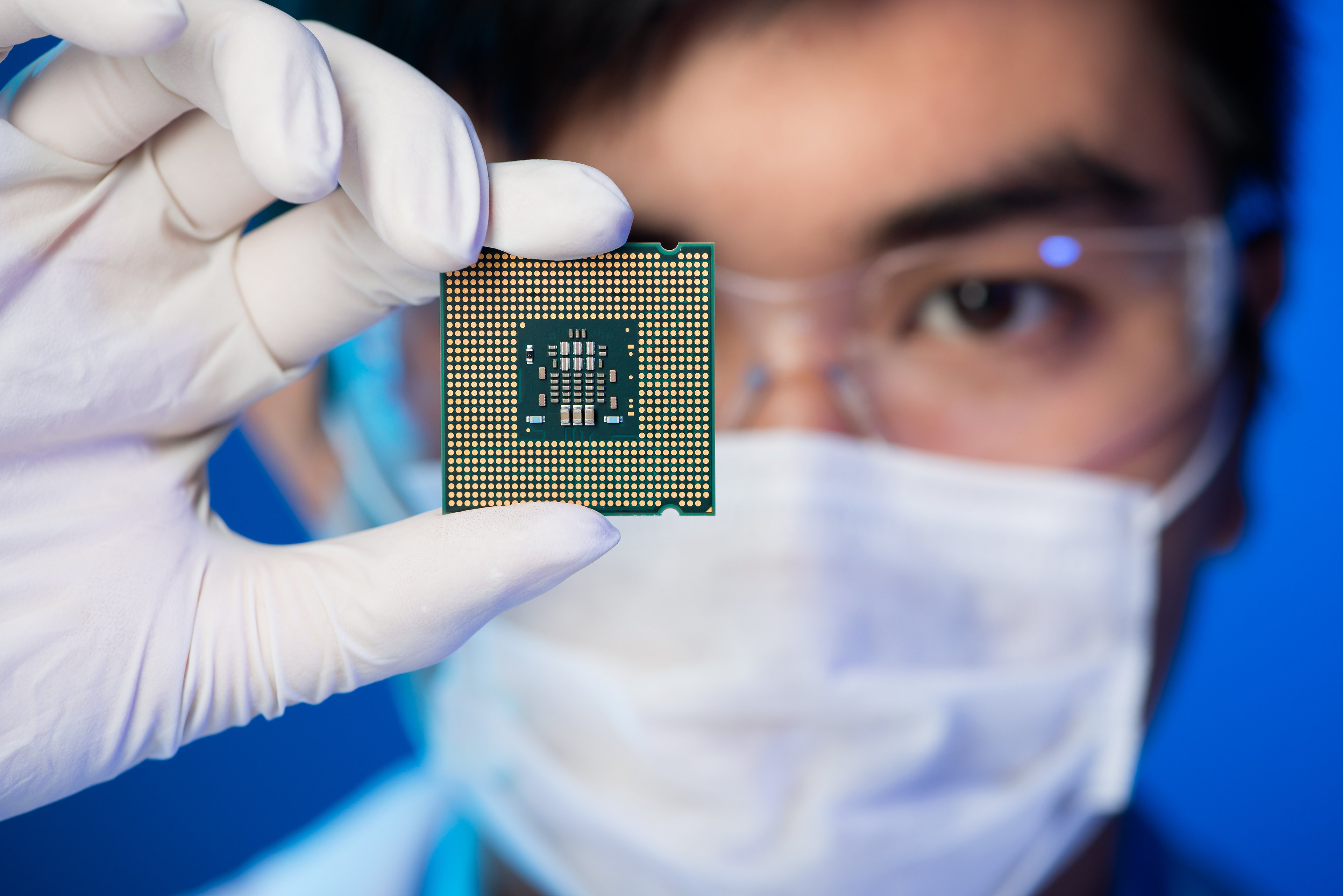
The company, which makes connectivity chips for data centers and artificial intelligence (AI) infrastructure, has become a significant player in the AI boom. Its products basically connect the GPUs, CPUs, and memory chips within high-performance computing systems, helping them operate efficiently and at high speed.

Image source: Getty Images.
But even after Astera Labs delivered blowout results for its fiscal fourth quarter, the stock tanked, mainly due to its incredibly high valuation. Prior to the Q4 report, it was trading at more than 150 times earnings and more than 50 times forward earnings, which investors viewed as too great a premium, even given the company's robust growth outlook for 2026. Now, those multiples are down to around 99 and 34, respectively -- still far from cheap.
There is a lot to like about Astera as a pure-play connectivity stock, but right now, as an investment, I'd favor one of its primary competitors instead: Broadcom (AVGO 1.32%).
Why Broadcom is a better option
Broadcom also makes connectivity hardware, but it has a far more diversified product lineup than Astera Labs. While its networking and connectivity chips are its biggest revenue drivers, it also produces switches, routers and networking semiconductors, memory and storage components, broadband components, cloud computing software, cybersecurity, and database management software, among other products and services.

NASDAQ: AVGO
Key Data Points
In its last two fiscal years, its semiconductor solutions segment generated about 58% of its revenues. Within this segment, its AI semiconductors, which it designs in partnership with its hyperscaler customers, are driving the growth; revenues from that source rose 74% year over year in its fiscal fourth quarter.
Broadcom has emerged as the dominant player in the application-specific integrated circuit and custom silicon market -- it has contracts with multiple hyperscalers and a roughly 75% market share.
Heading into its fiscal 2026, which began Nov. 3, 2025, it had about $73 billion worth of backlog, meaning contracts signed and waiting to be executed. The company reports its fiscal first-quarter earnings on March 4 after the closing bell, and it expects AI revenue to double to roughly $8.2 billion.
A great long-term value
Broadcom has consistently been one of the best-performing stocks of the AI era, averaging a 46% annualized return over the past five years and a 76% annualized return over the past three years.
So far this year, the stock is down by around 7% due to investors' broader concerns about the outlook for AI companies. While Broadcom's price-to-earnings (P/E) ratio is high at 67, it's much more reasonably valued when you factor in future earnings expectations.
Its 12-month forward P/E is 22, while its five-year PEG (price/earnings-to-growth) ratio is about 0.9, suggesting it's a bit undervalued.
With its massive backlog and dominant market position, Broadcom should continue churning out great returns for investors for years to come.
Some 96% of the 55 analysts who cover the stock rate it as a buy, with a median price target of $458 per share. That would suggest a 43% upside. With another strong earnings report likely on the horizon, Broadcom is a stock to consider right now.