Roughly three decades ago, the advent and proliferation of the internet changed corporate America forever, as well as paved the way for the retail investor revolution. Investors have been waiting a long time for the next technological leap forward to meet or exceed what the internet did for businesses -- and artificial intelligence (AI) has answered the call.
Artificial intelligence is a multitrillion-dollar global opportunity that's currently being led by Wall Street's largest publicly traded company, Nvidia (NVDA +0.57%). Nvidia's graphics processing units (GPUs) are the brains that make AI-accelerated data centers tick.

Image source: Getty Images.
Billionaire Philippe Laffont has been a persistent seller of Nvidia stock
Despite Nvidia's jaw-dropping growth rate, the superior compute capabilities of its GPUs, and its otherworldly cash flow, billionaire Phillippe Laffont of Coatue Management has been a seller of its shares in 10 of the last 11 quarters (April 1, 2023 – Dec. 31, 2025). All share counts below have been adjusted for Nvidia's 10-for-1 stock split in June 2024.
- Q1 2023: 49,802,020 shares held
- Q2 2023: 46,449,700 shares (-3,352,320)
- Q3 2023: 45,410,400 shares (-1,039,300)
- Q4 2023: 43,222,010 shares (-2,188,390)
- Q1 2024: 13,851,410 shares (-29,370,600)
- Q2 2024: 13,754,447 shares (-96,963)
- Q3 2024: 10,138,161 shares (-3,616,286)
- Q4 2024: 10,006,488 shares (-131,673)
- Q1 2025: 8,545,835 shares (-1,460,653)
- Q2 2025: 11,488,529 shares (+2,942,694)
- Q3 2025: 9,870,743 shares (-1,617,786)
- Q4 2025: 9,203,338 shares (-667,405)
The big question is, "Why?" Does Laffont know something about Nvidia that the rest of Wall Street doesn't?

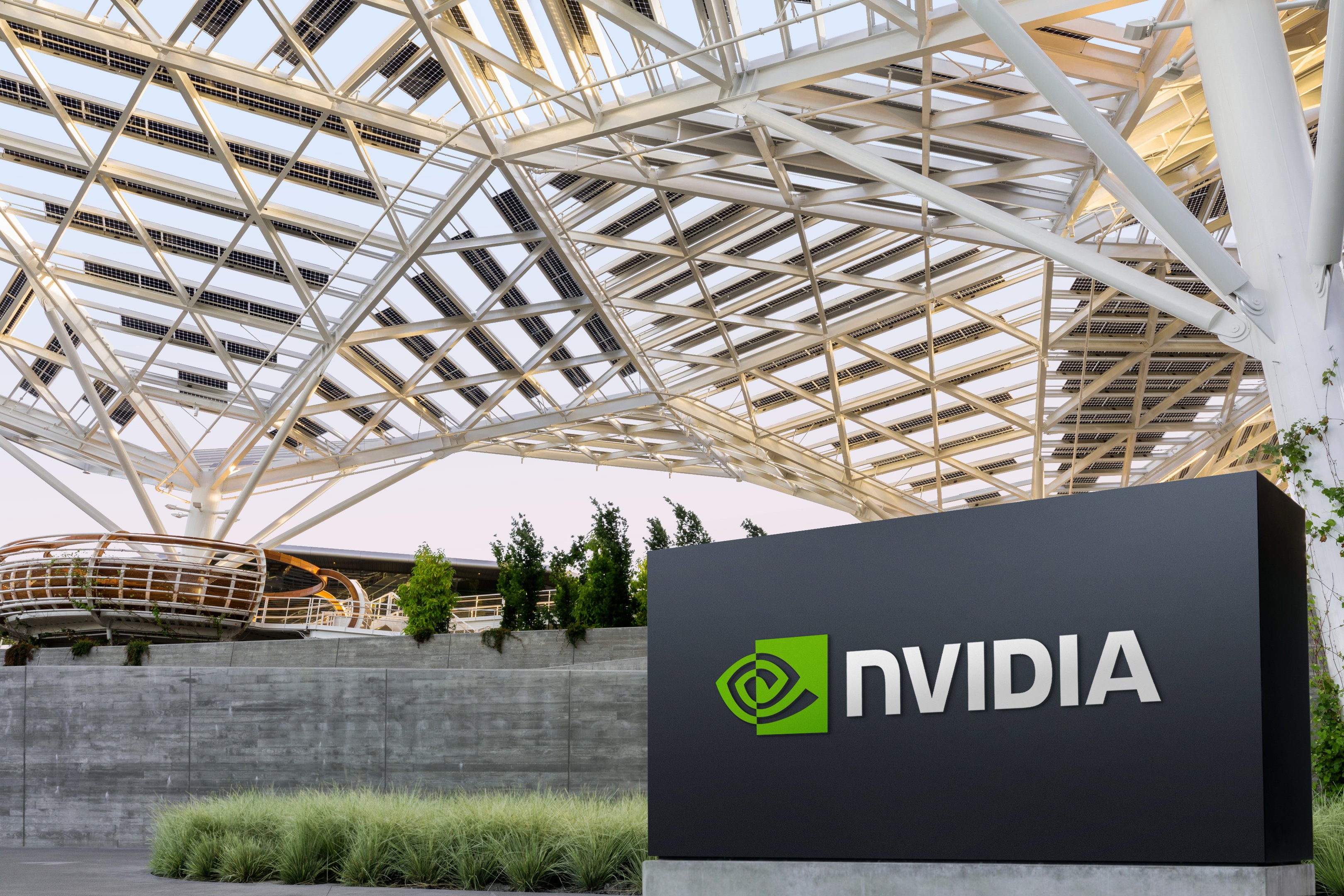
Image source: Nvidia.
Profit-taking is likely only part of the story
Some of Laffont's selling likely boils down to benign profit-taking. Since initially building a mammoth stake in Nvidia during the third quarter of 2022 (i.e., the height of the 2022 bear market), shares of the company have surged by more than 1,200%! Historically, Coatue Management's boss has shown a willingness to lock in significant gains when given the opportunity.
But profit-taking probably isn't the whole story.
For one, history hasn't proven all that kind to game-changing technologies over the last three decades. Every next-big-thing trend has endured an early innings bubble-bursting event that came about because investors overestimated the adoption and/or optimization of a new technology. Even though businesses are spending big on AI infrastructure (i.e., no issues with adoption), it'll likely be years before these same companies are optimizing AI solutions. If an AI bubble forms and subsequently bursts, Nvidia would undoubtedly be hit.

NASDAQ: NVDA
Key Data Points
Laffont may also be concerned about the prospect of increasing GPU competition. While no external competitors are particularly close to rivaling Nvidia's data center hardware, many of its top customers by net sales are internally developing chips for their data centers. Despite being slower than Nvidia's GPUs, these internally developed chips are cheaper and more readily available. That's potentially bad news for Nvidia's pricing power and gross margin.
Lastly, Coatue's billionaire boss might have lingering trade concerns. China's unwillingness to purchase Nvidia's revamped H200 GPUs, coupled with the seemingly ever-changing tariff and trade landscape under President Donald Trump, paints an unpredictable picture for a company whose price-to-sales ratio intimates it's priced for perfection.
While billionaire Philippe Laffont doesn't have access to privileged information, his persistent selling at Coatue is a stark reminder that even Wall Street's most influential businesses face headwinds.