Analysts from Bank of America believe we're in the midst of a new nuclear renaissance. "[N]uclear energy has, in many ways, been recently 'rediscovered' amid surging electricity demand," the bank concludes.
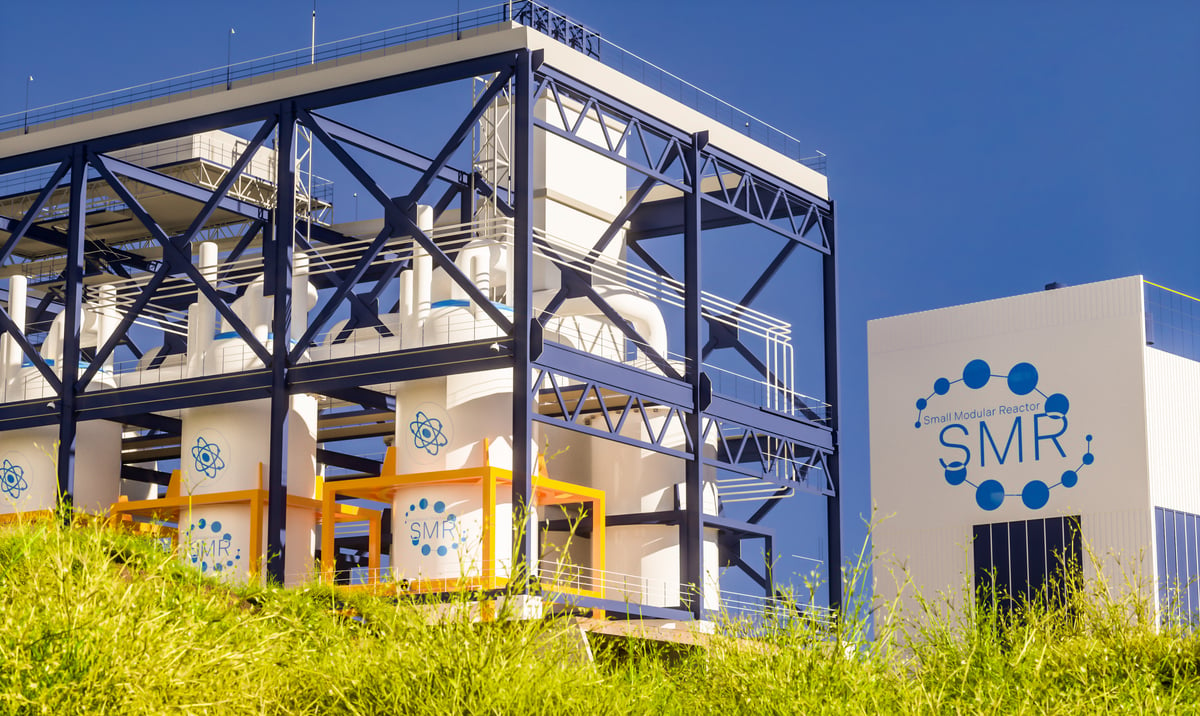
This renaissance, Bank of America believes, could create a $10 trillion opportunity for nuclear stocks like Oklo (OKLO +5.52%). Oklo in particular is betting on small modular reactors, or SMRs, which can theoretically lower initial costs, minimize infrastructure footprints, and provide greater ability to scale energy generation down the line.
But this month, Oklo closed on the acquisition of Atomic Alchemy, a firm not directly tied to nuclear energy. Why did Oklo make this deal? There are two obvious reasons.

NYSE: OKLO
Key Data Points
1. Atomic Alchemy diversifies Oklo's revenue streams
Previous to this acquisition, Oklo's future relied solely on its ability to design, sell, and build SMRs. SMR technology does exist in the real world, but adoption levels are very low. Put simply, there is a huge amount of uncertainty regarding Oklo's specific designs, the real-world economic viability of these nuclear plants, and the amount of demand that will ultimately materialize.
Atomic Alchemy's business model, meanwhile, has nothing to do with SMRs. Put simply, the company is building radioisotope production capabilities in the U.S. This is a big deal for a few reasons. Radioactive isotopes are crucial to several key end markets, including life-saving treatments, advanced industrial applications, and national security. In medicine, for example, they are used for diagnostic imaging to detect disease.
Here's the problem: There isn't enough high-grade radioactive isotope production to meet global demand. "The shortage," according to Cygen Health, "is systemic, persistent, and worsening."
Atomic Alchemy hopes to begin production of these isotopes in the U.S. beginning this year. That gives Oklo a new revenue stream in case its SMR growth plans are delayed.

Image source: Getty Images.
2. Atomic Alchemy and Oklo could complement each other long term
Long term, Oklo's reactors should naturally produce radioisotopes as a byproduct. Having Atomic Alchemy as an operating subsidiary lets Oklo capture and sell that value instead of wasting it.
The acquisition price of $25 million was relatively modest. But the medical isotope market alone is worth an estimated $6.63 billion. That market is growing by more than 8% annually, and by 2035, its value could top $14 billion.
This potential is clearly far less than Oklo's core business, which intends to capitalize on Bank of America's "$10 trillion" opportunity. But the near-term revenue and long-term synergy benefits are clear. And at a $25 million purchase price, it's a totally acceptable acquisition for a company hoping to bring its first SMRs online by 2027.