More than 30 years ago, the advent and proliferation of the internet changed the world forever. It provided businesses with new pathways to market and sell to customers, and paved the way for the retail investor revolution by breaking down information barriers that had existed between Wall Street and Main Street for over a century.
Investors have been waiting a long time for the next breakthrough technology, and artificial intelligence (AI) has answered the call. Empowering software and systems with the tools to make autonomous, split-second decisions is a multitrillion-dollar addressable opportunity -- and that's all thanks to Nvidia's (NVDA +1.30%) hardware.
But while Nvidia's graphics processing units (GPUs) are dominating in AI-accelerated data centers, history suggests a day of reckoning is approaching for its stock.

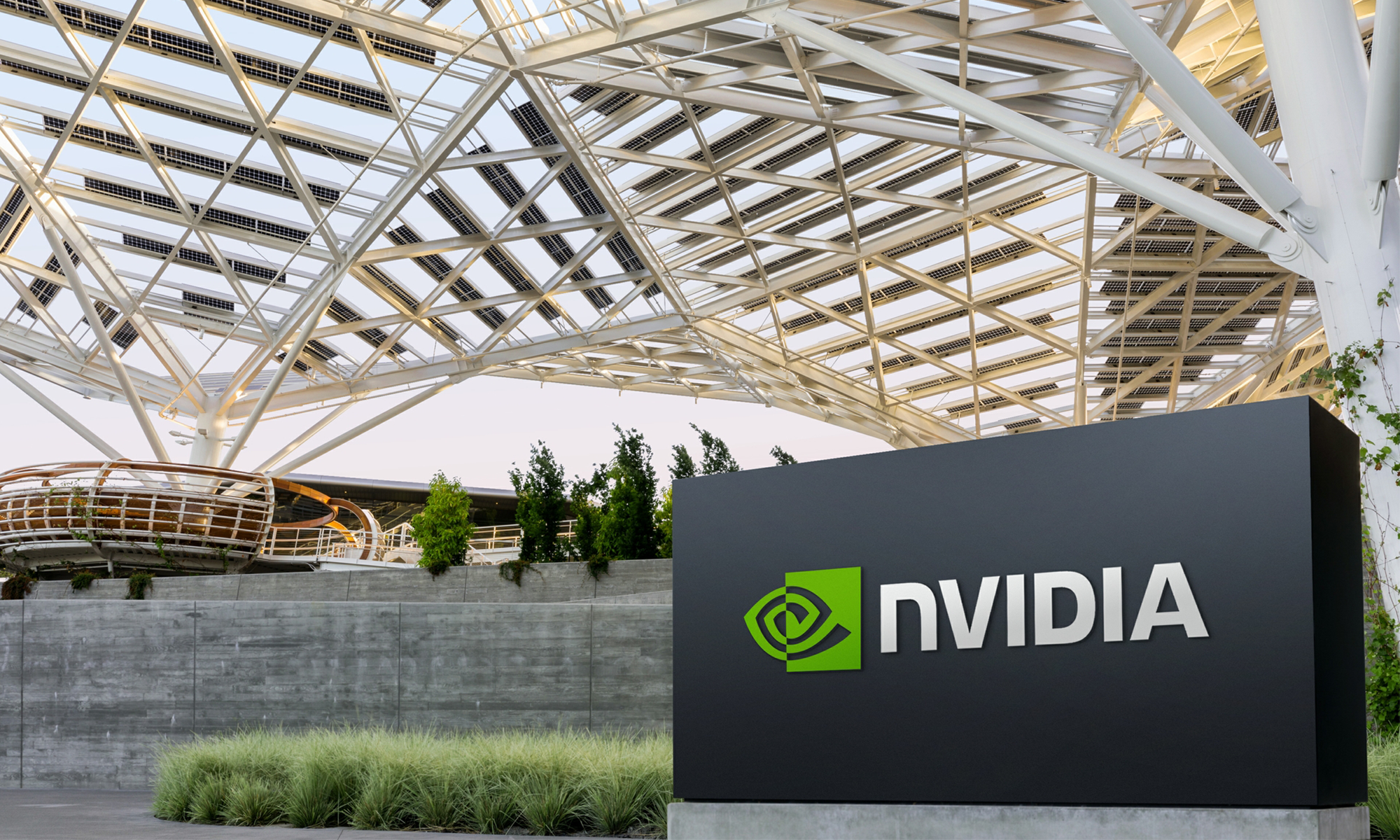
Image source: Nvidia.
The unveiling of Nvidia's fiscal first-quarter operating results is one month away
The face of the AI revolution will lift the hood on its 2027 fiscal first-quarter operating results after the closing bell on May 20. Based on the outlook provided by the company and its CEO, Jensen Huang, it should be another stellar quarter.
When Nvidia reported its fiscal fourth-quarter results in late February, it guided for $78 billion in first-quarter sales (plus or minus 2%) and a generally accepted accounting principles (GAAP) gross margin of 74.9%. This implies 77% sales growth from the comparable quarter last year and significant GAAP gross margin improvement.
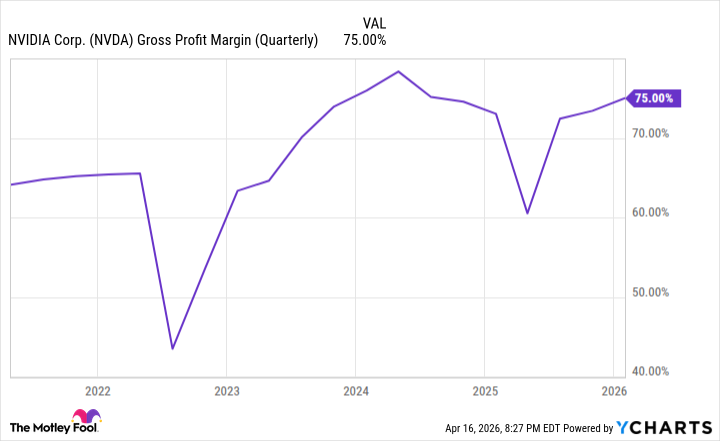
NVDA Gross Profit Margin (Quarterly) data by YCharts.
Although external competition is ramping up, Nvidia's GPUs hold well-defined competitive advantages on a compute basis. None of its direct rivals have come close to matching the capabilities of its infrastructure, which, when paired with persistent GPU scarcity, has enabled Nvidia to charge a premium for its hardware.
Huang has also made clear that his company's Blackwell and Vera Rubin architectures are on track to collectively total $1 trillion in lifetime sales by the end of 2027. Demand for AI infrastructure is overwhelming supply, and Nvidia's GPUs are the undisputed top choice in enterprise data centers.

Image source: Getty Images.
Investors' expectations are often too lofty
Although Nvidia has made a habit of exceeding the consensus quarterly revenue and profit forecasts of Wall Street analysts, the reaction of the company's stock following earnings releases suggests that investors' expectations for Nvidia, and perhaps AI in general, are too lofty.
Here's how Nvidia's shares have performed the day after it releases its quarterly operating results:
- Q4 2026: (5.5%)
- Q3 2026: (3.2%)
- Q2 2026: (0.8%)
- Q1 2026: 3.2%
- Q4 2025: (8.5%)
- Q3 2025: 0.5%
- Q2 2025: (6.4%)
While it's not uncommon for Nvidia's shares to pop in after-hours on the day of its release, shares have declined from their prior-day close following five of the last seven quarterly earnings releases. On average, Nvidia loses 3% of its value after unveiling its operating results.

NASDAQ: NVDA
Key Data Points
Since the advent of the internet, every game-changing technology for more than 30 years has navigated an early innings bubble-bursting event. These bubbles form because investors overestimate the adoption and/or optimization of innovations.
Though Nvidia's operating results clearly show there isn't an AI infrastructure adoption issue, businesses aren't particularly close to optimizing their AI solutions or generating a positive return on their AI investments.
Based solely on what history tells us, May 21 could be a terrible day for Nvidia and its shareholders.