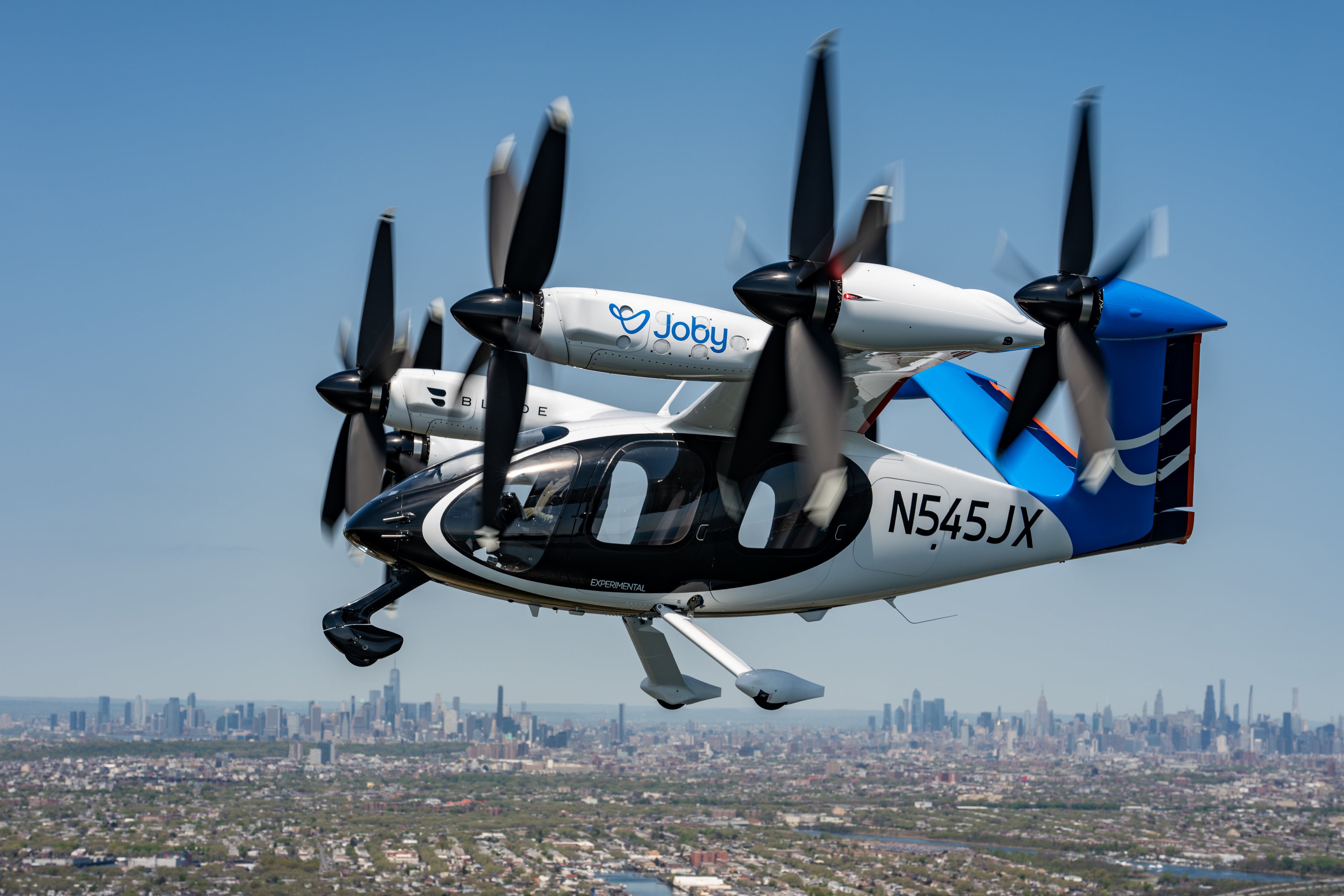
The electric vertical takeoff and landing (eVTOL) field is crowded. While most of the attention is focused on Joby Aviation (JOBY 2.27%) and Archer Aviation (ACHR 3.90%), as they are likely to be the first to receive Federal Aviation Administration (FAA) certification, there are plenty of other eVTOLs in development, not least the U.K.'s Vertical Aerospace, Embraer's Eve Air Mobility, and Boeing's (BA 1.24%) Wisk. The fascinating thing about these companies is that they all have different business models, but the most interesting comparison is between Joby and Boeing.
Two rival eVTOL approaches
The major split in eVTOL business models is between the original equipment manufacturer (OEM) and the integrated transportation-as-a-service (TaaS) approach. Vertical, Archer, and Eve are following the OEM approach, while Joby and Wisk are taking the TaaS route.

NYSE: JOBY
Key Data Points
The OEM approach has the advantage of allowing Vertical and Archer to lean on established aerospace suppliers for components (Wisk and Eve benefit from Boeing's and Embraer's extensive supply chain relationships), which, in theory, should reduce risk and put them ahead in the certification race.
In contrast, Joby is focused on becoming a vertically integrated TaaS company, not just developing its own in-house components, such as propulsion systems, batteries, propellers, and other core technologies.
But here's the thing: Joby is actually slightly ahead of Archer in the certification race, even as it develops its own technology, albeit with manufacturing help from its partner and investor, Toyota.
The business models impact financials
Moreover, Archer should start generating earnings and cash flow sooner because it can generate upfront revenue from eVTOL sales. At the same time, TaaS-focused Joby needs to establish itself as a transportation service company, with help from partners such as Uber Technologies and Delta Air Lines.

Image source: Joby Aviation.
The TaaS model that Joby and Wisk are following entails more upfront investment, as they build, own, and operate their own eVTOLs, and build out a transportation service, including access to vertiports. In addition, the TaaS model implies an initially slower revenue ramp-up, as it relies on incremental revenue from passenger trips rather than selling OEM eVTOLs.
Joby vs. Wisk: The TaaS battle with a difference
It's not just a battle between a small company and a deep-pocketed one, because Wisk, like EHang, is committed to developing autonomous eVTOLs, while Joby's initial eVTOLs will be piloted. The slower regulatory pathway inherent in autonomous eVTOL means Joby is highly likely to gain a first-mover advantage in the TaaS race, but the cost advantage of Wisk having an autonomous eVTOL service a few years later raises the risk factor for Joby.
Wisk also has the advantage of being part of Boeing's engineering capability, and its eVTOLs potentially being serviced, maintained, repaired, and overhauled by Boeing's global services. The latter is a key point because Boeing's global service center network will be impossible for Joby to replicate.
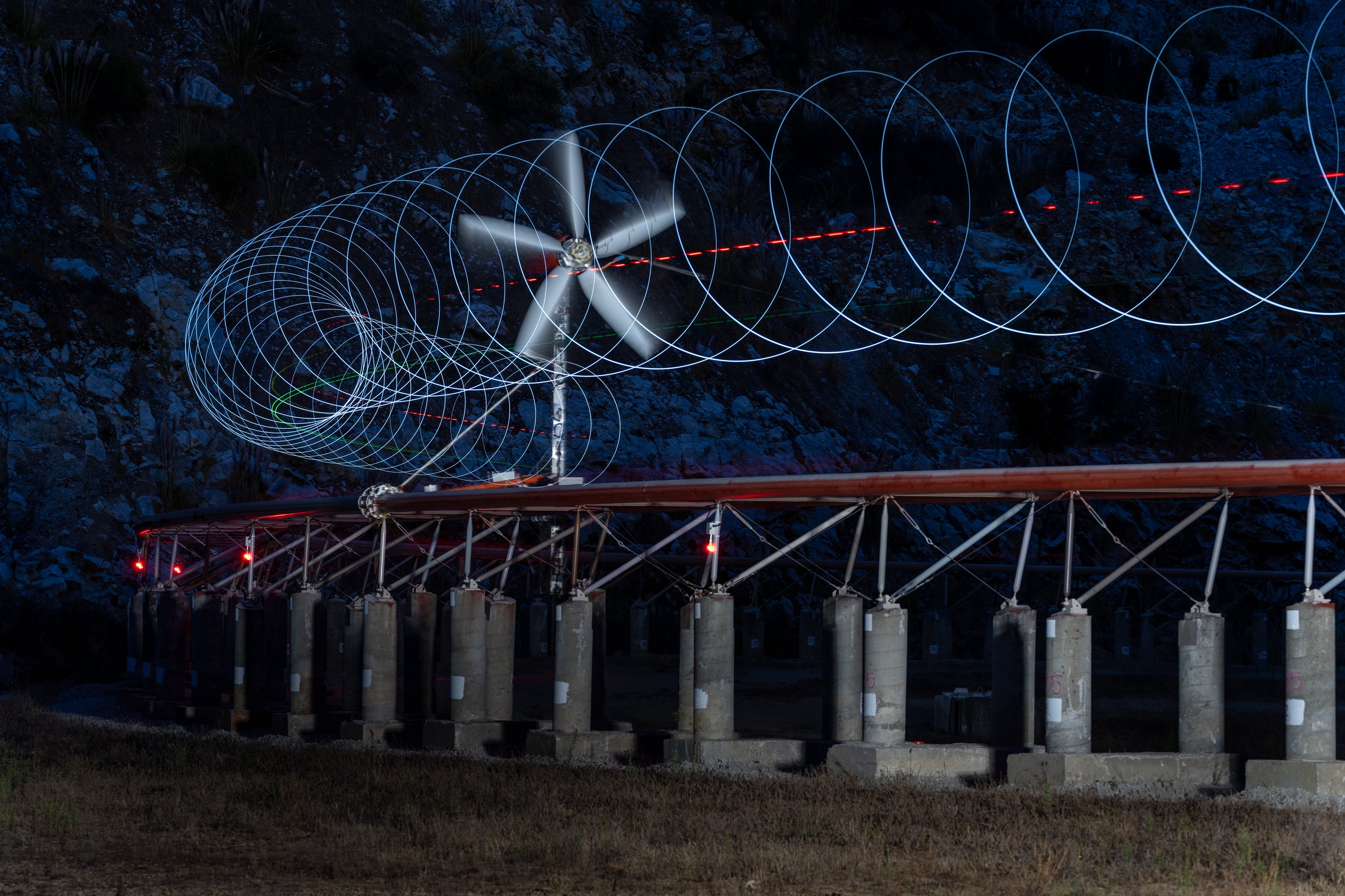
Image source: Joby Aviation.
A two-tier market
In the end, everything points to a battle over a first-mover advantage for Joby, allowing it to build commercial acceptance and scale. At the same time, Wisk focuses on developing a more cost-effective autonomous eVTOL that will take advantage of eVTOLs moving out of the initial novelty and premium-only phase toward more global mass-market adoption.
In response to the long-term threat, Joby is actively collaborating with Nvidia to develop autonomous capabilities that could ultimately lead to a fully autonomous eVTOL, which it could iteratively develop as it builds out its eVTOL network. In fact, that's why Joby bought Xwing's autonomy division in 2024. The acquisition, which added Superpilot autonomous software, is a clear indication of Joby's intent to be relevant should autonomous flight be the future of the eVTOL industry.