By now you've heard the news: President Donald Trump wants to spend $1.5 trillion on defense in 2027 -- and send $71.1 billion of that directly to the U.S. Space Force. Of that, $21.6 billion will be spent on what the Pentagon calls "space control," protecting U.S. satellites in orbit and hindering hostile nations in space.
But before you can do anything with a satellite, you first need to know where it is.
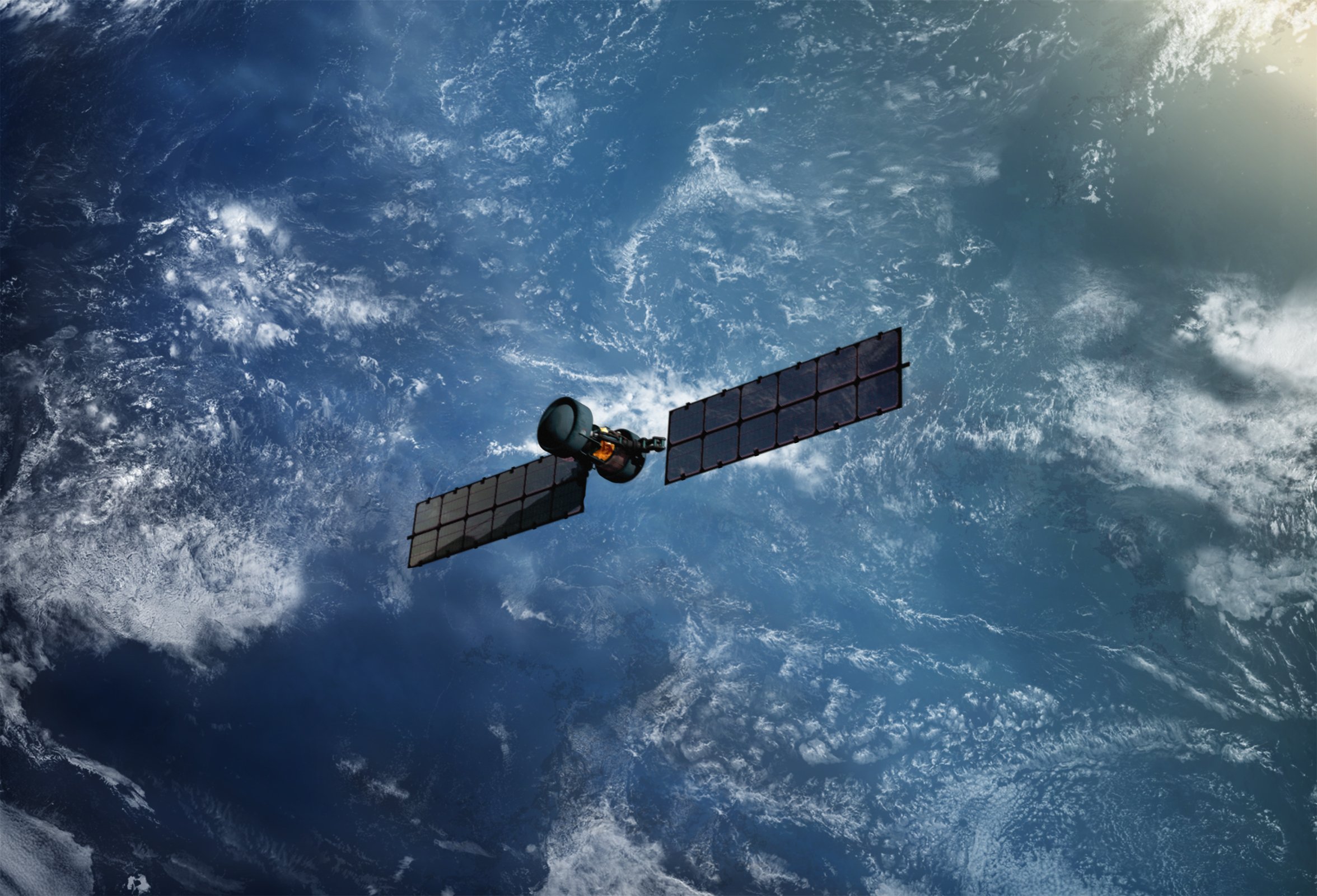
Image source: Getty Images.
Introducing Andromeda
Enter Andromeda, the new Space Force program that aims to track everything that happens in geosynchronous orbit (GEO) around Earth -- the patch of space 22,000 miles away that's home to America's most important communications and missile-warning satellites. This new 10-year, $1.8 billion program will award task orders to 14 space companies named in a Space Force award earlier this month.
Some of the companies named to participate in Andromeda are well known but not yet publicly traded -- General Atomics and Sierra Space, for example. Others are publicly traded, but may or may not be well known: BAE Systems (BAESY +1.20%), L3Harris (LHX 0.71%), Lockheed Martin (LMT 0.94%), and Northrop Grumman (NOC 0.80%) fit into the former category, while Intuitive Machines (LUNR +5.96%) and Redwire (RDW +6.72%) are lower-profile but also public companies.
There's even one that's becoming very famous, and may be contemplating an initial public offering (IPO) in the not-too-distant future: Anduril Industries.
What will Andromeda do?
Andromeda aims to hire one or more of the above companies to build a set of small satellites to perform "neighborhood watch" duties in GEO. Once launched, these satellites will be able to move around under their own power, visiting and inspecting other satellites, monitoring what those other satellites are doing, and generally getting a closer-up view of happenings in orbit than can be gathered from ground stations 22,000 miles away on Earth.
Space Force intends to award an initial "RG-XX" task order for Geosynchronous Reconnaissance and Surveillance under the $1.8 billion Andromeda program soon, with the goal of having its chosen contractors put satellites in orbit by 2030. Further task orders may follow in future years for one or more of the companies on the list.
What can Anduril do for Andromeda?
Best known as a start-up manufacturer of low-cost drones, counter-drone systems, and rockets, Anduril also boasts a small space division focusing on building "space vehicles and ground systems with advanced autonomy and cutting-edge capabilities."
The company keeps pretty mum on the specifics of its space division. To illustrate, here are three satellite systems Anduril describes building on its website:

Image source: Anduril Industries.
Still, the company specifically describes upcoming missions in 2026 that will demonstrate "space domain awareness" and "rendezvous and proximity operations in GEO." Sounds like just what the Space Force is looking for!