Tech veteran Intel (INTC -2.63%) has been an amazing turnaround story after initially struggling to capitalize on the arrival of artificial intelligence. Its stock has risen more than 300% in the past 12 months through the end of April.
Several factors have driven shares steadily skyward, from an $8.9 billion investment by the federal government last year to a deal to produce semiconductor chips for Apple. These are encouraging signs of Intel's rebound, and one of the company's latest business partnerships may prove the best yet: its participation in the Elon Musk-backed Terafab project.
Investors were excited about Intel's Terafab involvement, announced on April 7, helping shares soar a jaw-dropping 115% in April. Is Terafab the key to finally turning Intel's fortunes around?
Headline-grabbing news can temporarily boost the share price, so let's dig into whether this partnership can translate into long-term gains.
Image source: Intel.
Terafab's massive scope and Intel's role
Understanding why Terafab was a catalyst requires some background on the project. Terafab is a joint venture across Musk's companies, intended to construct a new mega-factory to supply them with semiconductor products.
The initiative emerged from an enormous need for artificial intelligence chips to feed Musk's businesses. The chips are required for the planned rollout of a self-driving car fleet, an army of AI-powered robots, and human expansion across the solar system. The last one is estimated to require 80% of Terafab's output for Musk's SpaceX, which is anticipated to go public later this year.
The project's ambitions are incredible. Terafab seeks to produce 50 times the world's current AI chip output, once the facility is fully up and running in the coming years.
While Intel stock got a boost from the Terafab announcement, the company's role in the endeavor isn't entirely clear. The chipmaker describes itself as a "strategic partner" in the project.
That could mean it will serve as a consultant to get manufacturing operations up and running. Intel could also license its nascent, next-generation 14A process technology to Terafab, given that Musk said "14A seems like the right move" to adopt for the facility.

NASDAQ: INTC
Key Data Points
Intel stock's historic run
What is known is Terafab's intention of finding new ways to build semiconductor chips, methods that will make them cheaper and more efficient to produce. Intel will help here, with CEO Lip-Bu Tan describing the approach as "looking for unconventional ways to improve manufacturing efficiency."
All of this has played into investor excitement over Intel's apparent recovery from earlier artificial intelligence missteps. Terafab is a sign that the chipmaker may finally be getting its AI act together.
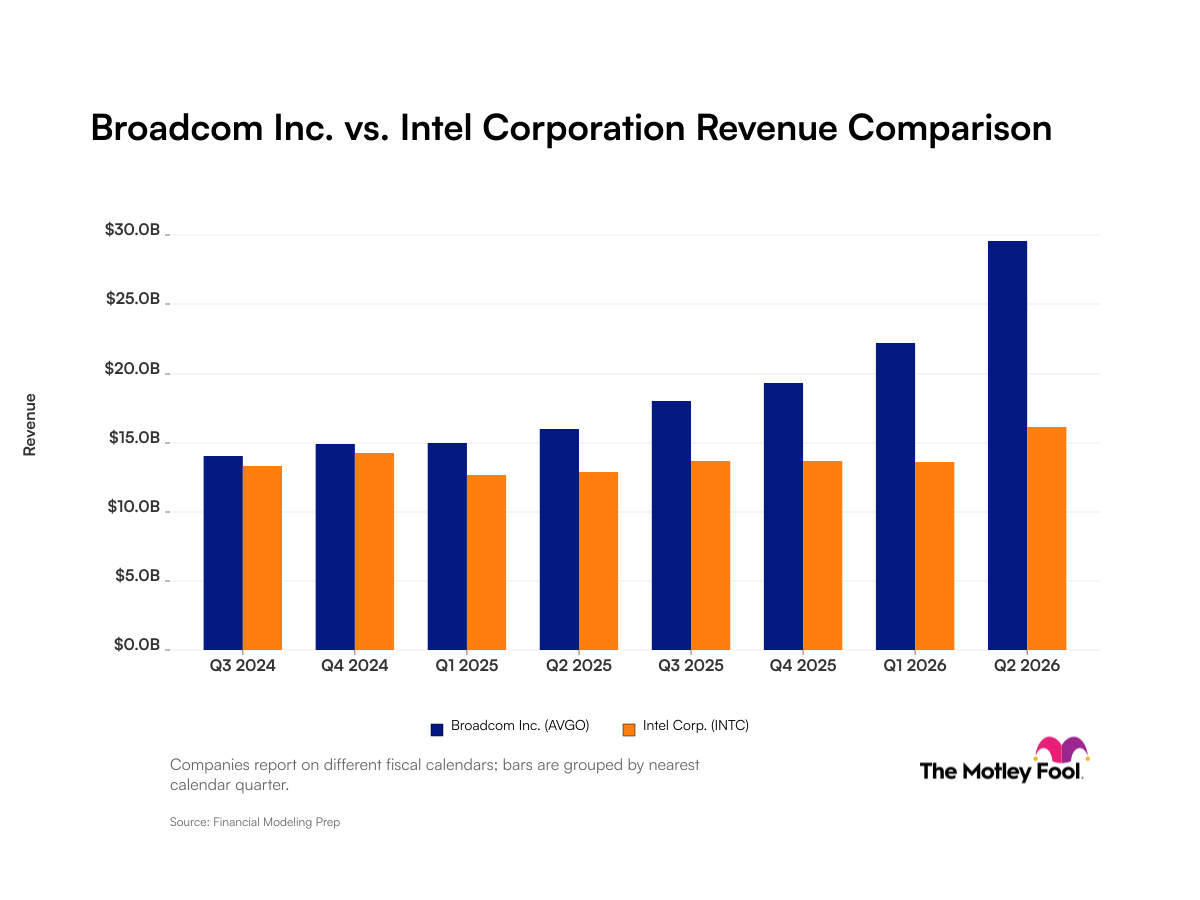
Adding fuel to the fire was Intel's solid earnings report for its fiscal first quarter, ended March 28. The company delivered 7% year-over-year revenue growth to $13.6 billion.
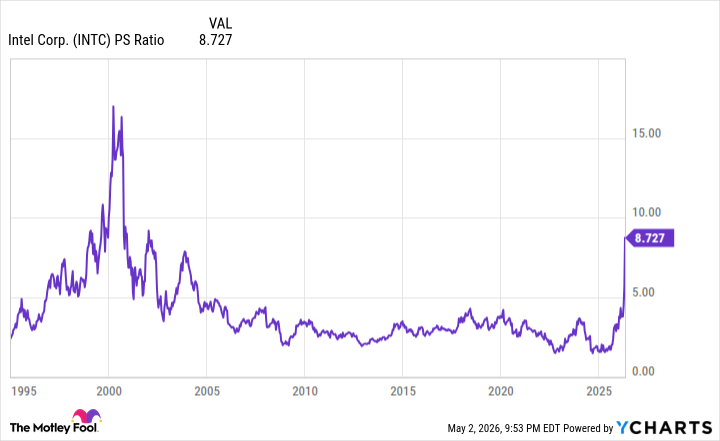
This confluence of good news drove the company's stock on a historic run. Its share price has never been higher than it is now. Consequently, Intel's valuation is lofty, as evidenced by its price-to-sales ratio.
Data by YCharts.
As the chart reveals, Intel's sales multiple hasn't been this high since the dot-com era at the turn of the century.
Terafab isn't Intel's greatest boon
Intel's elevated sales multiple suggests now is a good time to sell, but as a shareholder, I intend to hold on to the stock. The Terafab opportunity is a consideration in that decision, but not the primary reason. Intel's role in that project is too vague to know how much of a revenue bump it can deliver.
Rather, the ascension of Lip-Bu Tan to Intel CEO in 2025 marked the start of the company's current turnaround, and I believe he is key to its future. He was a factor in Intel's selection as a Terafab partner. As Musk stated, "We have a great relationship with Intel, a lot of respect for the CEO, the CTO, and the new team there."
Tan discussed the changes implemented at the company and their impact on Q1 performance, stating, "This deliberate reset to how we operate drove a sixth consecutive quarter of revenue above our expectations, as well as new and deepened relationships with strategic partners."
What Tan described is the kind of tangible result that validates Intel is a stock worth owning for the long term. The Terafab partnership is just the latest indication of Intel's comeback.
That said, investors who want to purchase Intel shares should hold off for now, given the high valuation. The stock exhibits elevated volatility, as evidenced by its beta of nearly 1.4, so you should wait for a price correction before taking the plunge.