Construction of a new nuclear power plant can take five years or longer, according to the U.S. Energy Information Administration (EIA). That doesn't consider that the U.S. Nuclear Regulatory Commission (NRC) application review process can take up to five years, according to the EIA.
In comparison, small modular reactors (SMRs) can theoretically be developed at a lower cost and be up and running faster than traditional reactors. While SMR technology has yet to be commercialized in the U.S., there are companies making promising developments. As more data centers seek nuclear power providers that can get operations up and running faster, two companies that could capitalize on that growing demand are NuScale Power (SMR +1.58%) and Oklo (OKLO +5.52%).

Image source: Getty Images.
The first-mover advantage
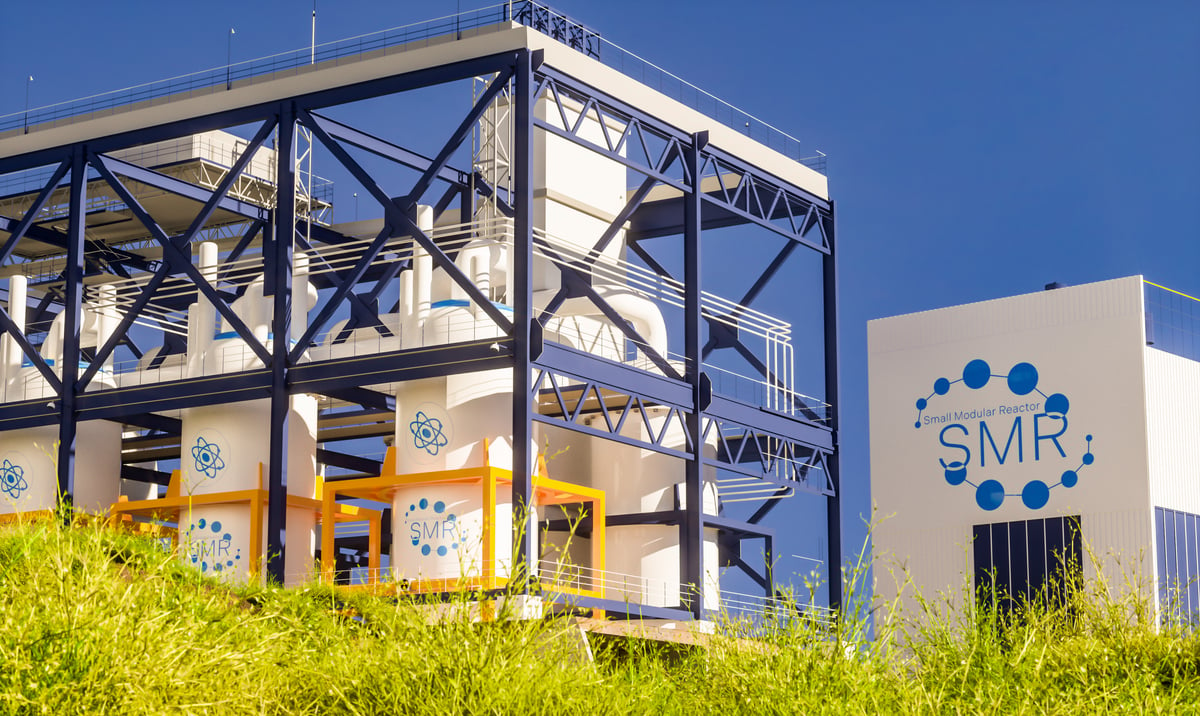
Getting a traditional nuclear reactor into service is a time-intensive project. Those traditional power plants also require a lot of space, limiting where they can be placed. That's why SMRs can help solve construction bottlenecks, due to their greater placement flexibility and faster launch times.
NuScale is considered to have an early lead in that market with the first SMR design certified by the NRC. Across 21 countries, it also has over 700 patents pending or granted, which help protect its technological innovations and can further extend its lead.

NYSE: SMR
Key Data Points
The company has yet to launch a commercial reactor, but in the meantime, it generates revenue from engineering work and licensing fees.
The dealmaker
Like NuScale, Oklo is developing SMRs, but it's shown stronger commercial momentum. It revealed a partnership with Meta Platforms in January. "The agreement provides a mechanism for Meta to prepay for power and provide funding to advance project certainty for Oklo's Aurora powerhouse deployment," the announcement stated.
Oklo also has a partnership with Nvidia for research on nuclear fuel and infrastructure, and is in talks with Centrus Energy to form a joint venture for enrichment and deconversion services. It also announced a 2025 collaboration with Vertiv to explore solutions for hyperscale and colocation data centers.

NYSE: OKLO
Key Data Points
One interesting aspect of the business worth mentioning that could turn into a competitive advantage for the company: Its plans to recover nuclear waste for reuse as fuel for advanced reactors. That allows it to rely less on new mining activity and can help reduce fuel costs over the long term. It is currently building a $1.6 billion nuclear fuel recycling facility in Tennessee.
The nuclear energy stock winner
Neither company has a commercial launch, so buying stock in either is a speculative investment based on future possibilities.
In 2025, Oklo reported a net loss of more than $105 million. NuScale's net loss was even greater at more than $664 million. Net losses of those sizes are never great, but they're also not surprising, as these are both early-stage companies in an industry with significant technology and infrastructure development costs. The key is whether they can keep funding operations until they start selling reactors. With that in mind, as of now, Oklo looks like the better investment of the two.
NuScale has an edge in terms of being the first company to receive design approval, but Oklo's advantage is that it can start generating revenue from its reactors faster, helping it slow down its cash burn and losses. Oklo believes commercial operations will begin somewhere between the end of 2027 and the start of 2028, while NuScale expects to have a reactor up and running by 2030. Oklo still needs regulatory approval, but it will potentially be ready for commercial deployment sooner than NuScale, based on each company's estimated timelines.
This dynamic could always change, as NuScale's progress could accelerate faster than anticipated while Oklo's momentum turns out to be slower. But given where each company stands in its progress as of now, I'd prefer the company closer to commercialization, because it can start seeing more meaningful revenue sooner.