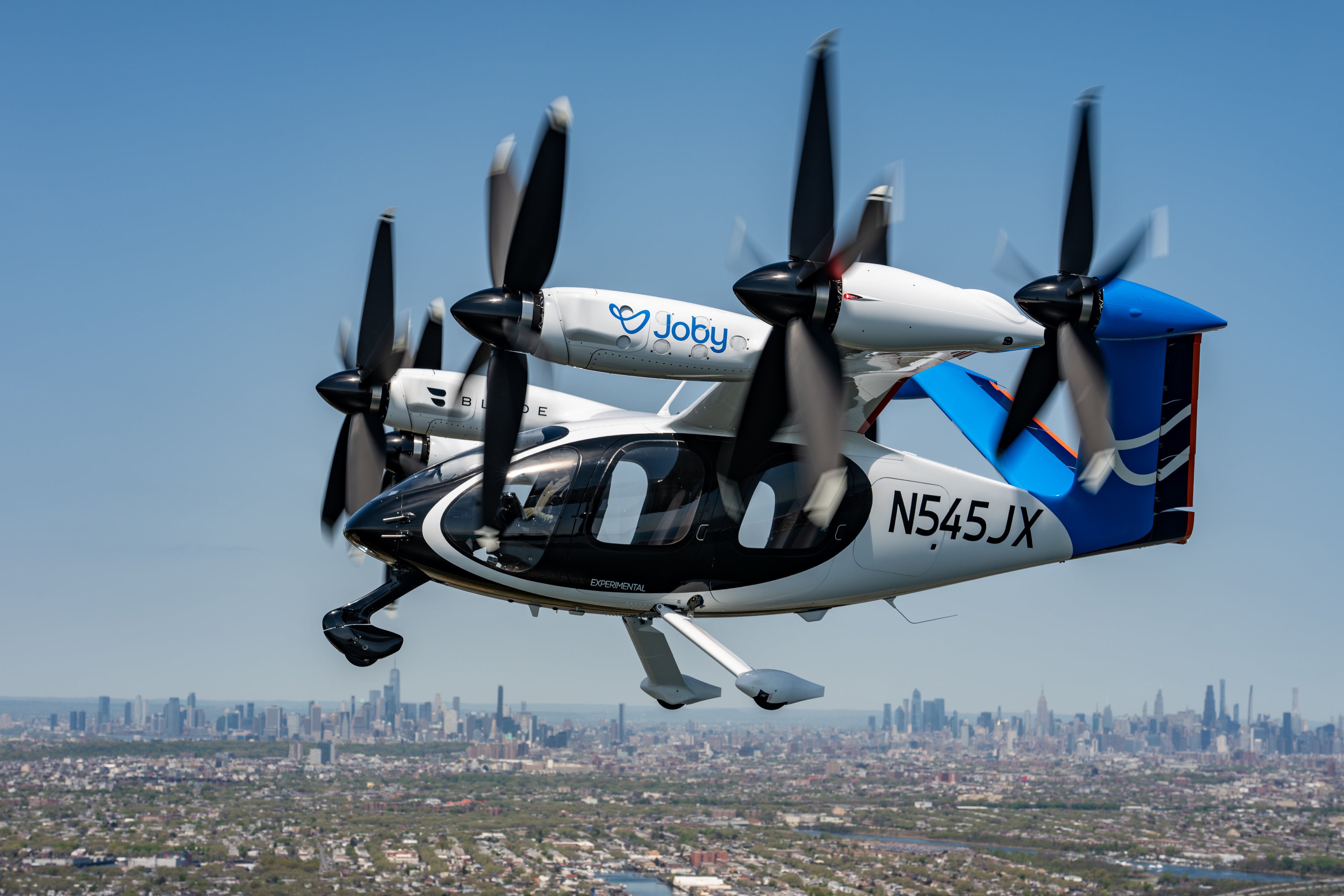
Investors often talk about considering risk and reward when valuing stocks, particularly in speculative areas like the electric vertical takeoff and landing (eVTOL) sector. Doing so with the two highest-profile eVTOL companies, Joby Aviation (JOBY 2.60%) and Archer Aviation (ACHR 3.80%), makes for a fascinating comparison. And it suggests buying the former over the latter.

Image source: Joby Aviation.
Joby Aviation vs. Archer Aviation
It's important to clearly distinguish between the two eVTOL companies. Archer Aviation aims primarily to be an eVTOL original equipment manufacturer (OEM), while Joby intends to be a vertically integrated transportation-as-a-service (TaaS) company. Both business models have their pluses and minuses.
Archer's OEM model benefits from leveraging established aerospace technology partners for its components; in theory, that should make its certification pathway easier. On the other hand, relying on other companies for a supply chain carries its own risk, including less control. However, the biggest plus of Archer's model is that it should result in earlier, more significant revenue for the company, as it will generate sales from equipment.

NYSE: ACHR
Key Data Points
In contrast, Joby's go-it-alone technology development (with significant manufacturing support from its investor, Toyota Motor) is seen as riskier from a development perspective, but offers more control. The TaaS model involves Joby building, owning, and operating its own eVTOL fleet as a kind of Uber Technologies of the skies -- in fact, Uber is an investor and partner in Joby. The downside of this model is that it takes longer to accelerate revenue, and requires a significant investment in building out the TaaS model.
The comparison between the two models is shown in the Wall Street analyst consensus figures from S&P Global Market Intelligence. Note that in 2030 Archer's predicted revenue, earnings before interest and taxes (EBIT), and free cash flow (FCF) are all higher than Joby's, and it's expected to use less of its revenue on capital spending.
However, as Joby's TaaS model kicks in and the company starts generating revenue from air taxi flights, every single one of these metrics reverses in its favor by 2034.
|
Metric |
2026 |
2030 |
2034 |
|---|---|---|---|
|
Joby revenue |
$111 million |
$2.24 billion |
$11.0 billion |
|
Archer revenue |
$14.4 million |
$2.51 billion |
$4.89 billion |
|
Joby EBIT |
($888 million) |
($111 million) |
$2.48 billion |
|
Archer EBIT |
($935 million) |
$270 million |
$2.11 billion |
|
Joby capital spending share of revenue |
117.7% |
7.1% |
1.3% |
|
Archer capital spending share of revenue |
661.1% |
3.7% |
2.6% |
|
Joby free cash flow |
($803 million) |
($112 million) |
$1.28 billion |
|
Archer free cash flow |
($897 million) |
$380 million |
$988 million |
Data source: S&P Global Market Intelligence.
All of this leads to the first argument relating to reward. Simply put, Joby Aviation offers greater potential long-term rewards than Archer does. If (and it's a big if) Joby's TaaS model works, then it offers potentially higher earnings and cash-flow margins than Archer's OEM model.
Don't forget risk
Joby's model is inherently riskier, with many more moving parts. But two key considerations may significantly reduce Archer's risk advantage, leading to the second and third reasons to favor Joby. It's actually slightly ahead of Archer in the race for Federal Aviation Administration (FAA) certification. This fact puts paid to the argument that Archer's eVTOL development model is less risky.
Recent negative commentary from United Airlines CEO Scott Kirby on flying eVTOL into airports calls into question whether the airline will go through with its $1 billion agreement to order eVTOL from Archer. As you can interpolate from the figures above, $1 billion is a large figure in the scheme of Archer's revenue over the medium term.
In contrast, Delta Air Lines continues to invest in Joby Aviation. While that carries no commitment from Delta, it does imply that its management believes in Joby, and in its potential to integrate a Joby service into Delta's offerings to premium customers.

NYSE: JOBY
Key Data Points
Joby over Archer?
There are no guarantees with eVTOL. But when you compare the two in terms of risk and reward, Joby Aviation offers more reward potential and less risk than most investors believed at the start of the year, and Archer Aviation has more risk than previously thought. If you're considering buying one of these stocks, you might want to favor Joby.