Hormel Foods (HRL 0.75%) is not a name that generates excitement at dinner parties or in investment portfolios. That is, in a real sense, my entire thesis for why this stock could make you a millionaire over time. The stock trades near $20 a share, down roughly 47% over five years. The valuation hasn't been this low since the early 2010s.
The brands this veteran company manages include Spam, Skippy, Planters, Jennie-O, Applegate, Justin's, and Hormel Black Label, a portfolio of proteins and snacks that occupy some of the stickiest positions in the American grocery aisle. These are habitual brands. The consumer who reaches for Skippy peanut butter does not comparison-shop. Neither does the one buying Spam for a recipe they have made for 30 years.
The bear case on Hormel is real and worth naming first: Retail segment volumes have been soft, raw material costs ran hot through 2024 and 2025, and the company spent three years navigating commodity inflation that hit its protein-heavy cost structure harder than most packaged food peers.

Image source: Getty Images.
Hormel's bull case
But the bull case is building from the bottom up, quarter by quarter. Q1 fiscal 2026 marked the fifth consecutive quarter of organic net sales growth, a streak that the company did not have two years ago. Foodservice and International both delivered high single-digit organic growth, with Spam leading branded export growth in China and across global markets. The Foodservice channel -- where Hormel sells to restaurant operators, hospitals, universities, and hotels -- carries structurally higher margins than retail, and its recovery is a signal that the volume problems are concentrated in one channel, not the whole enterprise.
The portfolio is also getting leaner. In February 2026, Hormel announced the sale of its whole-bird turkey business to Life-Science Innovations. This was a deliberate exit from a commodity protein segment with volatile margins, and it previously exited non-core private-label snack nut items for the same reason. Each divestiture narrows the business toward branded, value-added products where pricing power exists and private-label competition is weaker.
Interim CEO Jeff Ettinger framed it precisely at the CAGNY 2026 conference: "Hormel is a global branded food company, centered on protein, built around a deep understanding of the consumer." That is not a holding pattern statement. It is a portfolio thesis.

NYSE: HRL
Key Data Points
The long-term millionaire-making algorithm
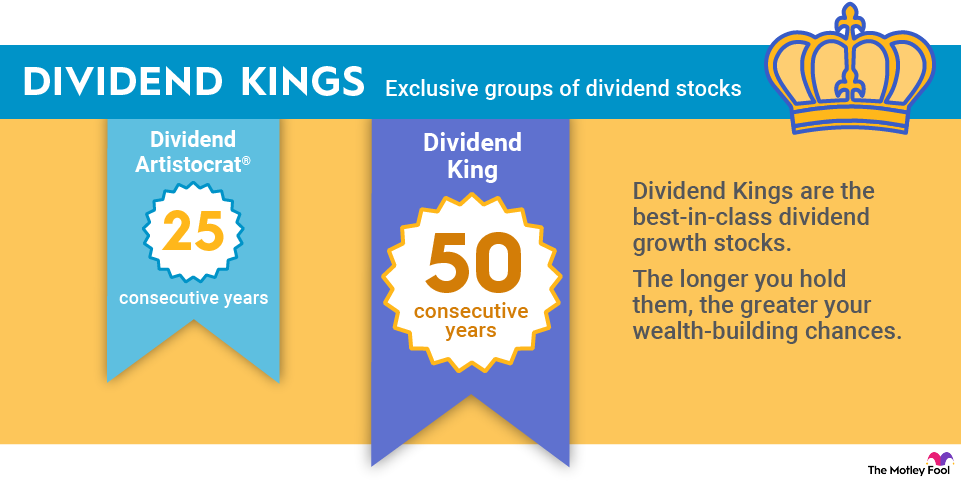
Hormel has raised its dividend for 60 consecutive years -- one of the longest such streaks of any public company on earth, placing it in the exclusive Dividend King tier. A Dividend King is a company that's grown its dividend payment for at least 50 consecutive years. At today's price, that dividend yields approximately 4%. The company's long-term algorithm targets 2%–3% organic net sales growth and 5–7% operating profit growth annually -- a profile that, if achieved at today's starting valuation, generates substantial long-term returns.
Here is where the millionaire math becomes real. An investor who puts $500 per month into Hormel at today's price, dollar-cost averaging through any recovery, collecting and reinvesting a 4% dividend along the way, builds a position that, at the company's own long-term algorithm of 5%–7% annual operating profit growth and a modest valuation rerating back toward historical norms, crosses $1 million in roughly 25 to 30 years. That is not a bold prediction; it is the arithmetic of buying a Dividend King at a decade-low valuation and letting compounding do the work that patience always rewards.