Last May, the U.S. Department of Energy (DOE) set a deadline for at least three advanced reactors to achieve criticality -- or proof of sustainable, controlled chain reactions -- by July 4, 2026, to advance its Reactor Pilot Program for accelerated nuclear tests.
Oklo (OKLO +5.52%), a developer of microreactors for nuclear power plants, is participating in that program through several major projects -- including its Groves Isotope Reactor in Texas and Aurora Powerhouse reactor in Idaho. Oklo aims to achieve criticality at its Groves project by the DOE's deadline. Its newly acquired medical and industrial isotopes business, Atomic Alchemy, has been developing that facility. Should you buy Oklo's volatile stock -- which has swung between $34.10 and $193.84 per share over the past 52 weeks -- before that key date?

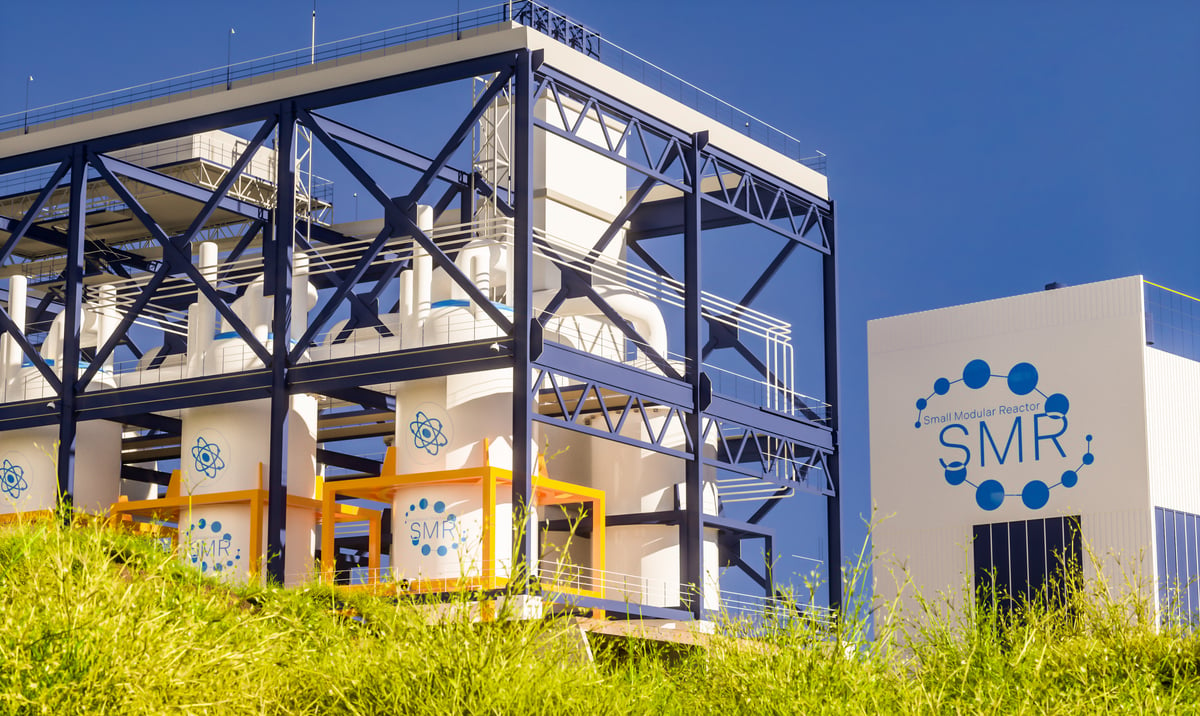
Image source: Oklo.
Will achieving criticality move the needle for Oklo?
Oklo's Aurora microreactor generates only 1.5 MWe on its own, but it can be chained together with more microreactors to deliver up to 75 MWe per deployment. That's a lot less power than a conventional nuclear power plant, which generates more than 1,000 MWe, but that modular design makes the Aurora ideal for smaller, remote, and off-grid nuclear power plants.
Oklo also uses metallic uranium fuel pellets, which are denser, more resistant to high temperatures, and cheaper to fabricate than the uranium dioxide fuel pellets used in conventional reactors. It can also reprocess and recycle that fuel in a closed loop, so its microreactors can last for about a decade without refueling. Conventional reactors still need to be refueled in stages every two years.
Those key advantages make the Aurora seem like a game-changer for the nuclear industry, but it needs to prove that its nuclear fission reactions are stable and sustainable. That's why any updates regarding its progress toward the DOE's July 4 deadline will likely move its stock.

NYSE: OKLO
Key Data Points
But will those gains be sustainable?
Oklo, with a market cap of $12 billion, is difficult to value because it hasn't commercialized its reactors and generated any meaningful revenue yet. However, it aims to bring its first Powerhouse reactors online in Idaho in 2027, and analysts expect its revenue to soar to $48 million by 2028 as it expands that project and secures more contracts. The ongoing expansion of the power-hungry cloud, AI, and data center markets should drive that growth.
That's a rosy outlook, but Oklo already trades at 253 times its 2028 sales. It will also remain unprofitable for the foreseeable future. That's why its stock is so volatile -- and why any short-term gains leading up to July 4 might not be sustainable in a market downturn. While I wouldn't rush to buy Oklo's stock before that deadline, I'll still keep a close eye on its progress -- since the upcoming developments could either make or break the stock.