Today is another big day for Wall Street's leading financial institution, the Federal Reserve. Following the end of Jerome Powell's second term as Fed chair on May 15, his successor, Kevin Warsh, will officially be sworn in.
In addition to marking a new chapter for the Fed, it signals the start of a period of potential unrest for Wall Street's major stock indexes, the Dow Jones Industrial Average (^DJI +0.59%), S&P 500 (^GSPC +1.18%), and Nasdaq Composite (^IXIC +2.07%).
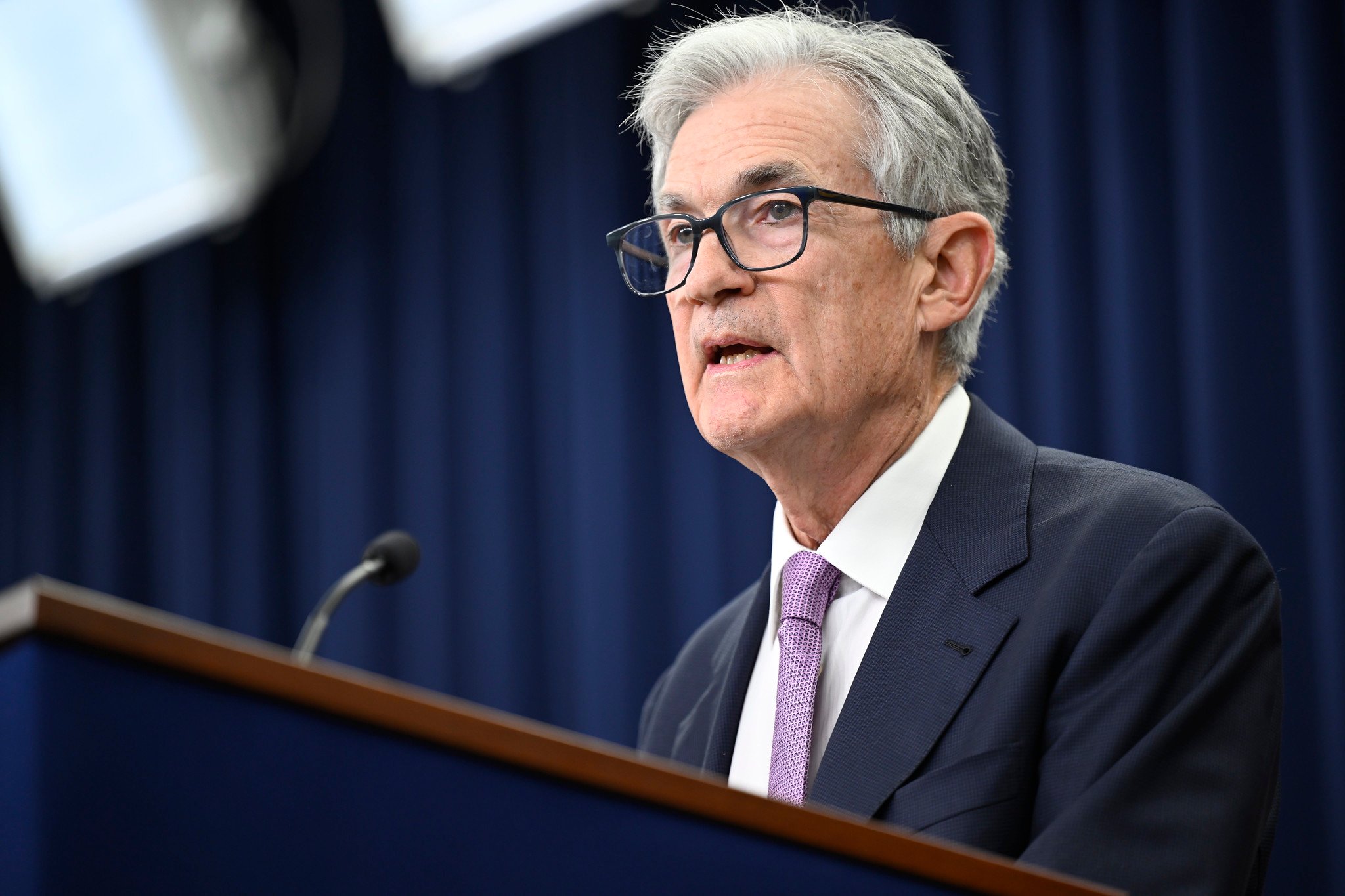
The end of Jerome Powell's tenure as Fed chair on May 15 means Kevin Warsh has inherited a difficult situation. Image source: Official Federal Reserve Photo.
New Fed Chair Kevin Warsh is stepping into a challenging situation
Warsh will be tasked with one of the most challenging economic scenarios in history. He enters the central bank's lead position amid a historically divided Federal Open Market Committee (FOMC), an exceptionally pricey stock market, and with two price shocks still filtering into economic data.
President Donald Trump, who nominated Warsh to the position, is expecting aggressive interest rate cuts that he openly lobbied for (but never received) with Powell in charge. Wall Street would also prefer to see lower interest rates, because it would help fuel the artificial intelligence data center build-out and would make servicing the nation's more than $39 trillion in debt less costly.
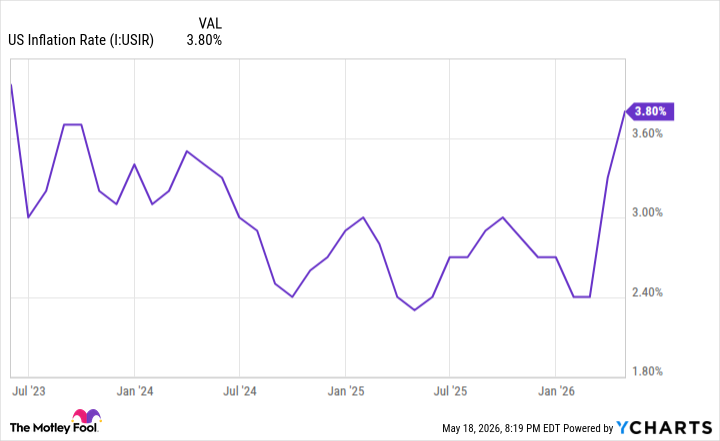
US Inflation Rate data by YCharts.
But inflation has other plans. Although now-former Fed chair Powell often cited the price stickiness of Trump's tariffs on the goods sector when discussing elevated inflation, the primarily catalyst of rapidly rising inflation is the Iran war.
Shortly after Trump gave the green light for the U.S. military to attack Iran on Feb. 28, the latter closed the Strait of Hormuz to most commercial vessels. This has led to the largest energy supply disruption in modern history and is responsible for lifting the trailing 12-month inflation rate from 2.4% in February to 3.8% in April.
It's also put the FOMC on a collision course with higher interest rates!

Image source: Getty Images.
The probability of a rate hike over the next year is rising
Although no predictive tool can guarantee what's to come, the CME Group's FedWatch Tool points to a growing likelihood of rate hikes, not cuts, over the next year. The FedWatch Tool relies on live trading data from the 30-day Fed funds futures market to calculate the probability of FOMC interest rate changes at upcoming meetings.
For example, there's only a 0.6% probability of the FOMC raising interest rates at the June 2026 meeting. However, the probability of a higher federal funds target rate than the present range of 3.5% to 3.75% increases with every subsequent FOMC meeting:
- July 2026: 5.4% probability of a rate hike
- September 2026: 15.6%
- October 2026: 26.8%
- December 2026: 44.4%
- January 2027: 52.7%
- March 2027: 64.5%
- April 2027: 70.2%
By April of next year, there's a 40% chance of interest rates rising by 25 basis points and a 22% chance of a 50-basis-point increase.
Making matters worse for a historically pricey stock market is the fact that Kevin Warsh's previous FOMC voting record shows he's a monetary hawk. From Feb. 24, 2006, to March 31, 2011, Warsh repeatedly cautioned about lowering interest rates, even as the unemployment rate surged during the financial crisis.
The new Fed chief's focus on price stability, coupled with an unrelenting rise in inflation caused by the Iran war, puts a historically pricey stock market on a collision course with higher interest rates as soon as late 2026/early 2027.