MP Materials (MP +0.00%) is a rare-earth mining company at the forefront of a massive effort to rebuild the U.S.'s domestic supply chain of rare-earth elements. And by "forefront," I mean it is pretty much standing alone.
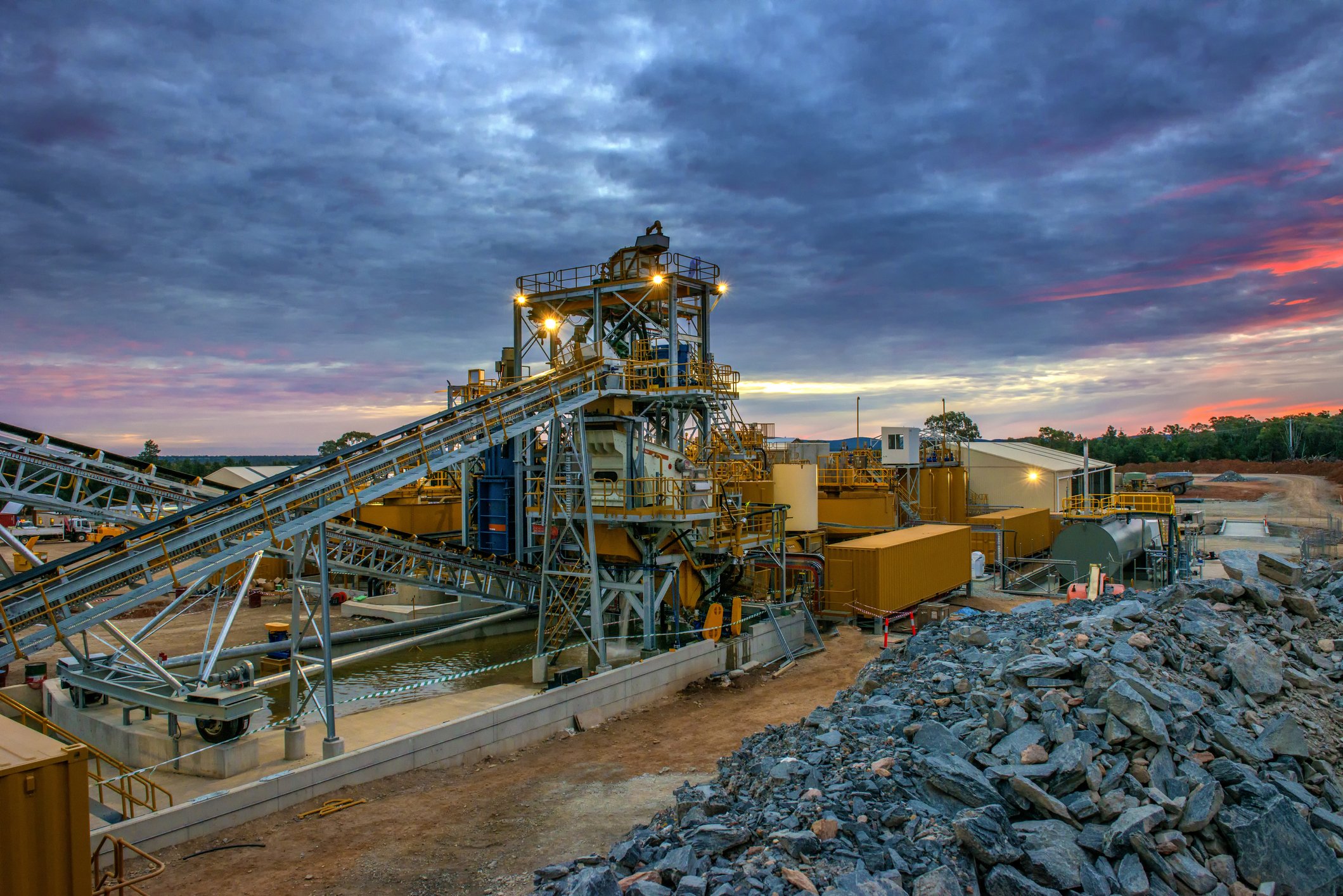
To date, no other U.S. company has what is under MP Materials' control. And no, I'm not talking about its partnership with Apple or its lucrative agreement with the Department of Defense (DOD) -- both, no doubt, key drivers behind MP stock's monster 223% gain last year. I'm referring to its key asset: the Mountain Pass mine, the only major rare-earth mine in operation in the U.S. today.

NYSE: MP
Key Data Points
Without MP's major mining facility in California and its Texas magnet factory to go with it, the U.S.'s ambition to break free from China's rare earths would have very little homegrown metal behind it, at least not enough above ground to refine into those highly sought-after high-performance magnets that every industry, from defense to tech, needs.
And yet something isn't lining up. MP has inked major partnerships with the DOD and Apple; it has reported a strong first-quarter revenue beat; it's even transitioning into profitability -- yet the stock is flat in 2026, even dipping significantly at times back down toward pre-DOD levels.
What gives? How could good news make the metal stock look worse?
What's happening to America's rare-earth miner in 2026?
The problem has always been MP's valuation. Indeed, despite its strategic importance to the U.S. rare-earth supply chain, the company's stock has run far, far ahead of its underlying business. Even at today's depressed price, it still trades about 37 times sales and more than 450 times forward earnings -- both of which scream anything but cheap.
On top of that, the larger geopolitical context around MP appears to be shifting, if only temporarily. Yes, I'm referring to the fact sheet on President Donald Trump's visit to Beijing. It appears that Trump has negotiated terms with China to facilitate rare-earth exports to the U.S. From the fact sheet:
China will address U.S. concerns about supply chain shortages of rare-earth and other critical minerals, including yttrium, scandium, neodymium, and indium. China will also address U.S concerns regarding prohibitions or restrictions on the sale of rare-earth production and processing equipment and technology.
Neodymium is one of MP's major outputs at Mountain Pass, and it (along with praseodymium) is an essential ingredient for permanent magnets.

Image source: MP Materials.
The fact that the U.S. is negotiating these terms with China doesn't mean it has given up on MP, nor on its ambitions to rebuild its supply chain. Instead, it reflects a deeper issue: MP may be America's most important rare-earth company right now, but one company's record output isn't the same as a fully rebuilt domestic supply chain.
Previously, MP was valued as if it were synonymous with that supply chain. The reality is that it can't be, at least not now. The company's inherent limitations -- it takes time and capital for a mining company to scale -- are forcing the market to revalue the stock, which is why it's trading lower in 2026 despite last year's major deals.