It's been a history-making month for the Federal Reserve. May 15 marked Jerome Powell's final day as head of the Fed, while a May 22 swearing-in ceremony at the White House cemented President Donald Trump's handpicked successor to Powell, Kevin Warsh, as the 17th head of the central bank.
It's also an uneasy time for the Dow Jones Industrial Average (^DJI +0.18%), S&P 500 (^GSPC +0.77%), and Nasdaq Composite (^IXIC +1.57%), which are potentially losing the predictability that was fostered with Powell at the helm.
Warsh has made it crystal clear that he wants to effect significant reforms at the Fed. During his testimony before the Senate Banking Committee, he thrust the blame for the Fed's bloated balance sheet on his predecessors and floated the idea of changing how we think about inflation.
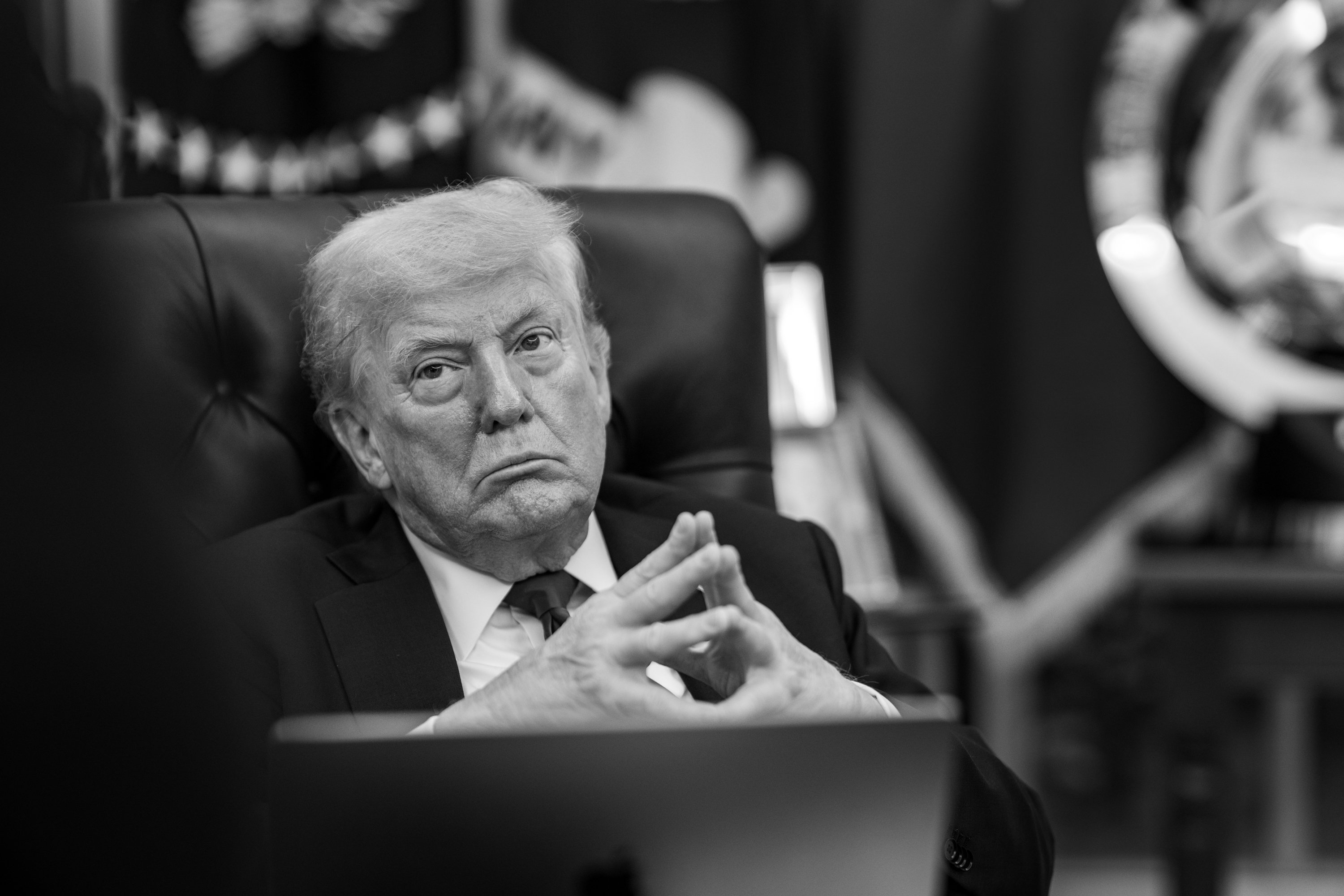
President Trump in a meeting. Image source: Official White House Photo by Daniel Torok.
But before Warsh has an opportunity to effect change, he'll have to wrangle two concurrent price shocks, courtesy of decisions made by President Trump.
An inflationary mess awaits the new Fed chair
In April 2025, the trailing 12-month (TTM) inflation rate stood at 2.3% and was approaching the 2% long-term inflation target that the Federal Open Market Committee (FOMC) has held as the gold standard since January 2012. Then everything changed...
In early April 2025, the president unveiled his tariff and trade policy, which introduced sweeping global tariffs and levied higher reciprocal tariffs on dozens of countries. Even though the U.S. Supreme Court invalidated most of these tariffs in February 2026 (prompting Trump to initiate another sweeping global tariff), the price stickiness of import duties continues to weigh on the goods sector to this day.
The second concurrent price shock comes courtesy of Trump's order for U.S. military forces to attack Iran. Since these attacks began on Feb. 28, Iran has shut down the Strait of Hormuz to virtually all commercial vessels, resulting in the largest energy supply disruption in modern history.
⛽ Average U.S. gas prices per gallon on May 6, per AAA:
-- NBC News (@NBCNews) May 6, 2026
• Regular: $4.54 (⬆️ $1.56 since war in Iran began on Feb. 28)
• Premium: $5.39 (⬆️ $1.85 since war began)
• Diesel: $5.67 (⬆️ $1.81 since war began)
Prices at the fuel pump have soared faster than at any point in the last three decades. But energy price shocks have several phases, and we're beginning to see evidence of non-energy-driven inflation entering the picture. Once higher transportation and production costs are factored into economic data, TTM inflation can jump further.
Between February and April, TTM inflation has risen from 2.4% to 3.8% (a roughly three-year high). According to the Cleveland Fed's proprietary Inflation Nowcasting tool, TTM inflation is projected to rise another 38 basis points to 4.18% in May.
Warsh is taking the helm at an exceptionally challenging time for the U.S. economy. While Trump has lobbied for substantially lower interest rates and Warsh has alluded to coming reforms, the new Fed chair may have little choice but to focus his and the FOMC's efforts on putting out the proverbial fires that the president's decisions have created.
With Kevin Warsh bringing a hawkish voting record on monetary policy to the position, and several members of the FOMC disagreeing with the use of the easing bias statement at the April 2026 meeting, unfavorable rate hikes (at least in the eyes of Wall Street) may be the medicine necessary to quell inflationary fears.