The artificial intelligence (AI) memory chip sector is experiencing something of a renaissance at the moment. As of 3 p.m. ET on May 27, both SK Hynix and Micron Technology (MU -4.96%) have entered the trillion-dollar club -- boasting market caps of $1.1 trillion and $1 trillion, respectively.
This milestone reflects much more than robust earnings or an encouraging future outlook. Rather, it signals a fundamental rerating of memory's critical importance in the AI infrastructure era.

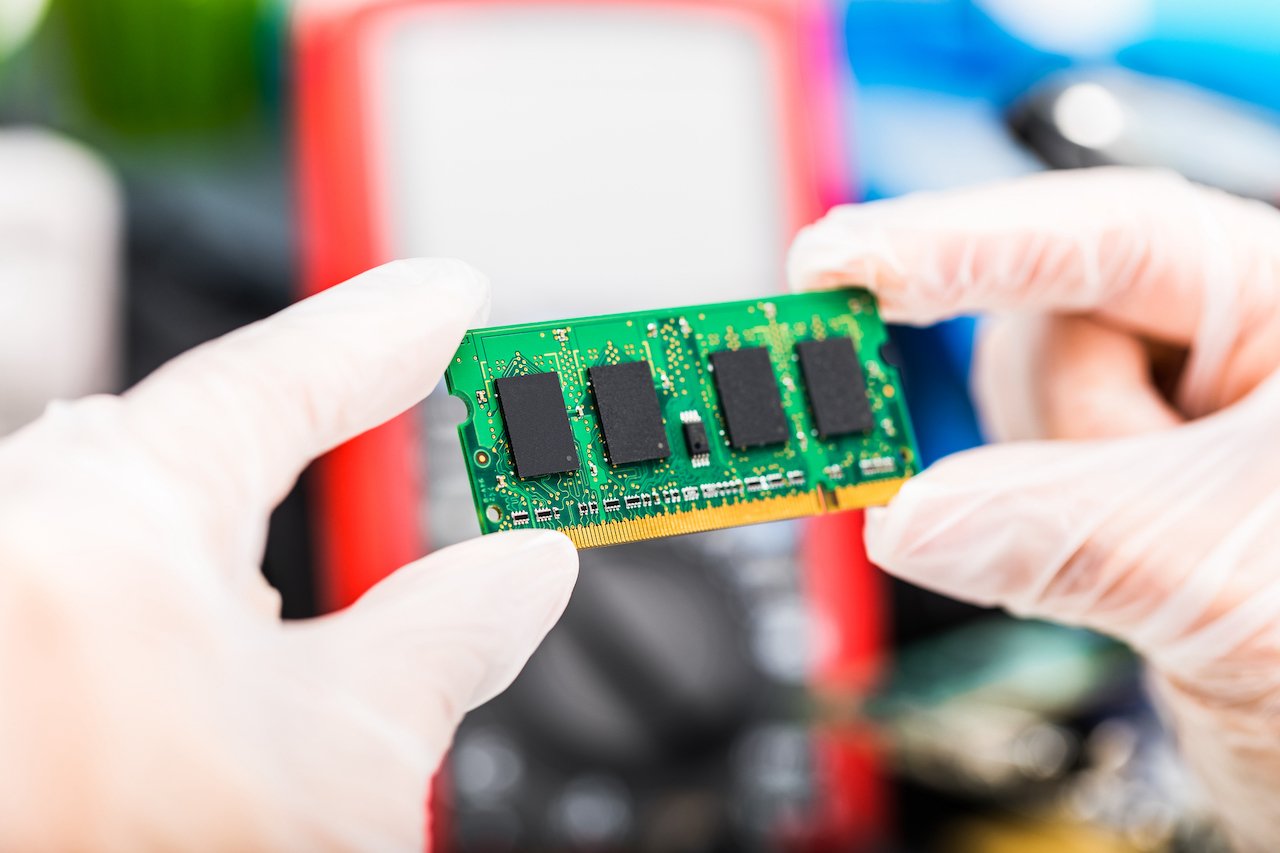
Image source: Getty Images.
What is fueling the rally behind Micron and SK Hynix?
Over the last year, memory has become a critical bottleneck within AI data centers. Traditional DRAM struggles to keep pace with the latency and bandwidth needs of next-generation AI accelerators. High-bandwidth memory (HBM) layers memory dies to produce dramatically higher bandwidth.
SK Hynix and Micron have captured leading share in supplying HBM to graphics processing unit (GPU) designers like Nvidia. For now, supply chains are constrained as demand is effectively pre-sold for extended periods. These dynamics have shifted significant pricing power toward memory producers. As a result, SK Hynix and Micron are generating historically high revenue while also expanding profit margins.
The memory supercycle has fueled jaw-dropping valuation expansion
In 2026 alone, SK Hynix shares have risen by more than threefold -- generating a roughly 230% return. The performance in Micron stock has been equally dramatic: Shares have surged 226% year to date, making Micron the second-best performer in the Nasdaq-100 index.
These gains are not representative of a cyclical recovery in memory chip stocks. Instead, the parabolic rise in SK Hynix and Micron reflects dramatic valuation expansion as investors price in sustained revenue acceleration and earnings growth amid tight supply and secular demand from big tech.
What is the best way to invest in the AI memory supercycle?
Investors seeking to participate in the AI memory supercycle without single-stock concentration risk might want to consider the Roundhill Memory ETF (DRAM -4.03%). Launched in early April, the fund offers targeted, global exposure to the memory chip value chain. Its top memory holdings include Micron, SK Hynix, and Samsung, with complementary positions in storage players such as Kioxia and Sandisk.

NYSEMKT: DRAM
Key Data Points
Together, these positions provide investors exposure to the dominant DRAM, HBM, and NAND producers driving hyperscale AI infrastructure build-outs. With an expense ratio of just 0.65%, the ETF offers global diversification across the U.S., South Korea, and Japan among various subsegments of memory while staying focused on one booming theme.
At just $60 as of this writing, the Roundhill Memory ETF mitigates the operational friction of directly owning foreign-listed shares, providing a concentrated yet balanced portfolio across the AI memory stack.