Mortgage real estate investment trust (REIT) Annaly Capital (NLY -1.24%) has a shockingly large 12.9% dividend yield. For reference, the S&P 500 index (^GSPC +0.66%) has a yield of just 1.1% today. The average REIT has a yield of 3.6%. If you are looking at Annaly's juicy yield today, you need to be worried about interest rates.
The next rate move could be higher
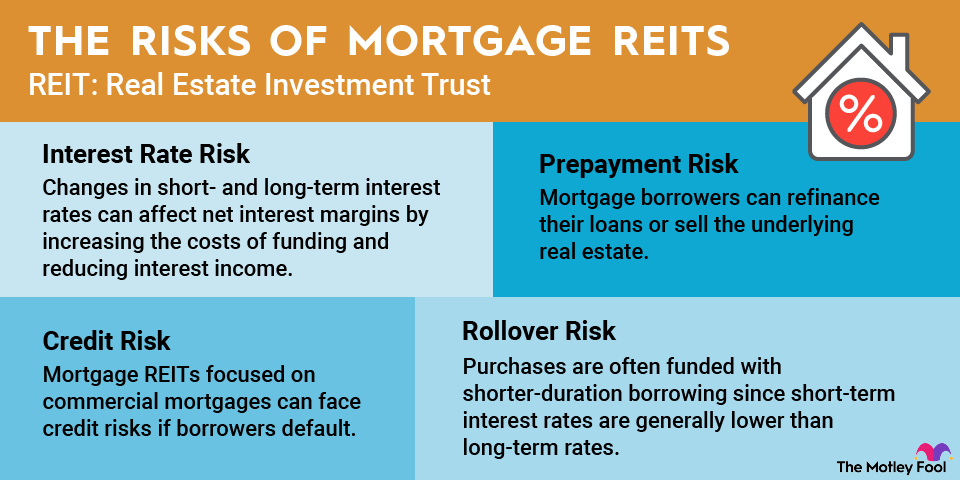
While consumers appear to be worried about a recession, tightening their budgets, inflation is running hot. Rising inflation could force the Federal Reserve to increase interest rates. A key part of Annaly Capital's business model is to borrow money short-term so it can buy long-term mortgage securities. If rates rise, the company's interest costs go up even though its interest income doesn't change. That would leave less money to pay dividends.

Image source: Getty Images.
To protect itself from interest rate volatility, the company hedges its portfolio. At the end of the first quarter of 2026, 87% of the portfolio was hedged, down from 90% at the end of 2025 and 95% in the first quarter of 2025. The company's hedging covers a range of different time periods, from short-term to long-term; the majority of its activity (45%) is at the short end.
Protecting the dividend is a complicated job
Annaly assumed "a conservative hedge profile throughout the quarter given elevated rate and macro volatility." None of the first quarter's uncertainty has receded at this point, so it is highly likely that the mortgage REIT is still taking the same conservative approach. That's a positive for investors looking at the stock, since it suggests that Annaly will be able to continue paying its dividend in the near term even if rates change dramatically.

NYSE: NLY
Key Data Points
That said, long-term dividend investors should tread with caution here. While Annaly's yield is attractive, the dividend has a history of volatility. The company is well-respected, but the real investment story is total return, which requires dividend reinvestment. In fact, from a total return perspective, the stock has outperformed the S&P 500 since Annaly's initial public offering. However, the dividend and stock price are both lower today than they were 10 years ago. In other words, if you spent the dividend, you would have been left with less income and less capital.
Safe for now, risky over the long term
The big-picture story is that Annaly appears to be taking a prudent approach to its portfolio, actively hedging its near-term interest rate risk. That should allow it to support its dividend through the current market uncertainty, even if that uncertainty leads to rate changes. However, if you are a dividend investor using dividends to pay for living expenses, that still isn't enough to make this ultra-high-yield mREIT a reliable choice for long-term income.