It's been a headline-making past month for Wall Street. The Dow Jones Industrial Average (^DJI +0.02%), S&P 500 (^GSPC -1.21%), and Nasdaq Composite (^IXIC -2.60%) all catapulted to new heights, and America's foremost financial institution, the Federal Reserve, got a new boss. Jerome Powell's term as Fed chair ended on May 15, paving the way for Kevin Warsh to take the reins.
But it's also been a history-maker for the U.S. inflation rate, which jumped to a three-year high of 4.2% in May. The debate as to whether the Federal Open Market Committee (FOMC) will raise interest rates is picking up steam, and the probability of a rate hike before the end of 2026 is suddenly soaring!
Image source: Getty Images.
An interest rate hike in 2026 is becoming increasingly likely
While no predictive tool can ever guarantee the future, the CME Group's FedWatch Tool leaves little to doubt about what's to come for interest rates. This tool analyzes the prices of 30-day Fed funds futures contracts to determine the likelihood that the FOMC will raise or cut interest rates at upcoming meetings.
In the days leading up to the release of the jobs report on June 5, the CME's FedWatch Tool placed less than a 50% probability of a rate hike occurring by the December 2026 FOMC meeting. But as of June 10, the day the Bureau of Labor Statistics confirmed that U.S. inflation had reached a three-year high, the probability of a rate hike by December had climbed above 71%!
BREAKING: May CPI inflation rises to 4.2%, the highest level since April 2023.
-- The Kobeissi Letter (@KobeissiLetter) June 10, 2026
Core CPI inflation also rises to 2.9%, the highest since September 2025.
Inflation in the US is officially back above 4% and more than double the Fed's target.
Odds of Fed rate hikes are rising.
To some extent, the jobs report is to blame. Stronger-than-expected job creation can boost economic growth and fan the flames of inflation.
But the bulk of this shift in interest rate-hike probability lies with rapidly rising inflation traced back to the Iran war. A historic energy supply disruption sent fuel prices soaring. Once the inflationary effects of this war spill over into non-energy sectors and industries, inflation could rise further.
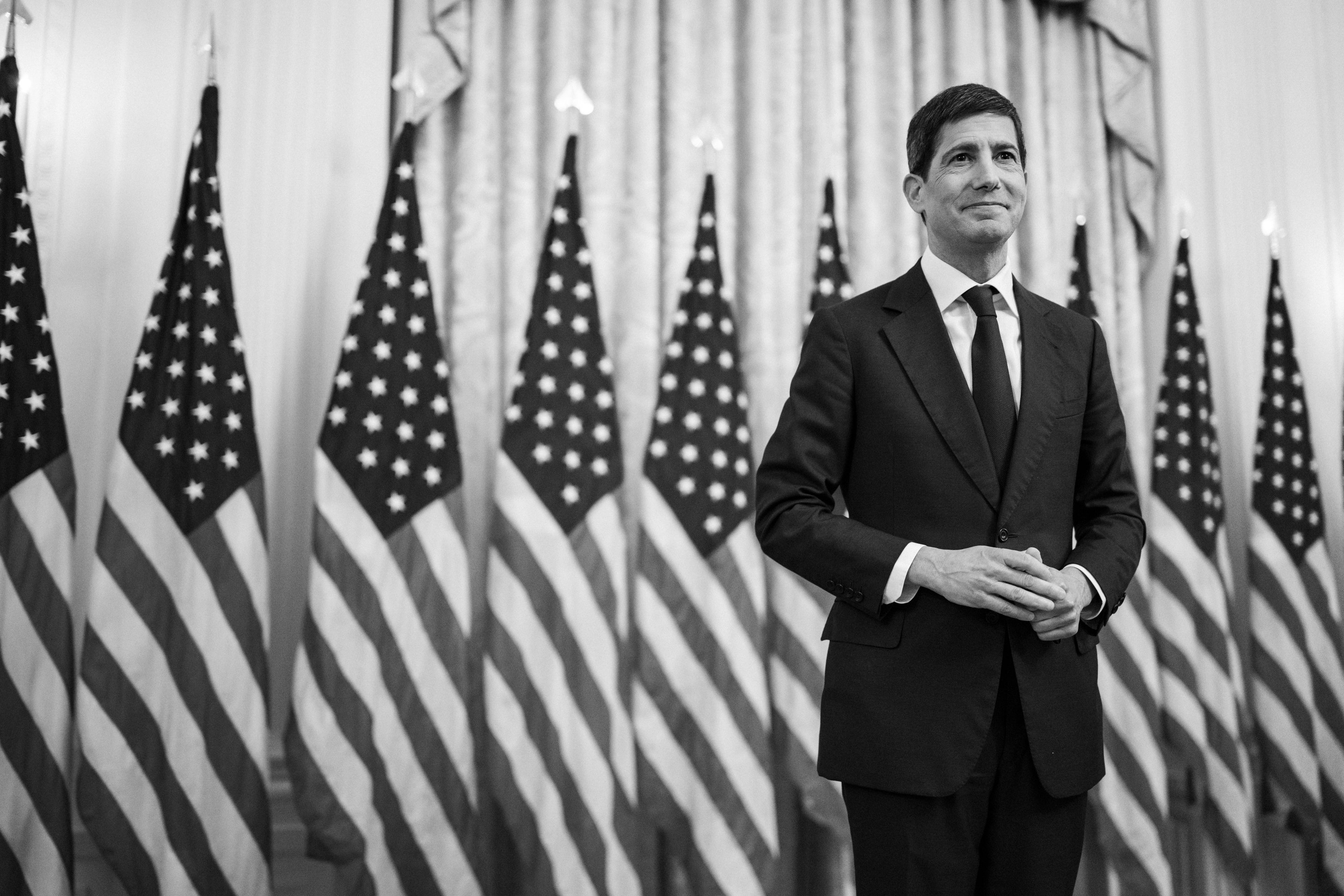
Fed Chair Kevin Warsh at his swearing-in ceremony. Image source: Official White House Photo by Daniel Torok.
Kevin Warsh's monetary hawk tendencies are bad news for Wall Street
However, there's more than inflation statistics at play when predicting if the FOMC will raise interest rates. The new Fed Chair, Kevin Warsh, brings a historically hawkish voting record to the table, making rate hikes more likely.
During Warsh's previous tenure as an FOMC member from Feb. 24, 2006, to March 31, 2011, he persistently favored higher interest rates as a tool to suppress inflation. Even as the unemployment rate surged during the financial crisis, Warsh cautioned against lowering the federal funds target rate.
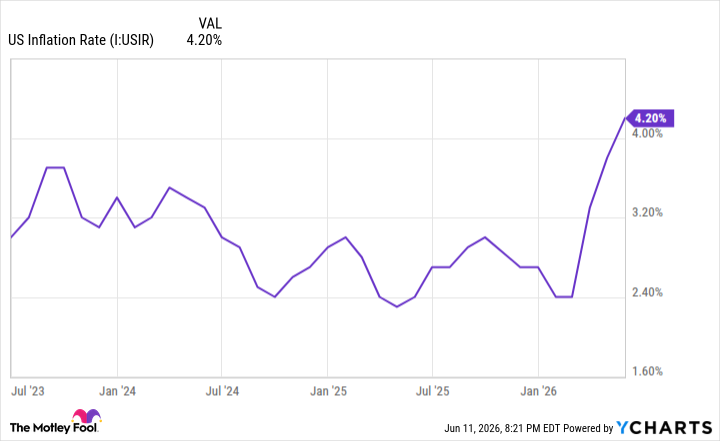
US Inflation Rate data by YCharts.
For Wall Street, rate hikes may be viewed as a necessary evil. Low borrowing costs are preferred as select businesses lean on debt to finance the artificial intelligence (AI) infrastructure build-out. If the CME's FedWatch Tool proves accurate and the FOMC raises rates, businesses may be forced to pare back their aggressive AI data center spending. It's not the best news for a historically expensive stock market.
At the same time, rate hikes may be necessary to quell Trumpflation. Higher prices threaten to pinch consumers' wallets, potentially harming corporate America and the broader economy.
While there's virtually no chance of Warsh and the FOMC raising interest rates tomorrow (June 17), there's a high likelihood of a rate hike before the year ends.