Two industrial companies, GE Vernova (GEV +0.23%) and Vertiv (VRT -1.12%), offer what artificial intelligence (AI) cannot function without: electricity and cooling. While the flashiest names in AI grab the headlines, the safer bet often sits a layer down. Neither stock is cheap; on any meaningful dip, however, these are industrial names worth considering.
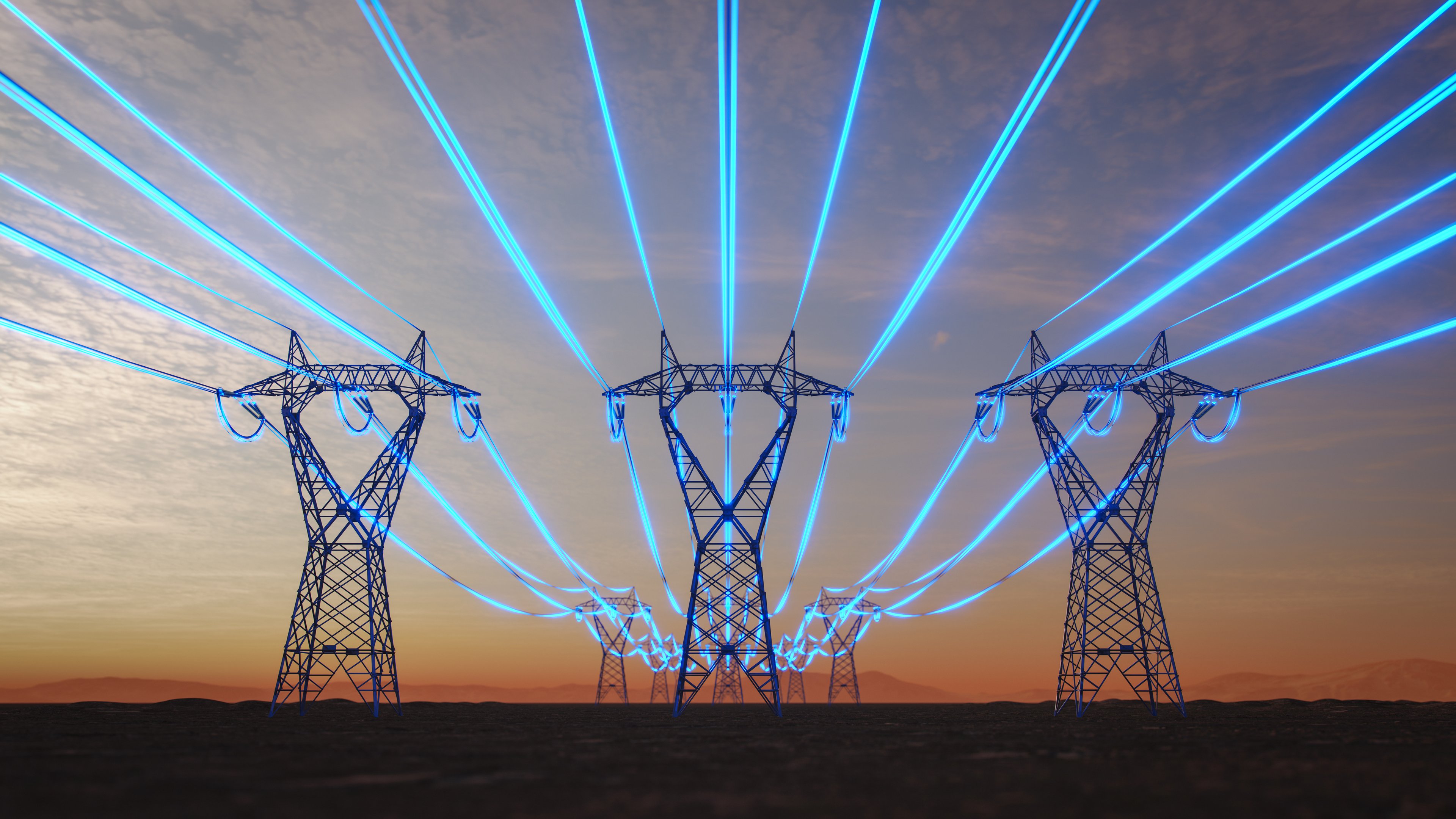
Image source: Getty Images.
GE Vernova: The electrons behind the AI boom
GE Vernova was spun out of General Electric in 2024 and now builds machinery that moves electricity. One sector sells turbines and nuclear services that generate power, while another provides grid equipment that carries it to where it needs to go.

NYSE: GEV
Key Data Points
Over the last 52 weeks, as I write this, the stock has traded between $479 and $1,182. Over the same period, it has gained 93%, and it's up 619% since the company went public in 2024. Investors of all types have come around to the idea that AI lives or dies on power.
In the first quarter of 2026, the company reported revenue rising 16% to $9.34 billion, while net income jumped from $264 million to $4.75 billion from the same period a year earlier. These are amazing results and for the most part aren't repeatable as about $4.5 billion came from a one-time gain tied to the company's acquisition of the remaining 50% stake in Prolec GE, a grid equipment supplier. Management raised full-year revenue guidance to a range of $44.5 billion to $45.5 billion, signaling confidence in demand.
One of the clearest bull cases for GE Vernova is its grid business. Orders grew 86%, and the segment booked $2.4 billion in orders for data center equipment in a single quarter. These numbers topped all of fiscal 2025 combined, driven by factories and data center builders ramping up.
Vertiv: The crucial cooling layer
Data centers generate tremendous heat, and cooling systems are becoming a bottleneck. Vertiv capitalizes on that by supplying power and thermal management tools that help keep high-density data centers running.
As chips run hotter, fans and traditional cooling systems may not be sufficient. Vertiv has worked closely with Nvidia to design cooling systems, and that partnership has become a competitive advantage. When a new Nvidia chip arrives, Vertiv is already involved.

NYSE: VRT
Key Data Points
The stock has traded between $110 and $380 over the last year, with the shares trading toward the upper end of the range now. Over the past 52 weeks, it has gained 165%, and over the past five years, it is up 1,061%.
In the company's first quarter of 2026, revenue climbed 30% to about $2.65 billion, while net income rose to about $390 million (from $164.5 million a year earlier). Profits are rising faster than sales, suggesting the business is becoming more efficient as it grows. For full-year 2026, management expects revenue of $13.5 billion to $14 billion, implying 29% to 31% year-over-year growth.
One notable catalyst is its work with Nvidia on the Vertiv OneCore Rubin DSX , a power-and-cooling infrastructure stack built around Nvidia's Vera Rubin platform. It also serves as a blueprint that the company can replicate worldwide.
The risk, however, is that if hyperscalers slow data center spending, Vertiv will feel it more than most.
Which is a better buy?
At today's prices -- GE Vernova trades at a price-to-earnings ratio around 29 while Vertiv's is around 78 -- neither stock looks like a bargain. Still, the business case is straightforward. AI runs around the clock, and it stalls without power and cooling. GE Vernova provides the power, while Vertiv provides key infrastructure to help keep systems from overheating. On a good pullback, adding to either position may be an easy call.