Space Exploration Technologies (SPCX +1.25%) -- SpaceX as it's commonly known -- has gone public, and the stock has risen 36% in less than a week as of this writing. It is now worth more than Amazon by market cap, making it the fifth-most-valuable company in the world. Investors around the world cannot get enough of Elon Musk's rocket company at any price, driving the small number of shares available for trading to new heights each day.
Now, SpaceX is formally acquiring the artificial intelligence (AI) start-up Cursor in a deal valued at $60 billion. Here's what I predict comes next for the company and its ambitions in both the space economy and the world of AI.
Aggressive investments in AI
With its slew of acquisitions in 2026, SpaceX has evolved from a space-economy stock to a full-fledged competitor in AI.
The company generated $4 billion in revenue from rocket launches last year and $11.4 billion in revenue from its Starlink satellite internet business, which should continue to grow in 2026. It is also developing a larger rocket, the Starship, to help take the next step in its ability to deliver payloads into orbit for itself and third parties.

NASDAQ: SPCX
Key Data Points
However, what has investors most excited today is the company's ambitions in AI. It acquired xAI before the IPO, which owns X (formerly Twitter) and is investing heavily in data centers. SpaceX just signed computing deals with Anthropic and Alphabet worth $26 billion annually, which is more than its entire 2025 revenue of $18 billion.
Now, it has announced the finalization of its $60 billion acquisition of Cursor, using SpaceX stock for the deal. Cursor is an AI coding platform that has reached annual recurring revenue (ARR) of $2.6 billion and will hopefully help SpaceX compete more directly with OpenAI and Anthropic.
There are many moving parts, but right now, investors are cheering SpaceX's potential in both space and AI, betting that Elon Musk will deliver long-term value.

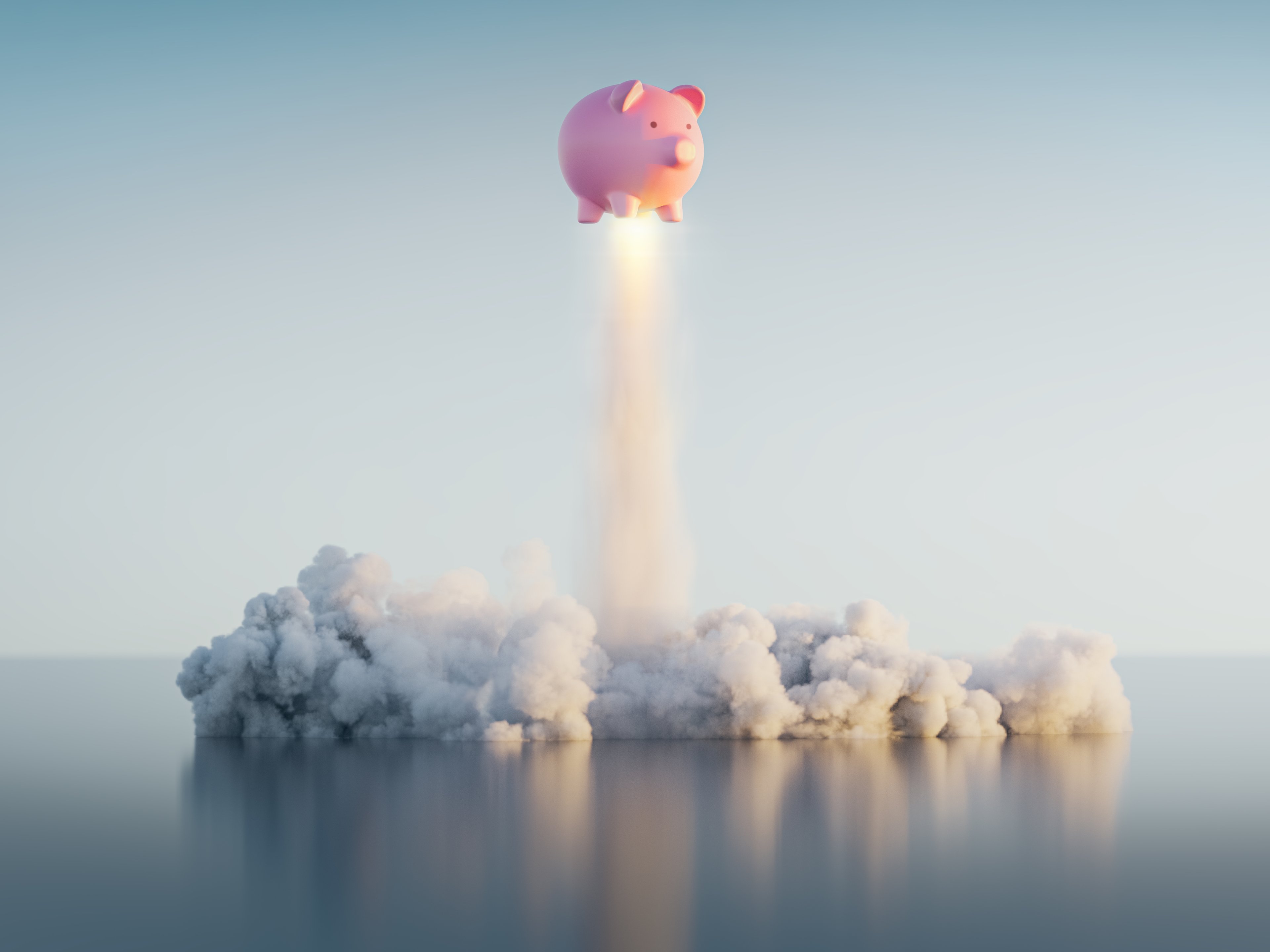
Image source: Getty Images.
Typical IPO trading
It's not surprising that SpaceX's stock has risen since its IPO. At $220 a share as of 10:11 a.m. on June 16, the stock was up 37% from its first trading price, to a market cap of $2.8 trillion. Dilution from the Cursor acquisition will add to this market value.
This is happening not because of any updates to its fundamental business performance, but because of the stock's illiquidity after the IPO. Many investors are clearly trying to buy SpaceX, but only a small sliver of its total outstanding shares are currently available for trading due to the IPO lockup period, meaning there is much more buying demand than anyone trying to sell.
When demand outstrips supply, prices rise quickly, as has happened with SpaceX in its first few trading days.
Take a deep breath with the stock
The dollar signs associated with the company can seem mind-controlling. It is in these moments that fundamental business performance feels unimportant, but is actually more important than ever.
In 2025, SpaceX generated $18 billion in revenue. In 2026, that figure may double due to the Anthropic and Alphabet contracts, but it is unclear what profit margin this revenue will generate.
Either way, a market cap of $2.8 trillion is a steep valuation for a company with this level of revenue and lack of profits. There are still many engineering problems for SpaceX to solve before it can fulfill its space economy and AI vision, including getting the Starship to work. Without it, the dream of things like AI computing in orbit is just that: a dream.
With $18 billion in revenue, it has a trailing price-to-sales ratio (P/S) of 155. That is an absurdly high P/S, even if revenue doubles in 2026. Smart investors know to stay away from SpaceX after its illiquid post-IPO climb.