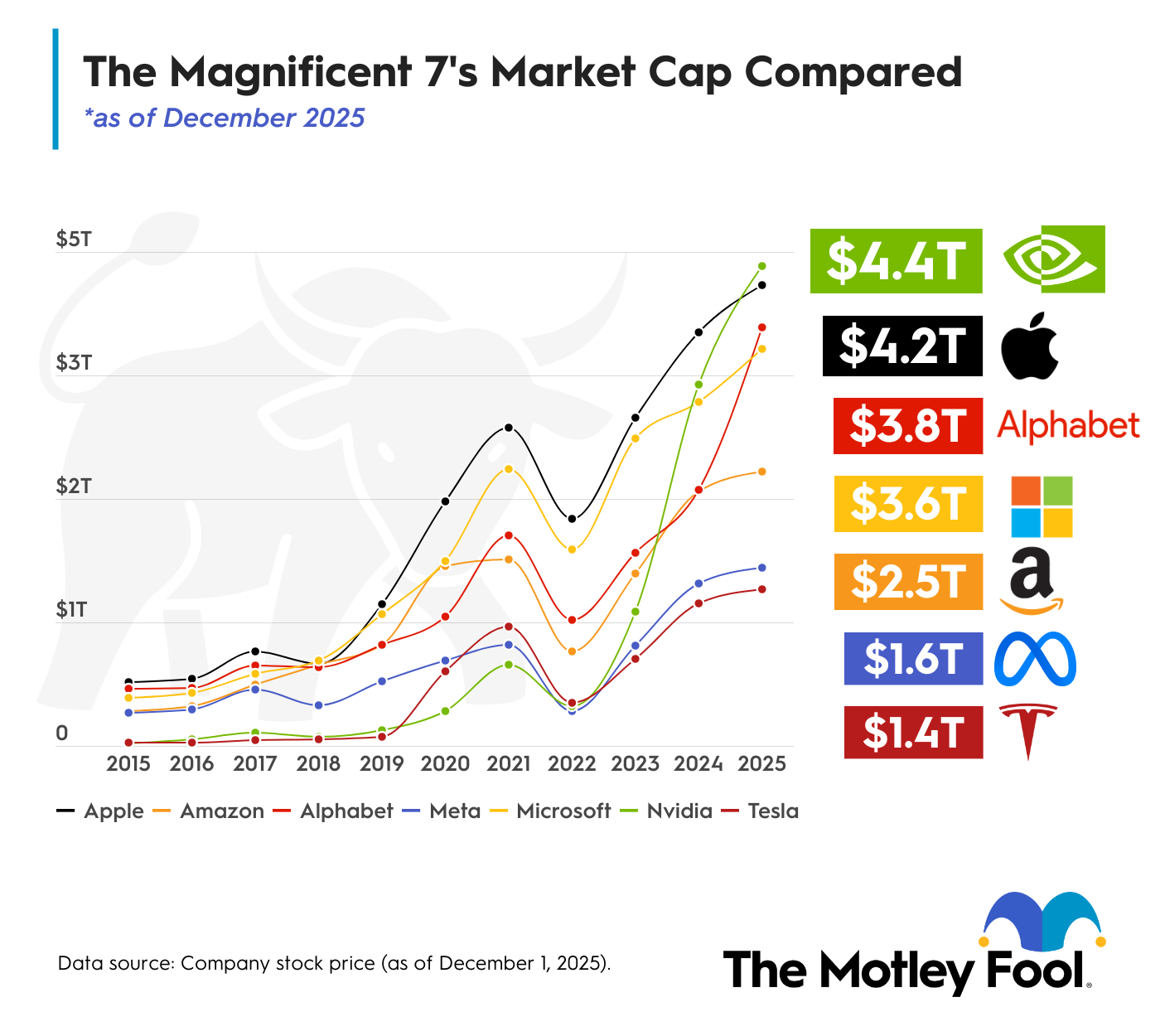
The market is focused these days on the immense amount of capital flooding the artificial intelligence (AI) build-out. The hyperscalers are getting all the attention as they embark on an extraordinary investment cycle.
Meta Platforms (META -0.06%) is one such business. The dominant social media platform, which has historically posted huge profits and free cash flow, plans to spend $125 billion to $145 billion on capital expenditures (capex) in 2026, mostly for AI infrastructure. That upper bound is about double the $72 billion figure from last year.
Investors are probably wondering why Meta is transitioning from a capital-light business to a capital-intensive one. There might only be one reason.

Image source: The Motley Fool.
It's all about Meta's advertising
On the Q1 2025 earnings call, Meta founder and CEO Mark Zuckerberg said the company has five major opportunities related to the AI revolution. The list includes better recommendations and content, business messaging, the Meta AI assistant, and AI devices. But perhaps the most important priority is leveraging AI to improve advertising capabilities.
"Our goal is to make it so that any business can basically tell us what objective they're trying to achieve -- like selling something or getting a new customer -- and how much they're willing to pay for each result, and then we just do the rest," Zuckerberg mentioned on the call.
He continued by saying that if Meta is successful in this regard, then "the increased productivity from AI will make advertising a meaningfully larger share of global GDP than it is today."
Connect the dots, and it becomes clear that Meta's ultimate goal is to keep growing its ad revenue at a rapid clip over the long haul. Ad sales totaled $55 billion in the first quarter (ended March 31), representing 98% of the company's entire top line. Advertising is what Meta is all about. That's not going to change.

NASDAQ: META
Key Data Points
The market looks concerned
During Q1, Meta reported a 19% year-over-year increase in ad impressions, while the average price per ad rose 12%. These two variables helped lift the company's revenue by 33% compared to the first quarter of 2025. That was the fastest growth rate since Q3 2021.
To justify the $135 billion in capex earmarked for 2026, investors will become more demanding about Meta's financial performance. In fact, they probably already are, as the "Magnificent Seven" stock is down 15% in 2026 (as of June 29) and 29% off its record.
Time will tell whether this AI capex boom will lead to satisfactory returns for one of the world's elite businesses.