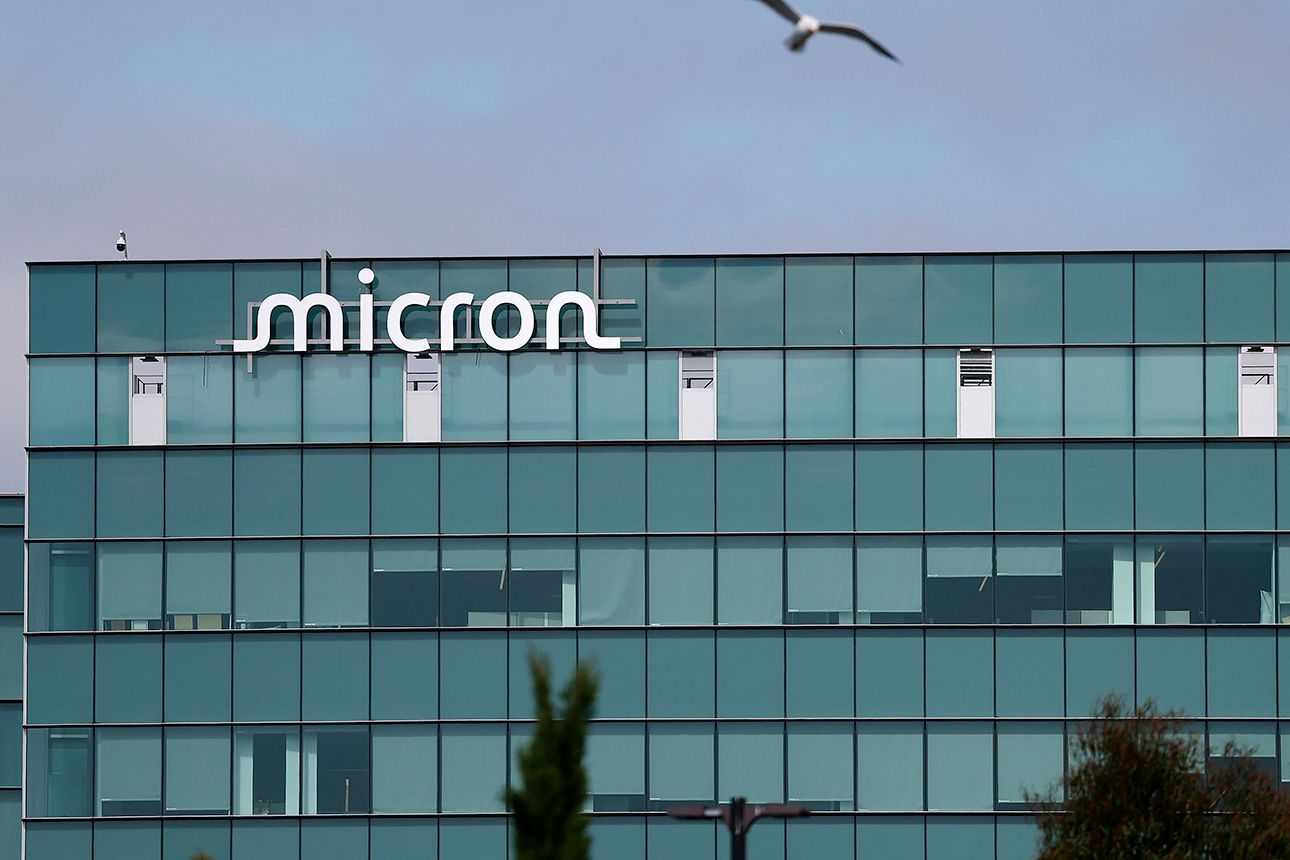
Over the past year, shares of Micron Technology (MU +2.98%) have soared more than 800%. As of this writing (June 30), Micron stock trades at $1,142 and sits comfortably in the trillion-dollar club. Micron's rapid ascent is naturally leading investors to ask whether the company is positioned for a stock split.
Let's explore the mechanics of stock splits, the typical reasons why companies pursue them, and whether such a move would deliver meaningful benefits to Micron.
MU Micron Technology
NASDAQ · As of 4:00 PM ET 10/26/26

What is a stock split, and how does it work?
During a stock split, a company simply increases the total number of outstanding shares by distributing additional shares on a proportional basis. For example, in a 5-for-1 split, a company with 1 million shares outstanding at $1,000 each would end up with 5 million shares trading at $200 post-split. In essence, the company's overall market capitalization remains unchanged because the reduction in stock price is offset by the increase in share count.

Image source: Getty Images.
Why do companies perform stock splits?
Broadly speaking, companies pursue stock splits to improve both the perceived affordability and liquidity of their shares. When a stock trades at a level that appears expensive, smaller retail investors generally hesitate to purchase even a single share. This limits market participation and can potentially reduce trading volume.
A lower share price following the split erases this psychological barrier, often ushering in a broader base of buyers. Higher liquidity can make a position more attractive to institutional investors who prefer stocks with active markets.
Moreover, stock splits tend to coincide with periods of strong business performance and can be interpreted as a signal of management's confidence in future growth. While the action itself does not create any economic value for the business, the subsequent increase in investor enthusiasm can support continued upward momentum in the share price.
Will Micron split its stock?
As shares approach $1,200, Micron stock is well above the range where most retail investors comfortably buy. The obvious perk for smaller investors with limited capital is that a stock split would lower the entry point in terms of absolute dollars to begin building a position. From a strategic standpoint, a split aligns with the practices that other semiconductor stocks -- such as Nvidia and Broadcom -- have completed during comparable rallies in recent years.
Given Micron's prolonged share price appreciation, announcing a split may be viewed favorably by the market as a step to sustain momentum. Operationally, however, the company gains little from performing a stock split. Micron's revenue, earnings, and competitive position would remain unaffected.
Overall, a stock split represents nothing more than a cosmetic adjustment that supports investor accessibility and sentiment without introducing meaningful downside. For these reasons, I do not think Micron will split its stock anytime soon.