Shares of Meta Platforms (META +0.05%) were heading lower last month as a slew of concerns mounted for the social media giant. Among those were layoffs, overspending on AI and capital expenditures, and a lack of direction in artificial intelligence, as the company has struggled to develop a meaningful revenue stream beyond advertising.
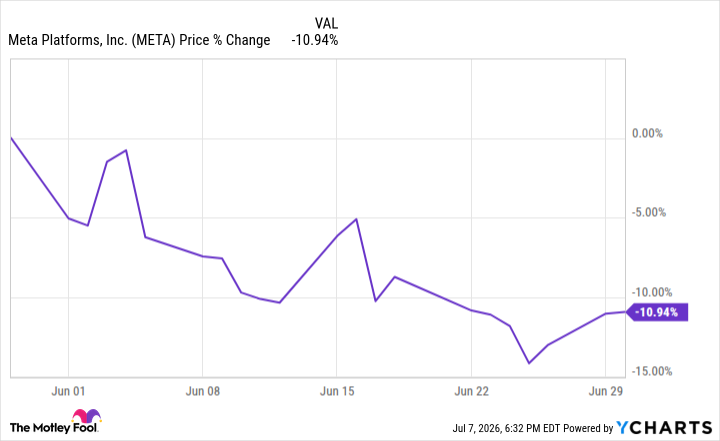
The stock also fell on a report that it would sell new shares to fund its AI ambitions. By the end of the month, shares had given up 11%, according to data from S&P Global Market Intelligence.
As you can see from the chart below, the stock fell steadily throughout the month.
Why is Meta sliding?
Meta is the only one of the four hyperscalers, which includes Amazon, Microsoft, and Alphabet, to not have its own cloud computing business, though a report broke in July that said it would launch one.
The lack of cloud computing business makes its plans to spend a $125 billion-$145 billion on capital expenditures this year especially risky, and the stock paid the price for it last month.
On June 5, the stock fell 6% after Financial Times reported that the company had been considering raising tens of billions of dollars in a stock offering to support its AI-related spending. The sell-off is understandable as Meta is burning approximately $20 billion a year on Reality Labs, its division that supports its AI projects, and investors have yet to see a return on that investment.
As evidence of the ongoing backlash against social media, the U.K. banned social media for children under 16, which could add to calls for other companies to do the same.
Meanwhile, other reports indicated that morale was low at the company following several rounds of layoffs and after CTO Andrew Bosworth told Wired that its AI reorganization was "atrocious." The head of product for "AI for Work" also said she was leaving the company shortly after being named to the position.

Image source: The Motley Fool.
What's next for Meta
The stock popped on July 1 after Bloomberg reported that the company was planning to launch its own cloud computing business, news that came weeks after CEO Mark Zuckerberg said that the idea was "definitely on the table."
Following the stock's sell-off in recent months, Meta stock looks cheap, trading at a price-to-earnings ratio of just around 24 after adjusting for a one-time tax gain in the first quarter.
That looks like a great price to pay for a company that just grew revenue by 33%, but Meta will have to convince investors it's spending its capex dollars wisely in order to unlock the stock's potential.