All too often, dividend stories start with a beaten-down stock and a nervous question about whether the payout can survive. Johnson & Johnson (JNJ +1.44%) is the opposite case. The healthcare giant raised its dividend for the 64th year in a row, and the payout looks about as secure as any in the market. The complication is the stock: shares have climbed more than 60% over the past year and trade within a few percent of an all-time high, closing near $257 as of this writing.
So the question worth asking isn't whether the dividend is safe. It is probably about as safe as dividend stocks get. Instead, the question is whether the stock is still worth buying after a run like that.
Image source: Getty Images.
The dividend isn't the worry
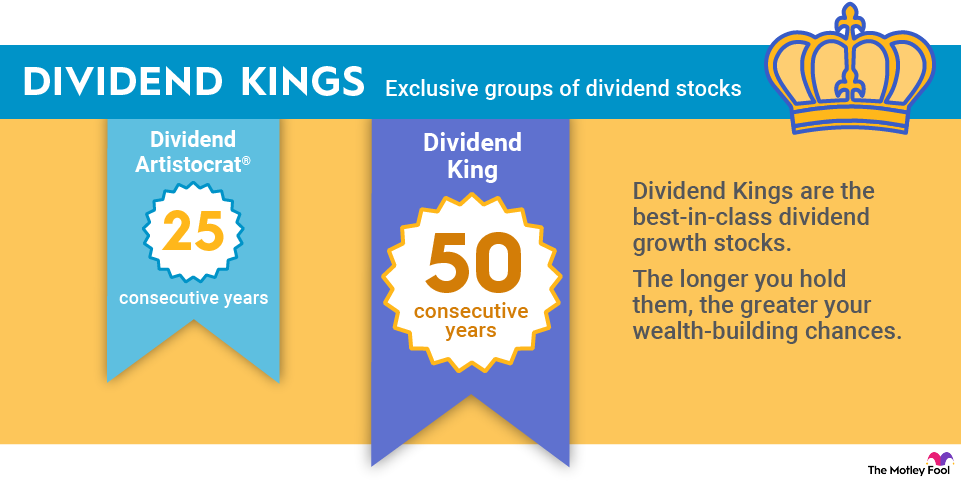
In April, Johnson & Johnson's board lifted the quarterly dividend 3.1% to $1.34 per share, or $5.36 a year. That was its 64th straight annual increase -- a streak that makes it a Dividend King, the name for companies that have raised their payout for at least 50 years (consecutively) running. At the current share price, the dividend yields about 2.1%.
More telling than the yield is how comfortably the company covers it. The $5.36 annual payout eats up only about 46% of the non-GAAP (adjusted) earnings Johnson & Johnson expects to earn this year, so there's room for the dividend to keep climbing even if profits flatten. Backing all of it is one of the strongest balance sheets anywhere: Johnson & Johnson is one of only two U.S. companies S&P rates AAA -- a notch above the U.S. government itself -- a distinction it shares only with Microsoft.

NYSE: JNJ
Key Data Points
The obvious risk is the talc litigation that has weighed on the company for years. Johnson & Johnson still faces tens of thousands of lawsuits alleging its talc-based baby powder caused ovarian cancer. A judge rejected the company's proposed $10 billion settlement early last year, sending the claims back into the court system to be fought out at trial. That's a cash overhang and a steady source of unflattering headlines. But for a company that generates far more cash than it pays out and carries a top-tier balance sheet, it reads as a manageable liability rather than a threat to the dividend.
The discount is what's gone
Here's why the stock has climbed so far: the fear that drove its discount has faded.
For a while, investors braced for a painful patent cliff. Stelara, which at its peak sold more than $10 billion a year, is losing sales fast to cheaper biosimilar competition; its revenue fell about 60% year over year to $656 million in the first quarter of 2026. But the rest of the drug portfolio is more than making up the difference.
Total revenue in the quarter still rose 9.9% to $24.1 billion, led by the innovative medicine segment. Cancer drug Darzalex climbed about 22% to nearly $4 billion, and Tremfya -- the immunology drug Johnson & Johnson is steering patients toward -- jumped 68% to about $1.6 billion. Newer additions like Caplyta, gained in last year's Intra-Cellular Therapies acquisition, are helping too.
Given this backdrop, management was confident enough to raise its full-year guidance, calling for adjusted earnings per share of about $11.55.
Overall, John & Johnson offers a safe and growing dividend, a drug business that's outgrowing its patent cliff, and litigation that looks contained.
A year ago, worries about talc and Stelara left Johnson & Johnson trading at a discount to the broader market. Today, at a price-to-earnings ratio of about 22 based on that guidance. With a valuation like this, the easy part of the return -- the piece that came from a depressed valuation working its way back to normal -- is probably alrady in the rearview mirror.
So, is the stock a buy?
Johnson & Johnson is a wonderful business and an excellent stock to own for durable, growing income. And long-term holders have no reason to sell. But for new money, I'd rather wait for a pullback -- or for a few more quarters of the pipeline growing into the price -- than pay a premium for a stock whose discount has already closed.