The Wall Street analyst consensus target price for Delta Air Lines (DAL -1.59%) stock is $108, according to Visible Alpha. It's a target implying 25% upside from the current price of $86. I think this target, and more, is achievable, and the stock is attractive at these levels. Here's why.
Delta Air Lines and cyclicality
Starting with valuations, management expects to generate $3 billion to $4 billion in free cash flow (FCF) in 2026. Taking the midpoint of that and applying a back-of-the-envelope valuation for a mature industrial stock at about a 20x multiple yields a market cap of $70 billion, equivalent to a share price of about $106.

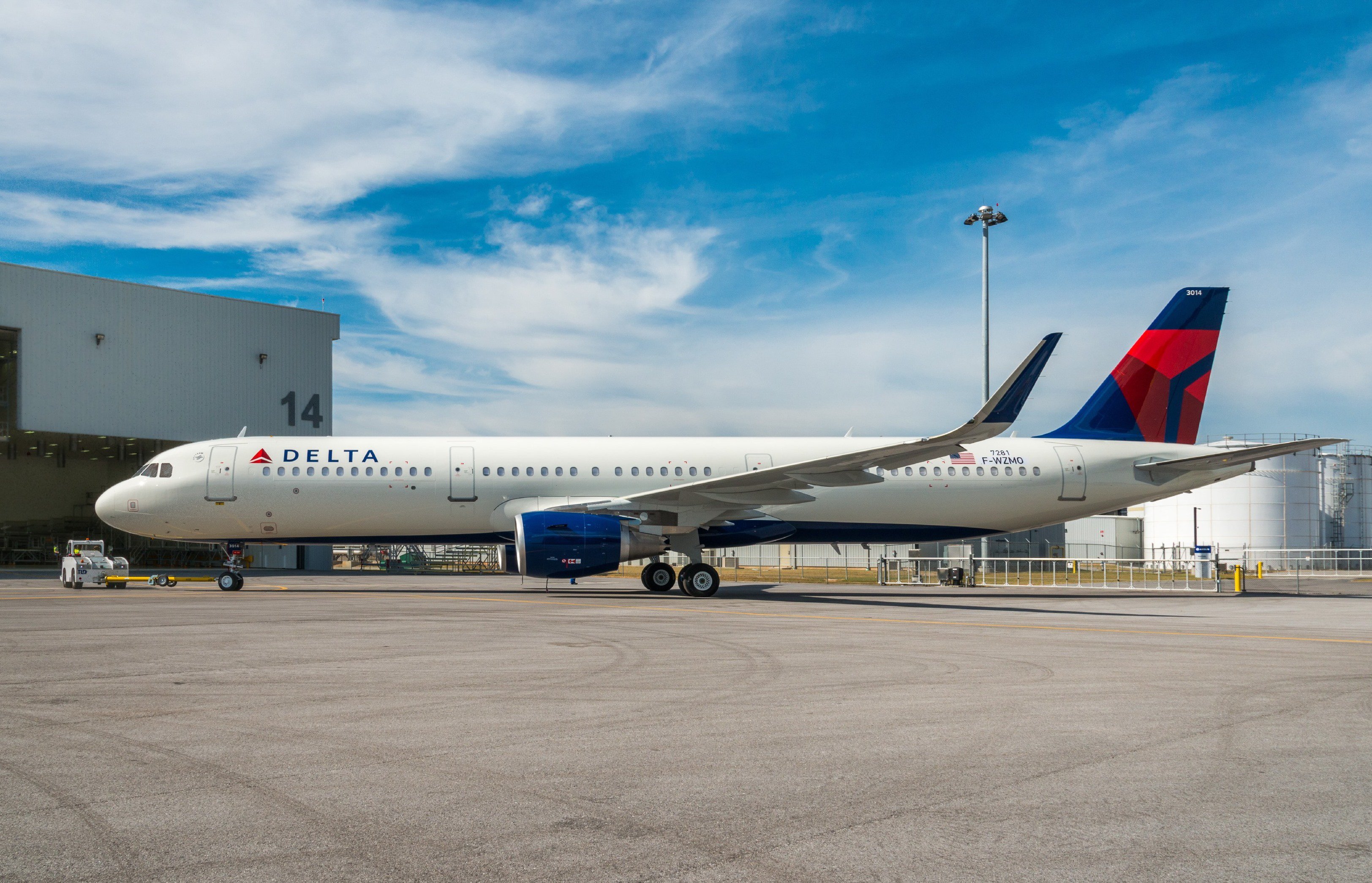
Image source: Getty Images.
Of course, the key question here is whether Delta is a mature, stable industrial company poised to steadily grow cash flow, or a cyclical stock whose earnings/cash flow are likely to be highly volatile.
Why Delta's earnings are becoming less cyclical
The answer is that airline stocks are never really immune to cyclical pressures. The economy turns down, and people stop flying. However, the reality is that airlines like Delta and United Airlines have made concerted efforts to diversify their income streams by growing premium cabin and ancillary revenues, loyalty programs, and highly successful co-branded credit card revenue.
These income streams and ongoing strength in end demand helped Delta partially absorb a whopping $1.9 billion year-over-year increase in adjusted fuel costs in the second quarter, so that adjusted operating income declined by only $501 million year over year. Nevertheless, Delta still generated $1.56 billion in adjusted operating income.
It's an excellent result in a very difficult cost environment, and given that oil costs have moderated from the $100-a-barrel levels they were at for much of Q2, it's reasonable to expect more favorable conditions going forward.

NYSE: DAL
Key Data Points
Delta's valuation is attractive
Moreover, Delta has already baked a $4 billion increase in fuel costs for 2026 into its guidance, and it still expects $3 billion to $4 billion in free cash flow.
This is proof positive that Delta is passing a key stress test of how it might perform in adverse conditions, which means it should be priced more like a mature industrial than a highly cyclical stock. If Delta achieves its earnings-per-share guidance of $6.50 to $7.50, that puts it at a forward price-to-earnings ratio of 11.5 to 13.2 times earnings. Whether you look at cash flow or earnings, these are attractive multiples for a stock that's much less cyclical than many investors think, and $100 looks within reach on that basis.