Artificial intelligence is driving unprecedented electricity demand for data centers. According to Gartner, a global research and advisory company, data center electricity consumption is projected to reach 565 terawatt-hours (TWh) in 2026, a staggering 26% year-over-year increase.
Power is becoming a huge hurdle for technology companies, and "time-to-power" has become the critical new bottleneck, as data center developers face agonizing multi-year waits for traditional utility grid upgrades and interconnection build-outs.
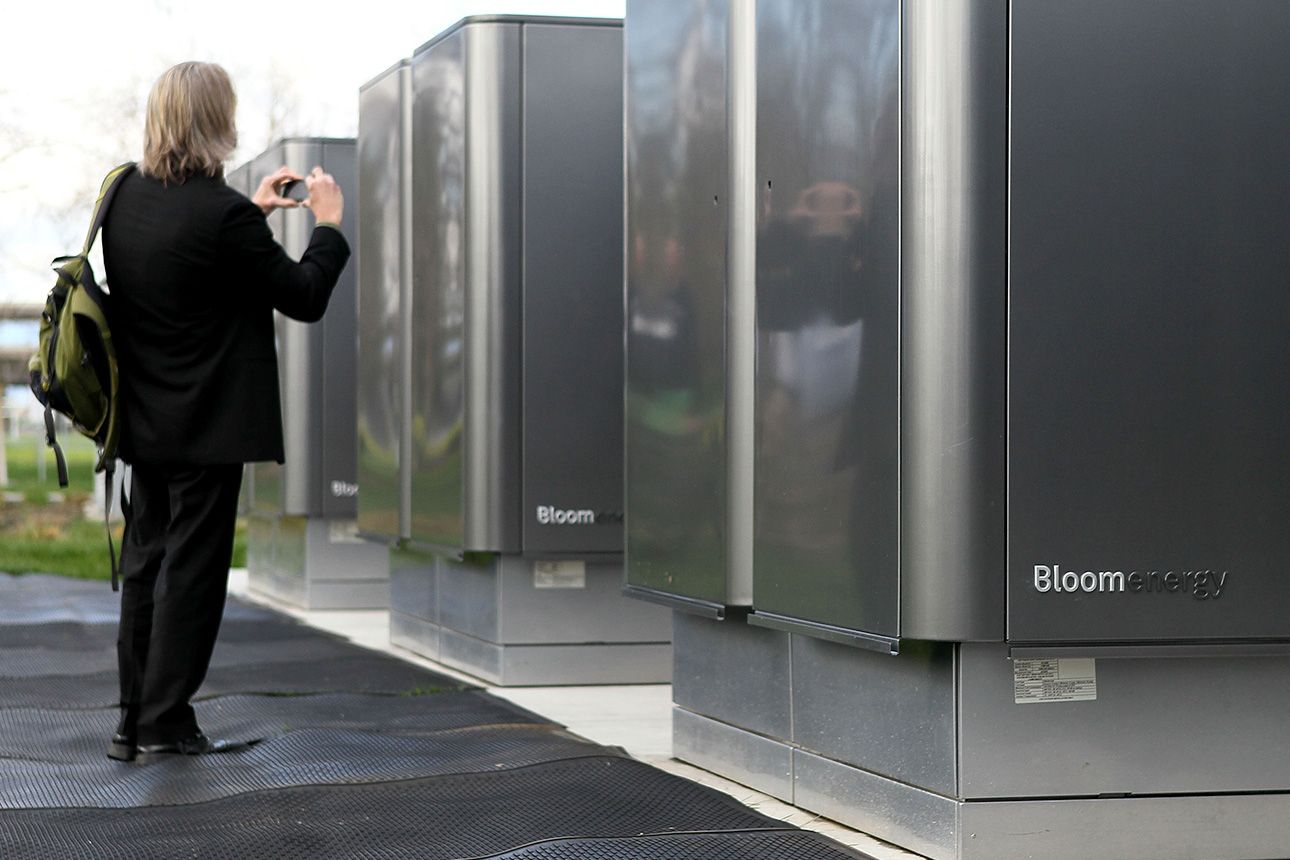
To bypass these extensive delays, operators are increasingly turning to plug-and-play power solutions like Bloom Energy's (BE -11.24%) solid-oxide fuel cells. These on-site power generators can be rapidly deployed in less than two months, and more hyperscalers are turning to Bloom's solutions to address these challenges.
Image source: The Motley Fool.
Why hyperscalers are turning to Bloom Energy's fuel cells
Data centers are facing severe capacity deficits, and Goldman Sachs reports that U.S. data center demand will outpace available capacity through 2028. As a result, 30% to 50% of the large-scale data center capacity originally expected to come online in 2026 faces major delays, according to a July 2026 analysis by energy intelligence firm Currence.
The power grid is struggling to keep up. Upgrading the aging grid and adding more capacity involves costly transmission improvements and multi-year interconnection queues. In contrast, solid oxide fuel cells offer a quick-to-deploy alternative. These fuel cells run on natural gas, biogas, or hydrogen, provide reliable baseload energy, and operate independent of the electric grid.
Bloom Energy has emerged as a winner amid the data center energy crunch. The company has secured several megadeals worth billions of dollars with companies such as Oracle, Brookfield Asset Management, and American Electric Power.
The company demonstrated its time-to-power advantage in 2025 when it deployed its fuel cells for Oracle Cloud Infrastructure facilities in 55 days, well ahead of its 90-day target. This proof of concept convinced Oracle to scale up its deal to a 2.8 gigawatt (GW) master agreement. The company also recently expanded its infrastructure agreement with Brookfield Asset Management to $25 billion, a staggering increase from its $5 billion agreement from one year ago.
BE Bloom Energy
NYSE · As of 4:00 PM ET 10/23/26

In the second quarter, Bloom Energy's revenue surged 166% to $1.065 billion, marking the company's first billion-dollar quarter. Meanwhile, its blended gross margin was 34%, up by over 6% year over year, while diluted earnings per share came in at $0.62. The company raised its full-year revenue guidance of $3.9 billion to $4.2 billion, driven by booming demand from hyperscalers, neoclouds, and colocation operators.
Is Bloom Energy a buy right now?
Bloom Energy's solid-oxide fuel cells address a key pain point for many data center operators, and the stock has surged 583% since the start of 2025. However, it has experienced significant volatility as investors weigh the sustainability of the hyperscaler build-out, and its stock is down 54% from its recent high of $351.
Bloom Energy is a key partner that will help data center operators meet their power demands right now. However, if broad macroeconomic stress or low returns on AI software investments cause hyperscalers to slow or pause infrastructure spending, Bloom's growth trajectory could slow significantly. That said, the ongoing AI build-out has a long runway for growth, making Bloom Energy an appealing stock for investors looking to capitalize on the explosive growth in AI infrastructure.