Do you view the proverbial glass of water as half-full or half-empty? How you answer the question could dictate how you view Micron Technology (MU -2.05%) right now.
If you're a half-full kind of person, you'll probably focus on the fact that Micron's stock has skyrocketed so far in 2026. You could also point out that Micron has delivered the third-highest year-to-date gain among S&P 500 (^GSPC +0.73%) members.
On the other hand, if you see the glass of water as half-empty, you'll likely emphasize that Micron's shares have plunged since peaking in late June. And you would almost certainly underscore some of the risks the company faces going forward.
Where will Micron's stock trade at the end of 2026? Here's my prediction.
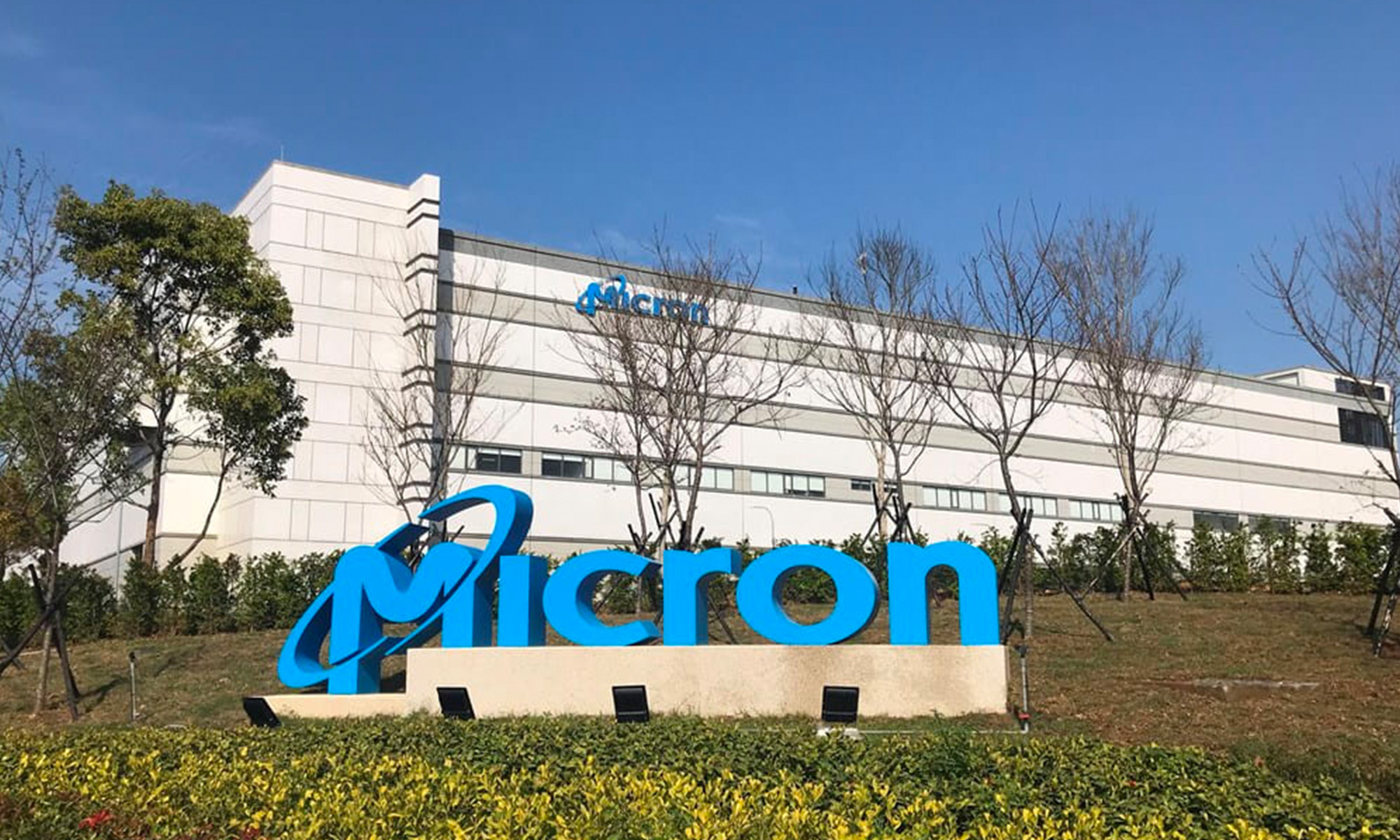
Image source: Micron Technology.
The bull case for Micron
To say that Micron's business is booming would arguably be an understatement. The company's revenue soared roughly 3.5x year over year and 74% quarter over quarter in its fiscal 2026 third quarter to $41.5 billion. Earnings jumped nearly 15x year over year and more than doubled from the previous quarter.
This tremendous momentum is due to supply and demand. The supply of memory chips, especially high-bandwidth memory (HBM), is limited to only two other major manufacturers other than Micron. Meanwhile, demand for memory is surging amid the ongoing explosive adoption of artificial intelligence (AI).
Wall Street remains overwhelmingly bullish about Micron even after the stock's impressive gains this year. Of the 45 analysts surveyed by S&P Global (SPGI -0.49%) in July, 40 rated the stock as a "buy" or "strong buy." The other five outliers recommended holding Micron. The consensus 12-month price target reflects upside potential of over 80%.
There's also a wild card for Micron that could accelerate its momentum in the not-too-distant future. CEO Sanjay Mehrotra said during the company's Q3 earnings call, "Humanoid robots carry 10 times the amount of memory as an average L2+ [semi-autonomous] vehicle, and we expect a sustained, substantial multi-decade memory demand cycle to begin in the latter part of this decade."

NASDAQ: MU
Key Data Points
Threats from China -- and history
What's not to like about Micron? For one thing, a potential threat could be rising in China.
ChangXin Memory Technologies (SHA: 688825) recently conducted its initial public offering (IPO) on the Shanghai Stock Exchange. The semiconductor company currently generates nearly all of its revenue from DRAM chips. However, should CXMT's investments in HBM enable it to catch up with Micron and others, it could become a formidable competitor.
Micron's shares still trade at only 5.8 times forward earnings. That's a dirt cheap multiple for a tech stock. But there's a reason behind this low valuation: Many investors know that Micron has historically been a cyclical stock. And cyclical stocks often don't command premium price tags even when their businesses are growing strongly.
Sooner or later, the supply of memory will exceed demand. When that happens, prices will inevitably fall. So will Micron's share price.
A prediction
What about my promised prediction of where Micron's share price will be at year-end? I expect the stock will trade somewhere between $1,050 and $1,150. The midpoint of this range reflects upside of over 30%.
I'm bullish about Micron primarily because I don't think the supply demand imbalance for memory chips will be resolved anytime soon. Mehrotra stated in the Q3 earnings call that management expects "tight conditions to persist beyond calendar 2027 as a result of AI-driven demand across all segments coupled with structural supply constraints." I think he's right.
I also agree with Morningstar's (MORN -3.75%) assessment that CXMT faces a "a significant technological barrier" due to its lack of access to advanced extreme ultraviolet (EUV) lithography. Morningstar concluded in a recent report that this hurdle "is likely to prevent the company from materially closing the technological gap versus global memory leaders."
Granted, a disappointing Q4 update from Micron could cause my prediction to fall short. However, with the prevailing market dynamics, I don't expect that to happen.