The chip industry has historically been cyclical, going through cycles that average about four years. With semiconductor stocks undergoing a correction after a period of large gains, it's reasonable to ask if the cycle has peaked.
Nvidia (NVDA -0.98%) CEO Jensen Huang doesn't think so. In a recent sit-down with Axios co-founder Mike Allen, he said that he doesn't expect a bust any time soon and that the semiconductor industry still has plenty of room to grow.
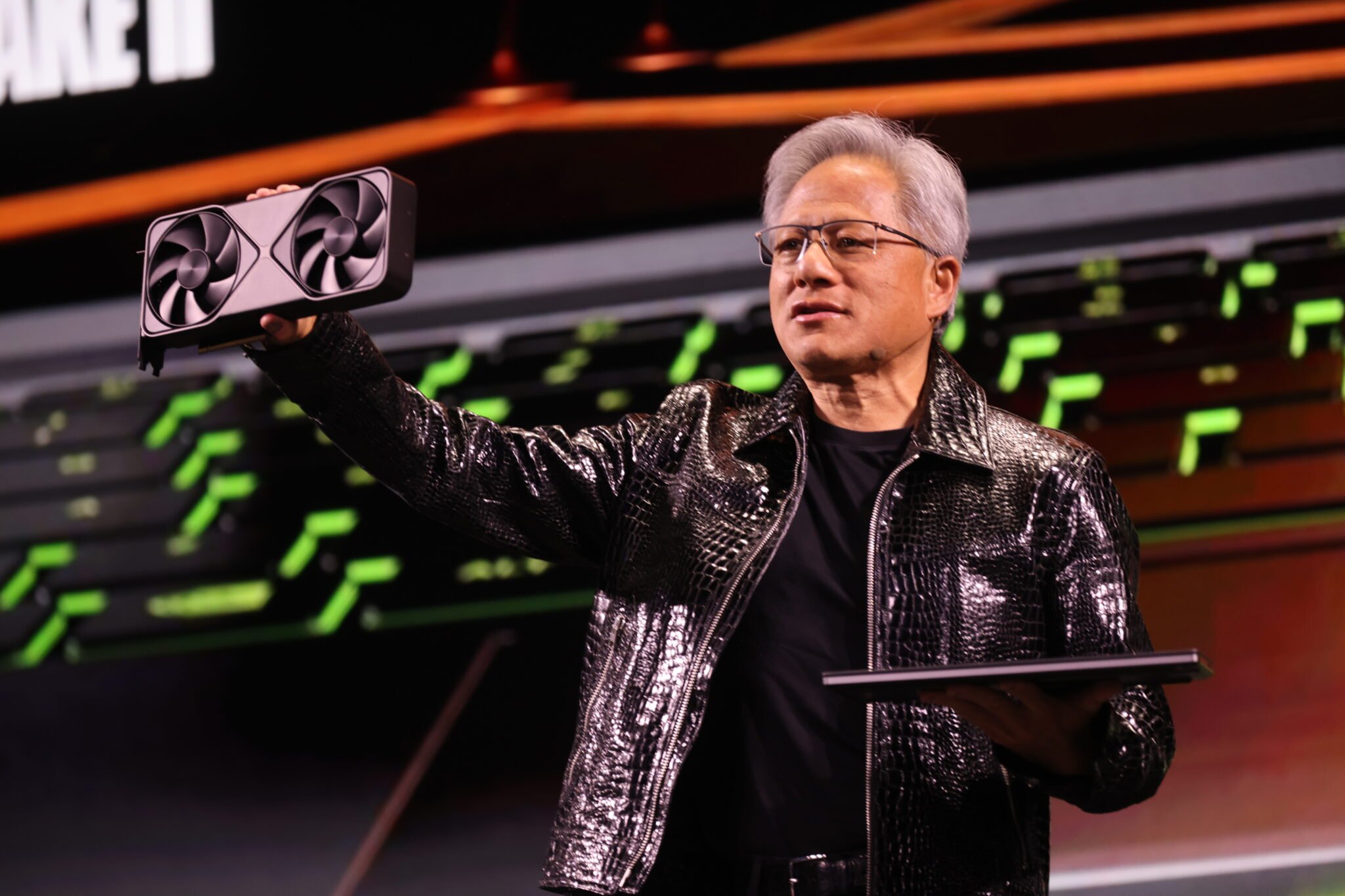
Nvidia CEO Jensen Huang. Image source: Nvidia.
Jensen Huang isn't expecting a chip bust
During the Axios interview, Huang said his core argument is that this chip boom is different because it's not driven by consumer demand. As he puts it, "This is industrially driven, meaning the fundamental technology of computers is changing."
He says that AI is a new layer of infrastructure comparable to energy, the internet, roads, and railroads. This intelligence layer requires chips, making the current demand fundamentally different from consumer-driven demand cycles, in which more chips were needed for computers and phones.
The most exciting part of Huang's interview, at least for investors in AI stocks, is his assessment of the semiconductor industry. He believes that it needs to be between five and 10 times larger than it is today. If he's correct, that's a great bull case for Nvidia and other chipmakers.
Is Huang correct about the chip industry?
As the CEO of the largest chipmaker, Huang's not exactly an unbiased observer. He has a financial incentive to talk up demand for his company's products. It'd be surprising to hear him say that the cycle has peaked and it's downhill from here.
There's also valid skepticism about the AI build-out. Hyperscalers are spending hundreds of billions on data centers. Investors are understandably concerned about the sustainability of this spending -- for example, Alphabet's free cash flow turned negative for the first time in Q2 2026 due to $44.9 billion in capital expenditures (capex).

NASDAQ: NVDA
Key Data Points
That said, recent compute demand supports Huang's expectations. Nvidia consistently exceeds expectations and raises revenue guidance each quarter. Intel also delivered excellent numbers in Q2 2026 with 25% year-over-year revenue growth. CEO Lip-Bu Tan called it the company's strongest revenue growth in more than 15 years and tied growth to AI-driven compute demand.
Huang believes the semiconductor industry is in an early cycle, not a late one. The best way to evaluate this is to monitor earnings releases from hyperscalers and chipmakers. If hyperscalers maintain or raise capex and chipmaker earnings continue to rise, both would indicate that the semiconductor industry remains in a boom period.