Billionaire investor Bill Ackman runs Pershing Square Capital Management, a hedge fund that owns only about eight to 12 holdings at any given time. It's mostly focused on core U.S.-based, large-cap consumer-facing companies, but it currently holds three artificial intelligence (AI) stocks: Amazon (AMZN +0.45%), Microsoft (MSFT +0.56%), and Meta Platforms (META -0.57%).
These are all fairly new positions: The Amazon position is about a year old, the Meta position started at the end of 2025, and the Microsoft position was opened in early 2026. The fund previously held shares of Alphabet, but it closed out its position in the first quarter of 2026. At the time, Ackman said he wasn't betting against Google, but he needed capital to buy Microsoft, which he thought was a better deal.
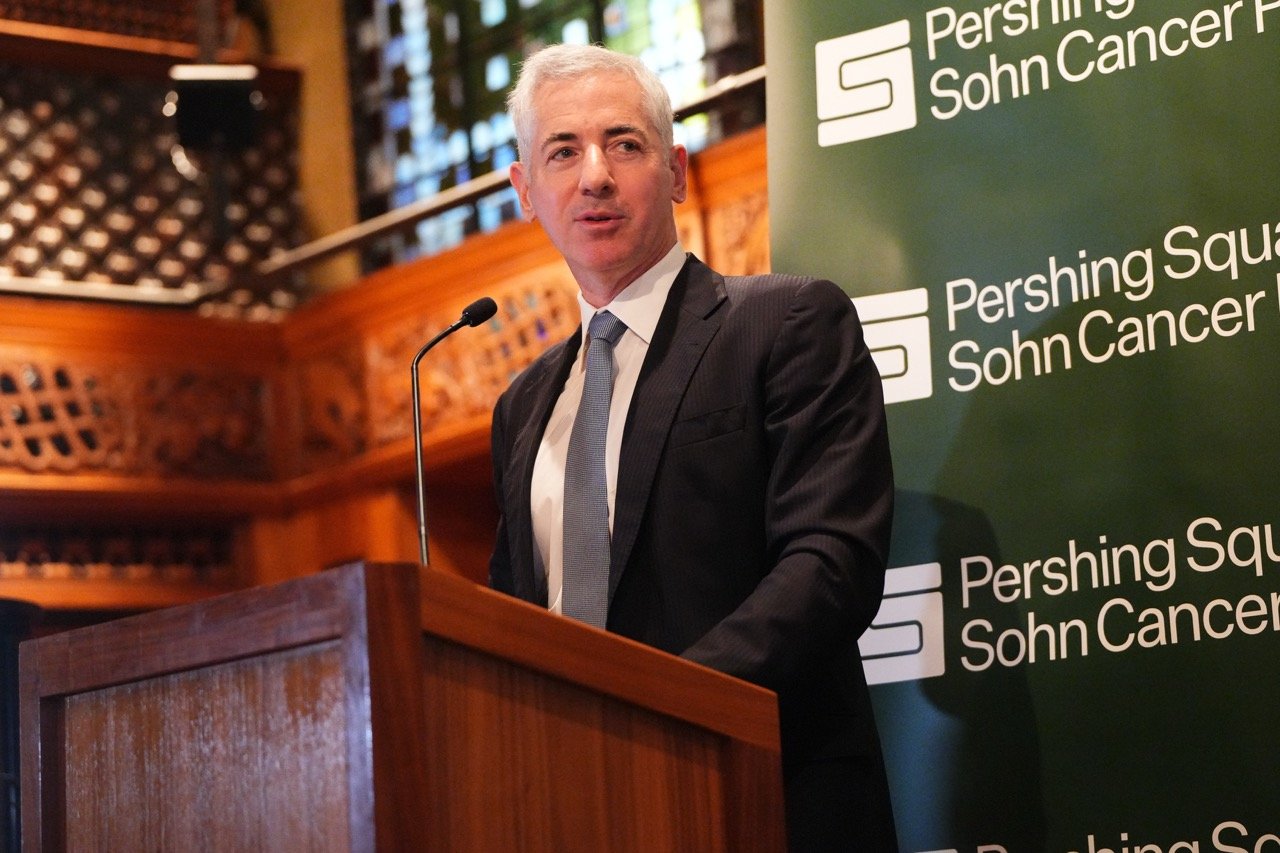
Bill Ackman of Pershing Square Capital Management. Image source: Getty Images.
Out of these three stocks, Amazon looks like the best buy right now. Here's why.
Stacking up Amazon, Microsoft, and Meta
Amazon, Microsoft, and Meta are three of the most valuable companies in the world. They're all heavily investing in AI right now, but they use it in different ways.
Amazon and Microsoft compete in cloud services, but have other uses, too: Amazon has developed an AI chip business that, as a stand-alone business, is one of the three largest chip businesses in the world, and Microsoft's Copilot large language model (LLM) is built into its Office applications. Meta's LLM, Llama, is used by developers to create AI applications and by advertisers to run marketing campaigns on Meta's family of social media apps.
Here's how these companies performed in their most recent quarters and how expensive their stocks are as of this writing:
| Company | Total Sales | Sales Growth | Operating Income Growth | P/E Ratio |
|---|---|---|---|---|
| Amazon | $201 B | 20% | 43% | 22 |
| Microsoft | $90 B | 18% | 18% | 26 |
| Meta | $61 B | 28% | (8)% | 21 |
Data source: Amazon, Microsoft, and Meta quarterly reports, YCharts. Growth is year over year.
Amazon is the largest company in the world by revenue, eclipsing Microsoft and Meta by more than double, yet it's growing rapidly, in line with much younger and smaller companies. It's also highly profitable, and its stock looks cheap.
It had a fantastic quarter in nearly every way, driven by AI momentum. Revenue from its cloud business, Amazon Web Services (AWS), increased 37% year over year, a major acceleration and back to the kind of growth it was experiencing several years ago when it was less than half the size it is today. It added $4.6 billion in the first quarter alone, which is 80% more than its largest increase by rate, and it has a $496 billion backlog, a triple-digit increase over last year.
Amazon previously said it would target $200 billion in capital expenditures (capex) this year, and it upped that to $220 billion due to increases in the price of memory products. CEO Andy detailed how the capex cycle works, explaining that there are two cycles: data centers, which last for about 30 years, and the infrastructure, which has a five- or six-year cycle.
While data centers require investments two years before they can be monetized, the infrastructure can be monetized within six months, giving Amazon more leeway to invest according to demand. Management expects to break even after two or three years, giving it another three or so years of increasing cash flow before it starts the cycle again.
More than the fundamentals
The market had been pricing Amazon sluggishly as doubts crept in about whether this spending could lead to better operating results. Jassy has been adamant from the very beginning that Amazon has a massive opportunity and would need to invest to capitalize on it.
As the results begin to stream in, he maintains the positive long-term outlook. Even with its capex spend this year, he said, "We will still not have enough capacity to meet all the demand we have in 2026. And I believe this dynamic will also be true in 2027, too."
AMZN Amazon
NASDAQ · As of 10:33 AM ET 10/26/26

And no one should forget the rest of Amazon. AWS accounts for less than a quarter of the company's sales, although it represented 60% of operating income in the second quarter. E-commerce is still responsible for most of its sales, and Pershing Square notes its leading position and its "one-of-a-kind logistics network that fulfills over $700 billion in gross merchandise value annually." It also believes that the retail business can nearly double profitability through "higher-margin advertising revenue, network density, and automation initiatives."
Amazon is the dominant player in two fast-growing businesses, it's investing for success, and it's priced to buy. Ackman isn't leaving this opportunity on the table, and retail investors should consider it, too.