When shipping lanes around Iran become combat zones, the world is reminded that modern militaries still run on some very old fundamentals: munitions, sensors, and logistics. Recent attacks and closures in the Strait of Hormuz and Red Sea have underscored how thin global defense supply has become, especially for drones, precision weapons, and artillery shells.
That stress does not just move oil prices. It can reshape the outlook for a handful of defense contractors that have been quietly scaling up for exactly this kind of environment.

Image source: Getty Images.
1. AeroVironment: Filling the small‑drone gap
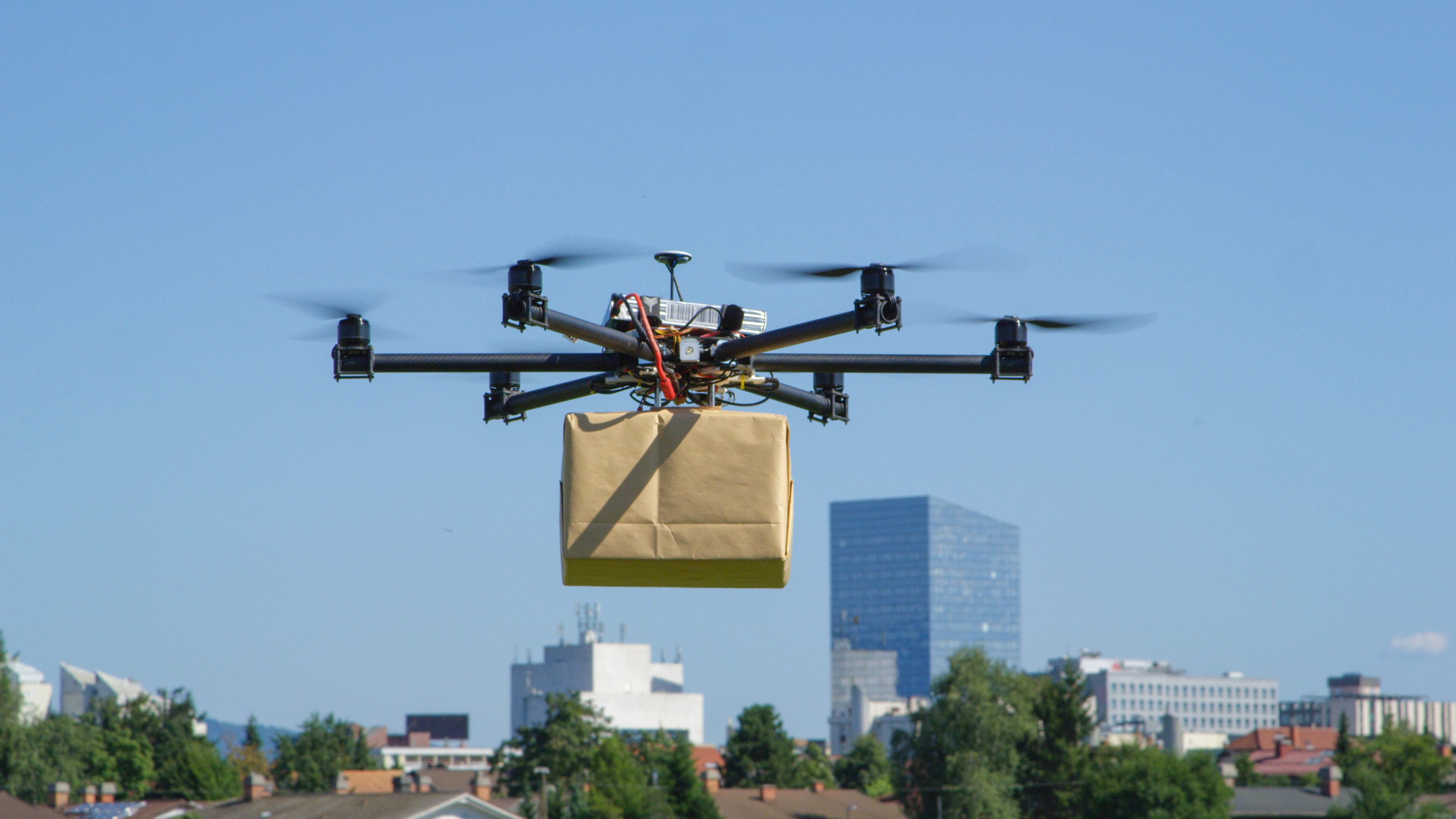
If you watch footage from contested regions, you see many small, lethal drones. AeroVironment (AVAV -4.08%) is one of the companies behind that reality. In February 2026, the company announced a $186 million U.S. Army order for its Switchblade 600 Block 2 and Switchblade 300 Block 20 loitering munitions, under a five‑year contract with a $990 million ceiling, first awarded in 2024. These systems are designed to let small units destroy armored vehicles and key targets without calling in larger missiles or aircraft.
For investors, that tells you two things. First, the U.S. is not treating loitering munitions as a niche experiment. The Army is rolling them into its core toolkit with multiyear funding and export support to allies. Second, AeroVironment is now on the hook to deliver at scale, which can deepen customer relationships but also test its own supply chain and manufacturing. The upside is clear in an era when U.S. Central Command talks about nightly drone and missile strikes around Hormuz and the Red Sea. The risk is that any production stumble or integration delay could sour confidence at a time when demand is hot, and alternatives are emerging.

NASDAQ: AVAV
Key Data Points
2. L3Harris: Sensors, communications, and missile capacity
Where AeroVironment focuses on the trigger, L3Harris Technologies (LHX +0.54%) helps militaries see, talk, and coordinate. Its latest results show a company already busy trying to close some of the supply gaps that current tensions have exposed. In the first quarter of 2026, L3Harris reported orders of $7.8 billion and a book‑to‑bill ratio of 1.4, pushing backlog to a record $40.7 billion. By the second quarter, backlog had climbed again to $42 billion on $7.3 billion of new orders and an 8% revenue increase to $5.9 billion.
Behind those numbers is a lot of hardware. In its annual report, L3Harris outlined roughly $2 billion in commitments to expand missile production capacity, including facilities, equipment, and supply chain upgrades. That is not just about more weapons. It is about hardening the industrial base so that when corners of the world flare, commanders are not told the shelves are empty. I see that as a quiet but important response to what we are watching in the Gulf: sustained operations draining inventories faster than factories can refill them.
The downside here is similar to other defense primes. Large backlogs can tempt management into overpromising, and missile programs are politically sensitive. Budget cycles, elections, and shifting threat perceptions can all slow or reroute planned spending even when the underlying need looks obvious.

NYSE: LHX
Key Data Points
What this means for investors
To me, these two companies sit at key choke points in the defense supply chain that current tensions with Iran have brought into relief: AeroVironment in small precision-strike systems and L3Harris in communications and missile capabilities. Neither of them is a pure bet on a single conflict. Their contracts and backlogs stretch across multiple theaters and customers.
That is the good news. The harder part is sizing any investment. These stocks can benefit from heightened tensions, but they also ride political cycles, budget arguments, and long procurement timelines. If you are looking to express a view that defense supply gaps exposed in Hormuz and the Red Sea will finally push governments to pay up for munitions, sensors, and shells, these names belong on the watch list. Just make sure they sit within a broader portfolio, not as your only bet on a world that feels less stable by the week.