Editor's note: This article has been corrected. Microsoft's system built by Plug Power was announced in July 2022 not July 2026.
Four years ago, Plug Power (PLUG +0.00%) tested a backup power system in collaboration with Microsoft. With hyperscalers' ever-increasing appetite for energy, tech giants are exploring every possible avenue -- from gas turbines to hydrogen fuel cells -- to meet their energy needs.
During its second-quarter earnings call earlier this month, Plug Power CEO Jose Luis Crespo was asked about whether the company would look to pursue data center deals, and noted that while it tested its technology with Microsoft early on, the company isn't looking to make a fundamental shift in its strategy right now.
Instead, Plug Power continues to focus on its core operations while undergoing a restructuring to become profitable. Here's what investors need to know about Plug Power and where things could go from here.
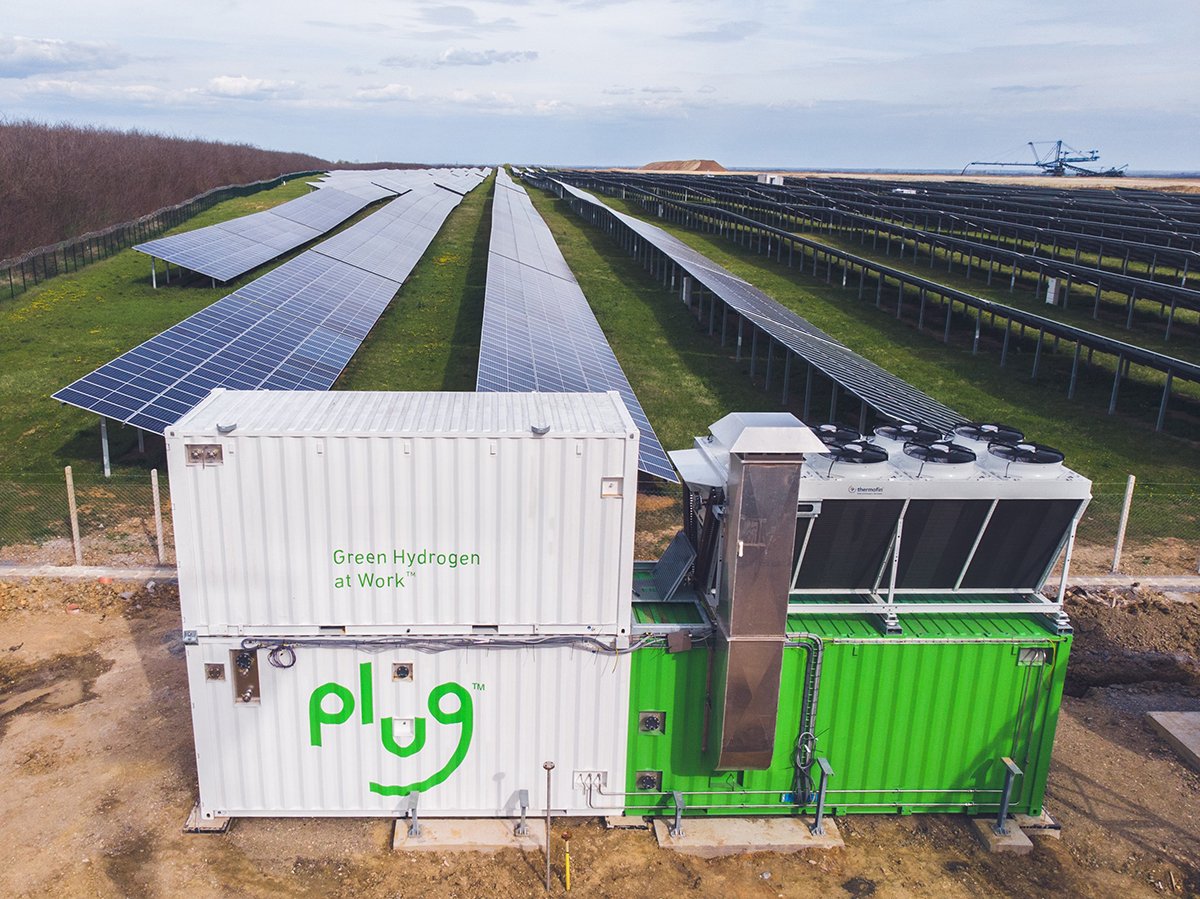
Image source: Plug Power.
Microsoft put Plug Power's hydrogen fuel cells to the test
In July 2022, Plug Power announced it had entered into a technical collaboration with Microsoft to test whether its proton exchange membrane hydrogen fuel cells could be used at scale. The company delivered a 3-megawatt (MW) backup power system prototype capable of generating enough energy to replace a standard diesel generator.
The unit was built and housed in two 40-foot shipping containers. During testing, these fuel cells responded to simulated power grid outages, ramping up in seconds and using hydrogen as fuel, which emits only water vapor and heat.
The move was an early test of Plug's hydrogen fuel cells in a data center environment, and the company is exploring whether its product could relieve grid strain from heavy electrical loads. Beyond testing, the company is working with Stream U.S. Data Centers to explore opportunities to deploy Plug Power's products in the data center industry.
Plug is undergoing a massive transformation and restructuring, and the data center move isn't a real pivot for the company. Its recent transactions are centered on asset monetization rather than on massive capital expenditures to open up new revenue streams. For example, it agreed to sell land and 164 MW of grid interconnection assets to Stream for up to $76.5 million.
PLUG Plug Power
NASDAQ · As of 4:00 PM ET 10/23/26

Plug's focus remains on becoming profitable
Plug remains committed to Project Quantum Leap, where it will focus on its core businesses and reducing costs as it looks to become profitable for the first time in a quarter-century. The company continues to execute on its three lines of business: material handling (through partnerships with retailers Walmart and Amazon); electrolyzers; and hydrogen fuel.
The company aims to achieve profitability across its existing segments; reach positive earnings before interest, taxes, depreciation, and amortization (EBITDA) by the fourth quarter of this year; and be profitable by 2028. For that reason, the company isn't looking to deploy significant capital to pursue another growth avenue. After all, that's what it has done throughout its history, and that's why it has an accumulated deficit of over $8.6 billion.
What investors should watch for
The Microsoft test demonstrated the technical viability of Plug Power's fuel cells for data centers, but it hasn't yet amounted to a deal with Microsoft, and Plug Power's management team remains focused on its core business and on achieving profitability before pouring capital into its next venture.
Plug Power has a long history of losing money and has been a painful stock for long-term investors amid massive cash burn and share dilution. While I wouldn't buy the stock right now, it's worth keeping an eye on it in the coming quarters to see whether management is achieving its stated goals and how it plans to handle data center deals going forward.