Berkshire Hathaway's (BRKA +1.13%) (BRKB +1.48%) second-quarter 13F is now officially filed, disclosing all the stock trades it made during the quarter, and ultimately offering a snapshot of the conglomerate's current stock portfolio.
No real surprises either. Although Berkshire was a net buyer for the first time in a long time, the additions were expansions of existing positions, or new purchases that make enough sense.
There's one name arguably worth Warren Buffett's and Greg Abel's consideration, however, that still isn't a Berkshire Hathaway holding. That's drugmaker Pfizer (PFE +1.91%). Here's why Berkshire should buy it, and why you might want to even if Abel or Buffett don't end up adding it to Berkshire Hathaway's portfolio anytime soon.
Yes, that Pfizer
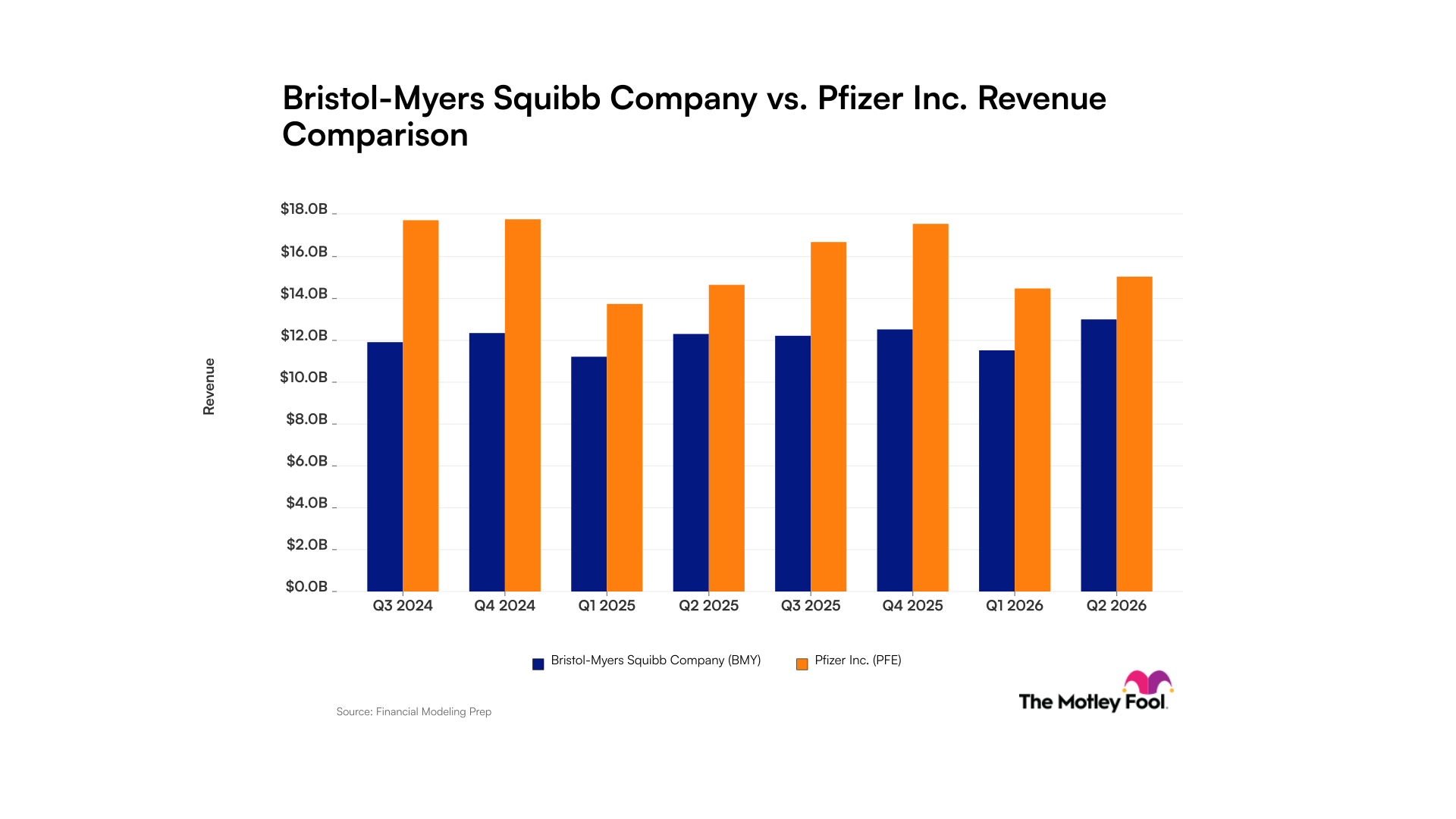
If you know anything at all about Pfizer, then you might disagree with the call. This pharmaceutical stock has underperformed since peeling back from its COVID-prompted peak in late 2021. In fact, it's gone nowhere since early 2024, unable to offset the massive revenue decline resulting from the wind-down of the coronavirus pandemic. The company wasn't able to do a great deal of developmental work during that period; shareholders have paid the price in the meantime.
PFE Pfizer
NYSE · As of 4:00 PM ET 10/22/26

Now take a step back and take an intellectually honest look at the bigger picture.
While not perfect (no prospective investment is), the market may be so fixated on Pfizer's recent past that it's struggling to see its plausible future. Through a handful of acquisitions like the purchase of Arena Pharmaceuticals in 2022, its 2023 deal for Seagen, and the acquisition of Metsera in 2025, the company's reloaded its pipeline. It's particularly got a bunch of new oncology drugs like Seagen's Padcev and Tivdak, and hopes to leverage its current portfolio of drugs and new know-how to develop at least eight new blockbuster (annual revenue in excess of $1 billion) cancer treatments by 2030.
Meanwhile, its deal for Metsera puts it deep in the GLP-1 weight-loss-drug race with a potential option that's distinctly different than most others already on the market. Namely, rather than a weekly dose, Pfizer's PF-08653944 (MET-097i) currently advancing into phase 3 trials would only require a monthly injection. This gives the drugmaker a chance at winning a piece of an anti-obesity market that Mordor Intelligence expects to grow at an average yearly rate of 31% through 2031, when it should be worth more than $130 billion.
The problem? Investors won't really start seeing the fruit of all of these acquisitions and Pfizer's ongoing R&D work until nearer 2030. Several of its current drugs, including blockbusters like its blood-thinning Eliquis and cancer-fighting Ibrance, will lose their patent protection in the meantime.
We may be seeing glimmers of the company's imminent replacement of its aging drug portfolio sooner than investors were anticipating, however. In its recently released Q2 report, Pfizer upped its full-year revenue outlook from a previous range of $59.5 billion to $62.5 billion to a new range of between $60.5 billion and $62.5 billion. It's not much, but it's a start, and all long journeys start with that first small step.
Why Berkshire (and you) might want to own a stake in Pfizer
So Pfizer is moving in the right direction, but why might Abel or Buffett specifically want it for Berkshire Hathaway's equity portfolio? Three reasons stand out.
1. The sizable dividend is reasonably well protected
Buffett certainly doesn't mind capital appreciation. One of the key reasons Berkshire owns stocks, though, is the dividend income they generate. For instance, its $35 billion stake in Coca-Cola produces a reliable $850 million worth of annual dividends.
Pfizer could offer something similar. Berkshire would be stepping into a forward-looking dividend yield of nearly 6.5%, but perhaps more than that, plugging into a dividend more than protected enough by profits. Even though analysts expect profit to deteriorate to only $2.48 per share by 2028, that will still fully cover its current annualized payout of $1.72 without crimping the company's ability to continue funding the development of its drug portfolio. And again, much of Pfizer's recent R&D work will only start paying off in earnest shortly after that.
2. There will be a wide economic moat again
Income isn't the only thing Buffett likes that Pfizer brings to the table. The Oracle of Omaha also likes companies with wide economic moats, which is to say that he looks for companies that sell a product or service that no rival can easily replicate.

Image source: Getty Images.
Broadly speaking, it's not always clear that such moats exist within the pharmaceutical industry. Oncologists have the choice of several cancer-fighting drugs, for instance, more than one of which might work well enough for a particular patient.
Nevertheless, there's no denying that plenty of drugs become a favorite for a particular purpose, or for treating several scenarios. There's room for more than one effective cancer drug, just as there's room for more than one GLP-1 weight-loss drug. If approved, Pfizer's monthly dosed PF-08653944 should cultivate its own crowd of loyal fans.
3. Pfizer stock is trading at a nice discount
Last but certainly not least, Pfizer stock is a name Buffett and Abel could get behind here simply because -- priced at less than ten times next year's expected per-share earnings -- this ticker is currently trading at a deep discount.
This argument raises a philosophical question: Is this low valuation an opportunity, or a warning? Cheap stocks are cheap for a reason, after all. The crowd's probably unwilling to price Pfizer any higher than this because it's got doubts about its foreseeable future.
And it's not like analysts are on board either. Most of them only rate the stock as a hold right now, with a consensus target of $28.51 that's only 8% above this ticker's present price. That's not much apparent upside.
Don't concern yourself too much about other investors' or analysts' opinion of Pfizer's stock, though, or, for that matter, any stock. Buffett certainly doesn't. Remember, he bought a big stake in Goldman Sachs in the middle of 2008's subprime mortgage meltdown, when nobody else was interested in touching any financial stocks. Berkshire ended up making a fortune on that trade.